| OCR Text |
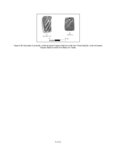
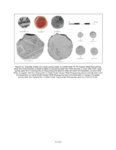
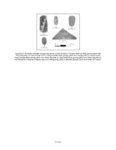
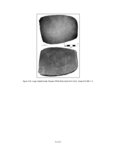
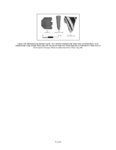
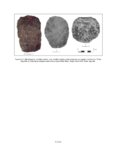
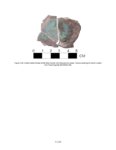
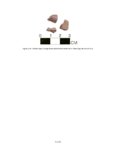
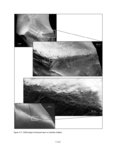
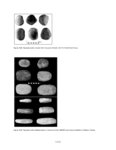
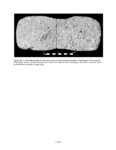
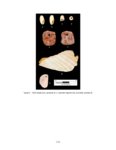
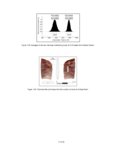
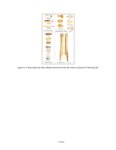
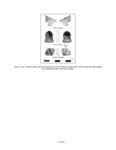
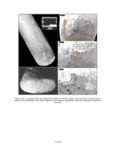
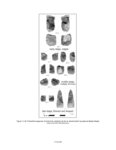
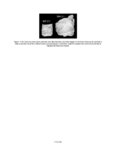
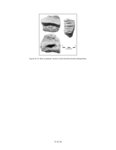
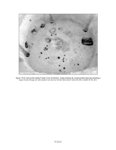
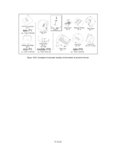
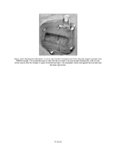
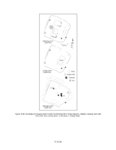
Show possibly anvil use. These divots appeared to be part of the tool design and could have served as finger grips. While it is possible that the divots were simply the unintended result of anvil use, the regularity of their placement suggests otherwise. The ends of the stones were convex and generally exhibited little grinding wear, but some had small, evenly spaced impact fractures. This use-wear suggests that the stones were held vertically and used in a crushing motion using just the weight of the stone to crush the material being processed. In addition, the four longitudinal faces were often flat and relatively smooth from reciprocal grinding along the transverse axis, just like a mano. The morphology and use-wear of these tools indicate that they may have been specialized multi-use pestles used for both crushing and grinding. While the precise function of these tools could not determined, they might have been used in the preliminary stages of food processing. The ends of the stones may have been used to initially crush nuts and seeds to facilitate removal from their shells. Then the sides of the tools might have been used to pulverize and grind the nuts and seeds. Conversely, these tools may have just as easily been used for processing non-food materials like clay. Rectangular crushing stones were recovered by NNAD on the N21 road project (Bungart et al. 2004), but in general descriptions of such tools are fairly rare in the archaeological literature. One such tool, recovered by the Rainbow Bridge-Monument Valley Expedition, was illustrated by Beals et al. (1945:78) but was not discussed in detail. Woodbury (1954:91) described tools he called elongated pitted hammerstones, and Tipps et al. (1989:508) described tools they called edge-ground cobble-hammerstoneanvils. Artifacts classified as rubbing stones were hand-held stones with fairly smooth surface textures used to process and produce items made of wood, bone, shell, and animal hides. Rubbing stones were differentiated from polishing stones, which were used in the production of pottery, mainly on the basis of size and use-wear. Rubbing stones generally were cobble sized and therefore larger than ceramic polishing stones, which were generally pebble sized. Use-wear on rubbing stones was dull and often striated whereas polishing stones had use-wear that created a smooth and frequently shiny surface. Water-worn cobbles and pebbles were commonly used for both types of tools because of their roundness and lack of texture, which would have caused abrasive scratches on the items being rubbed and polished (Adams 1997:33). Another type of rubbing or polishing stone was the floor polishing stone. These tools were distinguished from other polishing stones by their size and shape. Floor polishing stones were cobble-sized symmetrical disks, manufactured or naturally shaped, used in the application and finishing of plaster to both walls and floors (Adams 1997:33). Anvils, as the term is used here, were netherstones upon which other items were shaped in a manner that left impact fractures and abrasive scratches. This type of artifact should not be confused with the hand-held tools used in pottery production that are also called anvils. Although hammerstones were analyzed with the flaked stone tools, many of the items discussed in this chapter exhibited wear indicative of secondary hammerstone use. Hammerstones were hand-held stones, often unmodified except through use, that were used for striking off flakes from other stones and for pounding. Mauls, like hammerstones, were essentially used for pounding. Unlike hammerstones however, mauls tended to have undergone a fair amount of shaping and were grooved for hafting a wooden handle. This groove separated the stone into two approximately equal palls. Use-wear damage for both hammerstones and mauls included impact fractures and chipping. The items identified as axes were, to be more precise, actually axe heads. Axe heads were wedgeshaped and manufactured with grooves, or sometimes notched so a handle could be hafted to each head. For each axe the type of groove (i.e. full, half, spiral, etc) was recorded in the analysis notes when it could be identified. The grooves were positioned off-center, allowing for a large bit and smaller pall. Other traits such as polishing, groove ridges, and use-wear were also recorded. Hoes and digging tools were generally tabular with an edge or pointed end suitable for digging. Hoes were distinguished by characteristics indicating that the tools could be hafted. Stone Ornaments A variety of objects, such as beads, pendants, rings, and buttons, were considered ornaments. Beads were items perforated approximately in the middle with a hole extending from side to side. The hole was placed so that when the item was suspended with a string, the edge or circumference was the most visible (Adams 1997:28). Pendants were perforated with a suspension hole located off center, usually near an end, so that one of the broader faces was most visible when strung. Rings were small O-shaped items that could encircle a finger or toe. Buttons were small disks perforated with one or more holes that would have been used to attach the disks to other items for use as fasteners. Some buttons with only one hole were distinguished from beads by having larger diameters and were differentiated from pendants by V.6.6 |