| OCR Text |
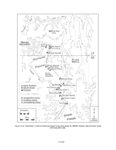
Show Chapter 4 ELECTRON MICROPROBE ANALYSIS OF CERAMICS Kimberly Spurr, Phil R. Geib, and James Wittke One research issue for the N16 project involves modeling craft production and exchange (Geib et al. 1993). The acquisition of raw materials to produce tools, containers, clothing, ritual paraphernalia, and other implements necessary for daily life was a central focus of prehistoric economy. Decisions as to whether items were produced by each household in a community or obtained from specialist producers likely depended on the availability of resources, costs of production versus exchange, skills possessed by the household members, and social structure of the community and related groups. Local production could include only what is needed by those people making the items, or it might expand to surplus goods that could be exchanged with other households, either within or outside the community. In cultures lacking strong centralized political organization, such as the Kayenta Anasazi, exchange systems tend to be controlled through social networks like moieties, clans, or extended families. Ceramics offer an excellent opportunity to study patterns of prehistoric production and exchange, and have long been used for such research. Because they are formed from geologic materials, ceramic vessels are reflections of the environment in which they are produced; this fact underlies compositional studies of ceramic provenience, production, and distribution. Early research into ceramic composition focused on provenience studies and characterizations of ceramic technology (e.g., Bamps 1883; Nordenskiöld 1990). During the 1930s and 1940s modern approaches to composition studies were established by researchers like Anna Shepard (1936, 1942, 1977) and Frederick Matson (1939). Since the late 1950s, compositional analysis of ceramics, using both physical and chemical methods, has addressed questions pertaining to long-distance exchange (Creel et al. 2002; Harbottle 1982; Simmons and Brem 1979), intraregional production and distribution (Abbott 2000; Bishop et al. 1982; Bernardini 2007; Douglass 1990), development of craft specialization (Abbott 2000; Rice 1978; Mills and Crown 1995), typological refinement (Bishop et al. 1988), and the behavior of potters in response to environmental and cultural constraints (Arnold 1981, 1985). Painted whiteware ceramics are a highly visible and regionally diagnostic component of Anasazi material culture. Although ceramic production occurred within the household economy (Blinman 1988; Hagopian 2004; Chapter 2, this volume), exchange networks tied to social organization also dispersed vessels across the region during the Pueblo II and III periods (Gumerman and Dean 1989; Plog 1986). Exchange likely involved goods as diverse as ground stone tools, ceramic vessels, pigments and lithic raw material, food, and cotton. Understanding these networks is crucial to a robust reconstruction of the prehistoric economy; to that end, electron microprobe analysis helps in modeling ceramic production and exchange systems in the Kayenta region. Tusayan White Ware is traditionally characterized as having quartz sand temper (Colton 1955), but during the late Pueblo II and Pueblo III periods volcanic ash was sometimes used in addition to or in place of sand temper (e.g., Ambler et al. 1964:73; Beals et al. 1945:122; Hagopian 2004; Smith 1971:192). Based on microscopic and petrographic analysis, Geib and Callahan (1987:98) concluded that the addition of volcanic ash was intentional rather than being a natural inclusion in the clay, and that the ash temper was "derived from unconsolidated deposits, not a tuff or pumice." The use of volcanic ash as temper was restricted to the northern and western Kayenta region. Geib and Callahan (1987) identified the Klethla Valley as a primary production area for ash-tempered Tusayan White Ware and documented a potential source of volcanic ash in Blue Canyon, about 40 km southwest of the Klethla Valley. Raw ash from Blue Canyon matches the ash temper in petrographic thin section but Geib and Callahan considered visual identification inadequate proof that the temper came from the ash deposit; verifying the relationship between the ash deposit and ceramic temper would require compositional data. Unfortunately, no good method exists to extract the fine ash temper from well-fired sherd paste. Crushing and analyzing an entire sherd produces inaccurate compositional data for both the paste and the temper. The electron microprobe therefore presents the perfect solution, because the technique allows quantitative compositional analysis of single ash fragments contained within the ceramic paste. The goals of our electron microprobe analysis of ceramics from the Kayenta region were fourfold: (1) establish a quantitative compositional characterization of volcanic ash temper in Tusayan White Ware V.4.1 |