| OCR Text |
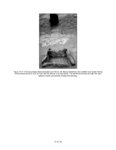
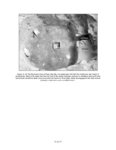
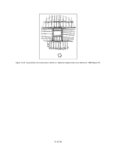
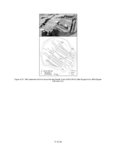
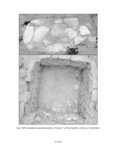
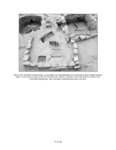
Show the Kayenta Anasazi that lived on northern Black Mesa. Powell (1983:54) thought that the Hopi were an "inappropriate analog" for understanding Kayenta Anasazi settlement because the villages that they occupied was so much larger and more permanent compared to the Kayenta settlements of northern Black Mesa. Instead she turned to ethnographic descriptions of settlement practices for the Pai and Navajo from northern Arizona. Urging her in the direction of analogies drawn from farmer-foragers rather than more fully sedentary Puebloan farmers was the floral and faunal evidence accumulated by the BMAP that indicated a greater subsistence role for hunting and gathering than was commonly assumed for the Kayenta Anasazi. She thought the evidence indicated that the Kayenta had a mixed economy, that they were part-time horticulturalists and part-time foragers and therefore had to be residentially mobile. "Groups practicing a mixed hunting, gathering, and horticultural subsistence strategy are not fully sedentary in these general environmental conditions [on the Colorado Plateau]. Rather, they occupy sites on a seasonal basis in order to procure the foods necessary for survival" (Powell 1983:69). She concluded that few Kayenta sites on northern Black Mesa were permanently occupied until after AD 1050 (Powell 1983:136). Plog (1986b) subsequently criticized Powell's study and her conclusions regarding prehistoric cultural change on Black Mesa on a number of cogent grounds. It is easy to envision that the mobility practices of the Navajo with their herding lifeway might have less relevance for understanding Kayenta Anasazi settlement than the Hopi, Zuni, or other Puebloan groups. In large part the issue boils down to expectations about the natural productivity of the environment and how the Anasazi could have survived in the region if they were in fact less reliant on agriculture than commonly supposed. Powell's (1983) mobility argument partly hinges on the assumption that the Kayentans were far less dependent on farmed produce than indicated in the ethnographic accounts of Puebloan farmers. The recovery of diverse plants and animals from BMAP sites was thought to signify this aspect of subsistence diversity, even though the potential productivity of the pre-agricultural landscape on the Colorado Plateau appears quite limited (e.g., Ford 1984) and most of the diverse subsistence remains were those characteristic of disturbed areas and thus likely a direct side benefit of agricultural fields-i.e., not wild land foraging but foraging in the garden, something likely true for many game animals as well (e.g., Semé 1984 following Linares 1974). More important, stable isotope analysis has now adequately demonstrated that maize agriculture was a focal aspect of Anasazi subsistence in the Kayenta region since Basketmaker II times (Coltrain et al. 2007), so whatever residential mobility that existed should be considered in terms of this aspect, not by overemphasizing the foraging of wild resources (cf. Sullivan 1987, 1992) and downplaying farming. Despite problems with Powell's theoretical approach and expectations she rightly called attention to the need to question traditional assumptions about Puebloan mobility strategies; at the very least we should explicitly acknowledge what these assumptions are. Perhaps it would behoove us to eschew the assumption that there exists an ideal adaptive pattern that all members of society strive to follow. We should all heed Kelly's admonition to avoid typological thinking and attend to "the many different dimensions of mobility-individual mobility, group residential movements, territorial shifts, and migration-each of which can vary independently of the others" (Kelly 1992:50). Key is recognizing that it is individual people and families that are trying to survive and making decisions about where, when, and how frequently to move in order to survive. The average or mode of any behavior does not express what an individual will do, or how variable the behaviors are around some measure of central tendency. Biseasonal movement in the Grand Canyon from summer highland settlements to inner canyon winter settlements might indeed characterize some portion of the population, but perhaps not all, and some might have practiced the reverse strategy or one totally different. In any analysis of residential mobility it is also important to factor in the transport costs of different resources (e.g., Barlow and Metcalf 1996; Jones and Madsen 1989) since some are more affordably moved great distances (e.g., deer and pinyon nuts) than others (maize) and dependence on abundant but bulky and low-return resources, especially those stored for winter subsistence, should markedly constrain residential placement. The NMRAP provided a few pieces of evidence that are relevant to the issue of residential mobility in the Kayenta region, ones worth considering for future projects and in the analysis of existing data. The first of these concerns differential abandonment modes. It is most common for Kayenta habitations, except for terminal Tsegi Phase villages, to be thoroughly scavenged of artifacts and usable wood. That is why Hammer House and the middle Pueblo III component of Ditch House are notable since both had intact roofs and superstructures at the time that the structures started to enter the archaeological record, although in the case of Ditch House the rooms thoroughly burned while the structures stood intact, perhaps in a forest fire. The fire in this latter case does not seem to have been catastrophic (not Pompeii like) in that the site appears to have been largely closed down with most usable goods removed from the V.15.51 |