| OCR Text |
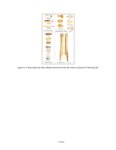
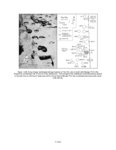
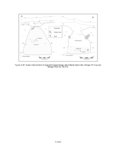
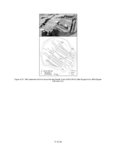
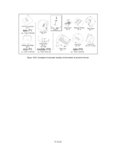
Show approaches. Since then, however, there have been several studies regarding small site function and duration (Stone 1993), interior versus exterior feature patterning (Sobolik et al. 1997), and the relationship between artifacts-ecofacts and room function-duration (Schlanger 1991; Nelson and Lippmeier 1993; Clark 1998), among others, that are not so dependent on historic analogy. In an interesting study of small Hohokam sites, Stone (1993:79) concluded that "there is no consistent, clear-cut relationship between site types and material culture in the northern Hohokam periphery." Site types, in this case, consisted of limited activity loci, field houses, farmsteads, and hamlets, each of which was defined by an expected set of artifacts and features that presumably reflected differences in site function. Such was not the case, however; rather than functional differentiation, "the … site typology appears to represent varying levels of occupational permanency" (Stone 1993:79)-i.e., duration. In other words, a farmstead is simply a field house writ large, and a hamlet is just a farmstead occupied that much longer. In each case the habitation is a response to a need for more efficient farming or food gathering. We have not partitioned NMRAP sites along the lines of Stone, and the Hohokam study did not include anything above the level of a hamlet, but we wonder if there isn't a similar phenomenon happening for the Kayenta region. Is site variability primarily due to differences in site function or to differences in duration of use? Since the ethnographic record provides the touchstone for archaeological "recognition" of field houses or the identification of seasonal habitations no matter their actual function, it is worth a brief consideration of this literature. Ethnographic Accounts. In Beaglehole's "Notes on Hopi Economic Life" (1937:39) he described a typical scene on the first day of planting, usually conducted in late April or May. A small working party gathers at the appointed field, digging sticks and corn in hand. Before starting they "smoke and breathe prayers" for rain under a ki'si, what the author translates as a "field hut"; then the real work begins. The "hut" probably looked similar to those illustrated by Mindeleff (1891: Figures 112 and 113), based on observations made during the 1880s. Mindeleff (1989:217-219) collectively refered to "field shelters" as kisi, but distinguished between two types: "the ‘tuwahlki,' or watch house, and the ‘kishoni,' or uncovered shade." The kishoni is "perhaps the simplest form of shelter employed," consisting of an arc of upright cottonwood saplings and attached boughs. The tuwahlki can range from a covered ridgepole supported by a forked stick (not illustrated by Mindeleff) to the roofed, mostly open sided, four-post arrangement that may correspond with Beaglehole's field hut. As perhaps the first published examples of Puebloan field structures, Mendeleff lamented not having "an opportunity of making an examination of all the field shelters used in these pueblos" (1989:217). His comparatively brief descriptions continued to be the case well into the twentieth century, as ethnographic accounts of what archaeologists now commonly call field houses were relegated to a few lines subsumed within the more social, ritual, or ecological aspects of agricultural planting, harvesting, and processing (e.g., Beaglehole 1937; Stephen 1936; Hill 1938; Hack 1942; Bradfield 1971; Ellis 1974; Titiev 1992; for more comprehensive listings see "Appendix: Summary of Data" in Sutton 1977 and Appendices A and B in Moore 1979). One early exception is Cosmos Mindeleff's (1898) treatise "Navajo Houses," which set the stage for later studies of Navajo dwellings (Spencer 1969; Russell 1978; Jett and Spencer 1981). One could imagine that a field-tending locus close to home need be little more than a tree with shade, whereas locations farther "afield" would require the full complement of domestic items. The comment that "on very hot days … I took a nap in the shade of a bush" (Talayesva 1942:206 in Moore 1979:263) reflects the former situation, and the latter might correspond with Bandelier's claim (1966:265 in Moore 1979:270) that Cochiti Pueblo was "almost depopulated in summer, nearly everybody going out to the ranchos." But are the Cochiti summer homes "field houses" in the traditional sense? Or are the ranchitos the summer quarters of a biseasonal round? If so, they are on the extreme end of what Moore (1979:119) called the "full set of potential analogs" within the class of ethnographic phenomena known as field houses. Such sites may appear in the archaeological record simply as small, self-contained habitations, clearly related to agriculture, but lacking the hallmarks of a humble field house. Ethnographic accounts of field houses also vary in the identity of the occupants. Beaglehole (1937) noted the following division of labor among Hopi of the mid-twentieth century: men (planting, hoeing, cultivating, harvesting, roasting, gardening); women (food preparation, husking, grinding, storing of foodstuffs, cooking, baking, and collecting wild foods). Both sexes would sometimes participate in planting, harvesting, and gardening, depending on the need, and boys were known to do some of the hoeing. Hill (1938) observed that weeding with a hoe was usually a man's work, unless the individual was otherwise occupied. During the use life of a field house, it is probable that more than one family member tended to some aspect of field work. "He stays here constantly," said Stephen (1936:284-285) of a Hopi man tending his peach orchard in the 1890s, "or some of his family, from the time the fruit gets large enough to eat till the crop is gathered, to guard against Navajo and other depredators" (emphasis added). V.15.37 |