| OCR Text |
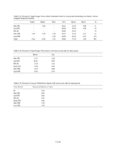
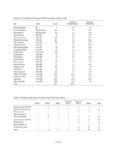
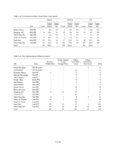
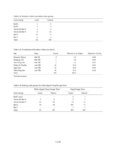
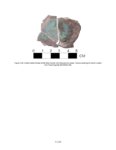
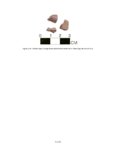
Show most nonlocal stone was obtained through embedded procurement strategies. Nonlocal stone obtained in this manner generally had higher value than local material only because of desirable intrinsic physical characteristics that made it superior to local material for use in particular artifact types. Based mainly on raw material type, source, and design strategy, a relatively small number of groundstone artifacts appeared to be obtained through exchange and originated from outside the project region. These trade goods included turquoise ornaments, soapstone beads, and pipes/cloudblowers made of scoria and soapstone. Grinding Tool Production Ethnographic Information Ethnographic information gathered throughout the historic Southwest shows that women were usually the people who manufactured manos and metates (Huckell 1986:42). Similar descriptions of material procurement and metate production among the Hopi have been recounted by two separate authors. According to Bartlett (1933:15), "the procuring of metate slabs is a ceremony in which only women take part and which occurs in late February or early March. The women go alone to the traditional place, get out the slabs, and carry them home on their backs." Unfortunately, this and Titiev's (1972) account are fairly sparse and do not provide further details as to the lengths of the trips or the distances covered. Four decades later another investigator reported that rites similar to those connected with the making of piki ovens, dumas, are observed for the quarrying of mealing stones, i.e., metates or matas. The leader of such a project is usually a woman who prays while her husband makes prayer feathers at the preceding Soyal and again when an expedition sets out.… The best time for getting mealing stones is between the month of March and the time when peach trees blossom. The Hopi believe that these stones are "cold" and would cause frost if gathered out of season. They may be installed, however at any time. (Titiev 1972:142-143) Presumably, after obtaining the slabs the women also shaped them by flaking and pecking and would install the finished metates into mealing bins within their homes. Apparently Hopi women also manufactured their own manos (Hough 1897, cited in Huckell 1986:42). According to Cushing (1920:307-308) Zuni women also produced their own metates, and he recounts the story of how they were shown how to make these tools by the "Woman of the White Shells." In contrast, at Santa Clara Pueblo it was reported that men were the ones responsible for manufacturing metates (Hill 1982:80-82, cited in Huckell 1986:42). Nonetheless, the description of the manufacturing process involving iron tools suggests that this production method may be a fairly recent historical development. Women created their own food-grinding tools among many non-Puebloan groups in the Southwest. Paiute slab metates were "collected ‘in the mountains' and pointed (shaped?) by the woman" (Kelly 1964:37, cited in Huckell 1986:43). Chiricahua Apache women are also reported to have made their own metates (Opler 1965:385, cited in Huckell 1986:43). Among the Navajo either men or women reportedly performed the work of manufacturing metates, and either sex could use it, although it was generally the women who owned it (Kluckhohn et al. 1971:117). The Mohave along the lower Colorado River in Arizona and California appear to be somewhat different than most other historic Southwest groups when it comes to the manufacture of metates, manos, and pestles (which were used in wood mortars). As previously discussed, Huckell (1986) concluded that part-time specialists produced these tools. One ethnographic informant identified the metate manufacturer he knew of as male (Stewart 1968:32, cited in Huckell 1986:36), but it is not clear if this type of specialization was restricted to just men. Even when conducted at the community or household level, groundstone procurement and production by local residents could have involved specialists. In discussing piki stones Woodbury (1954:209) claimed that only certain Hopi women had the knowledge and skill to properly prepare and install the stones, stating that "we know that even today, for example, only a few women among the Pueblos are considered qualified for the final preparation and installation of cooking slabs." It is unclear, however, whether this situation reflected a traditional specialist role or if it resulted from decreasing numbers of women who maintain traditional knowledge and practices. This review of ethnographic information about mano and metate manufacturing in the historic Southwest shows that a variety of grinding tool production practices were used by the various groups. Although both sexes could be associated with mano and metate production in some cultures, generally women, more often than men, were the manufacturers and owners of these tools. In many instances, but V.6.23 |