| OCR Text |
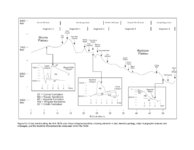
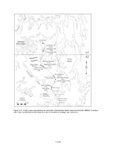
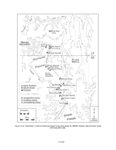
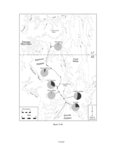
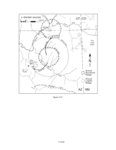
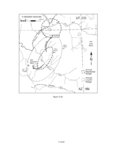
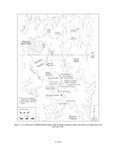
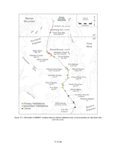
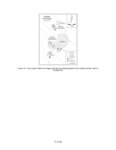
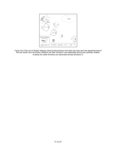
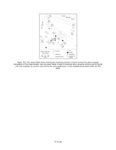
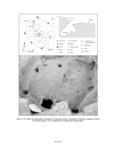
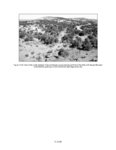
Show The area traversed by the N16 ROW consists of three main environments that seem to have had an influence on the types of sites investigated. The southernmost consists of the dissected ridgeline that connects the northwestern part of the Shonto Plateau to the southeast edge of the Rainbow Plateau and separates the upper reaches of Piute Canyon from the eastern tributary canyons of Navajo Creek. This portion, which ranges in elevation from about 2240 to 2100 m, is characterized by a dense pinyon-juniper forest but with vast exposures of Navajo Sandstone slickrock. Well-watered alluvium for farming is available within adjacent canyons, especially the upper portion of Piute Canyon. The middle portion of the ROW, at about 1900-1800 m, consists of the sagebrush-covered flats of the Rainbow Plateau, an area generally sparse in tree cover. Anasazi settlement of this portion would have depended upon dryfarming. The final portion of the ROW is the lowest in elevation, from about 1800 to 1700 m. It runs along the eastern foot of Navajo Mountain, which rises to a height of 3166 m elevation, about 1200 m above the Rainbow Plateau. This area consists of sagebrush-filled sandy drainages separated by pinyon-juniper covered ridges that are mantled with talus boulders. Proximity to the Glen Canyon lowlands may have been an additional benefit/attraction of this setting. RESEARCH ISSUES The overall themes of economic specialization and social differentiation served as guiding principles for the NMRAP research effort but not as a straightjacket. These two themes are intertwined and the processes that lead to them can be mutually reinforcing. A locational advantage next to some resource with limited spatial distribution might have allowed part-time specialization in the production of some craft item that also marked a first step towards social differentiation. Likewise, differential social status might occur based on longevity of occupancy in a locality, which might have entailed primacy of access or first rights to the best farmland or other resources. If use rights were negotiated communally as they likely were, then families recently arrived to an area might turn to part-time craft production in order to make ends meet. Without food production, the possibilities for either economic specialization or social differentiation would have been exceedingly limited on the Colorado Plateau since Archaic foragers of the area seem to have lived more of a hard-scrabble existence. The adoption of maize and other domesticates allowed these processes to come into play as families became more residentially stable and especially as population density increased and social groups expanded in size. Accordingly one of the primary interests of this project concerned the agricultural transition, an issue relevant to the Archaic and Basketmaker records documented by the NMRAP excavations. Agricultural Transition The shift from a hunting-gathering economy to one based to some extent on food production, or farming, has been a long-standing research topic throughout the world. In the North American Southwest fully domesticated plants were acquired by one means or another from Mesoamerica; thus the processes of the transition are perhaps unlike those of pristine centers of food production where forager populations became food producers as they developed maize or other crops. Throughout portions of Mesoamerica, Archaic foragers slowly became Formative populations as the subsistence contribution of crops increased at the expense of wild resources, in part because of improvements in the yield of domesticates. In the secondary setting of the Colorado Plateau and the Southwest more generally, the agricultural transition may not have followed Romer's rule (Hockett and Ascher 1964) as Wills (1988:31-47) has suggested, at least not everywhere. This is clearly an important concept when it comes to considering sociocultural or evolutionary change. "The rule implies that incorporation of domesticated plants into hunter-gatherer economies sustains the ongoing system instead of changing it … In this view, domesticates were first adopted not for food production itself, as some anthropologists have suggested (e.g., Cohen 1977), but rather for their contribution to the success of existing foraging strategies" (Wills 1988:36). Although some Archaic foragers of the Southwest probably acquired maize and squash and farming knowledge via diffusion, doing so to continue with their foraging lifeways, there also may have been a demic diffusion of farmer-foragers-Berry and Berry's (1986) San Pedro migration-to account for Basketmaker populations on the Colorado Plateau. If food production spread into the Southwest with migrant farmers, then Romer's rule does not apply. Indeed, in such a scenario, foragers within the same area as the migrant farmers may have adopted domesticates not so much to continue with their foraging lifestyle, but out of necessity in the face of economic competition from farmer-foragers (see Wills 1995). The economically viable options for foragers facing the loss of many prime settlement locations and a reduction in high-return resources might have been limited to either moving on or adopting food production to stay within a region yet avoid extinction. A critical part of interpreting the agricultural transition is thorough documentation and V.16.2 |