| OCR Text |
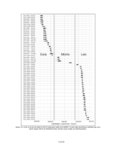
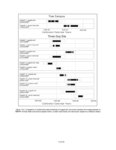
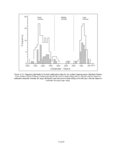
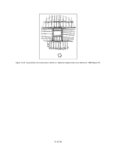
Show perhaps had domed covers of sticks and sediment that would have protruded above the ground surface. The change to this sort of storage feature, which would have allowed for more ready access but at the price of visibility, suggests an alteration of residential mobility, at least for some portion of the population, such that food stores were never left unattended. Part of this might have to do with multiple trusted family groups living together or in close proximity thereby allowing stores to be monitored even when portions of the families were absent. BASKETMAKER ORIGINS One research issue that came to the fore at the start of the NMRAP concerned the origins of Basketmaker II populations in the Kayenta region (see review by Matson 1991, 2002). Were they in situ forager groups transformed by the adoption of domesticates or farmer migrants from some southern source area? Would the N16 excavations reveal a continuous record of forager occupancy culminating in Basketmaker II or one punctuated by hiatuses, a discontinuous record? Moreover, what about continuity in material culture? Kidder and Guernsey's excavations (1919; Guernsey and Kidder 1921; Guernsey 1931) and others such as Earl Morris across the Four Corners region of the Colorado Plateau unearthed an impressive inventory of Basketmaker II remains, but did not disclose unequivocal evidence for earlier huntergatherer occupation. This finally occurred in 1961 at Sand Dune Cave on the Rainbow Plateau when distinctive open-twined sandals were recovered from cultural deposits directly under those with typical Basketmaker artifacts (Lindsay et al. 1968). Direct radiocarbon dates on three of the sandals demonstrated great antiquity (7150 to 7700 BP, Lindsay et al. 1968:96), confirming the long-held suspicion that foragers had existed in the region long before the Basketmakers. Research since then, especially at open sites, has greatly added to the descriptive details of Archaic period foragers (see reviews in Huckell 1996; Matson 1991; Vierra 1994), but it has not necessarily supported the notion that hunter-gatherers had a developmental relationship to subsequent Basketmaker farmers in the sense originally envisioned by formulators of the Pecos classification. Sequential use of the same site or area does not qualify as a descendant relationship and the assumption of continuous cultural development within regions should be a mater of empirical study rather than being taken as a given (Berry and Berry 1986). Archaic populations of the Four Corners region may have been predecessors in lifeway only, and not ancestral. For the northern Kayenta region, evidence relevant to Basketmaker origins at the start of the NMRAP seemed to strongly support the notion that it was an allochthonous process. On the Rainbow Plateau, excavations at both Sand Dune and Dust Devil Caves suggested a considerable hiatus between Archaic foragers and Basketmaker II farmers, with the caves abandoned for thousands of years prior to Basketmaker reoccupation. The potential biases of single sites are well known, yet the breaks in site use appeared to be a microcosm of a regional pattern highlighted by Berry and Berry (1986), of a discontinuous radiocarbon record that preceded the spread of domesticates across the Southwest (cf. Geib 1996a). Breaks in occupation seemed to be accompanied by other abrupt changes in material culture that did not accord well with the notion of autochthonous development as championed by IrwinWilliams (1973) and others. Focusing on material remains rather than regional chronologies, Matson (1991) called attention to the lack of Basketmaker II cultural unity and suggested multiple origins and processes to account for this patterning-transformation of in situ foragers in some cases and migrant farmer-foragers in others. Continuity vs. Discontinuity Two aspects of the archaeological record are relevant for examining continuity during the agricultural transition on the Rainbow Plateau: continuity in settlement and continuity in material culture. Genetic continuity is another crucial line of evidence, although even if DNA analysis or nondestructive cranial morphometric or dental trait analyses could be undertaken, the sample of Archaic skeletal remains from the Colorado Plateau is unlikely to be sufficient to make a strong case either for or against genetic relatedness. There is one Archaic burial known from the Rainbow Plateau, that of an adult male from Sand Dune Cave (Lindsay et al. 1968) recently dated 2938-3360 cal BC (Coltrain et al. 2007). It is one of three known for the entire Colorado Plateau; the other two Archaic burials are an adult female and a young child from Sudden Shelter (Jennings et al. 1980). Quite promising in this regard is the reported recovery of DNA from human feces (Poinar 2002; Poinar et al. 2001), something that might eventually allow Archaic-Basketmaker genetic continuity to be examined in detail. The feces of Archaic foragers are not a rare find on the Colorado Plateau. Continuity of settlement refers to the uninterrupted occupation of the same region. The significance of this is obvious, for without any observable trace of humans it is difficult to make a case for long-term V.14.41 |