| OCR Text |
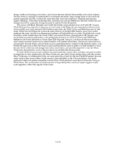
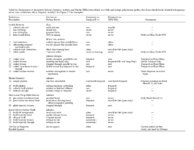
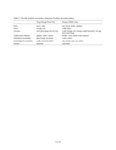
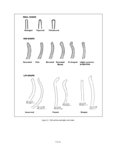
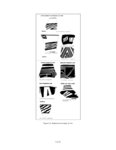
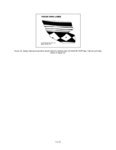
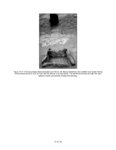
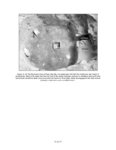
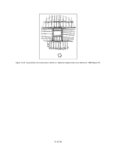
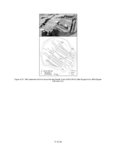
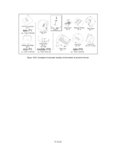
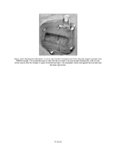
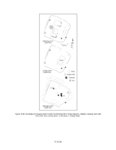
Show Stephen called the structure an "outlook house," and added that one woman built her outlook "right on the edge of the orchard" (1936:285); thus both men and women could be involved in field house construction and use. This isn't surprising when one notes Stephen's earlier description of spring house repair and construction as involving both genders, with men doing the "heavy lugging" of stone and timber, and women doing the roof and wall thatching and plastering (1936:284). In his dissertation Moore (1979) went to great lengths to report the ethnographic range in field house architecture, associated artifacts and activities, seasonality, function, location, and social makeup. These included the lengths and periods of use for field houses of various cultures during each growing season, termed temporal patterns of use (1979:268). Of particular interest was just how intensively some field houses (or "ranchitos" as they were known in the Eastern Pueblos; Moore 1979:270) were used. Reference upon reference has some variation of the following: "A generation ago and earlier, almost every family occupied a ranchito for extended periods, if not for the entire growing season" (Lange 1959:42, speaking of Cochiti Pueblo in Moore 1979:270). It is possible that the "ranchito" was more analogous to Moore's "summer village" (1979:135), but consider Hack's comment (1942:28) that Hopi field houses at distant fields were used during the entire summer, or Hoover's observation that "someone goes out to the fields every day, or some go and stay out for a number of weeks but return to the villages for dances and for the winter" (1930:434 in Moore 1979:269). At the very least, field houses are occupied continuously during the period between crop maturation and harvest-"these huts were often occupied by the entire family during the period of roasting green corn and during the main harvest" (Forde 1931:391, on the Hopi in Moore 1979:269). Navajo field structures can also serve as analogs for potential prehistoric counterparts. The works by Spencer (1969) and Jett and Spencer (1981) focused on the architecture of Navajo dwelling types, with an emphasis on diagnostic, major, and minor features of attributes such as construction materials and techniques, walls, floors, doorways, and the like. Under the category of "Temporary and Summer Dwellings" they listed the following: windbreaks, conical forked-pole shades, lean-to shades, and flatroofed shades (ramadas). Of interest to the present study are their descriptions of ramadas and, perhaps, forked-pole shades: A conical forked-pole shade is essentially the Navajo version of the northern Athapaskan "conical, pole-and-bark-covered hut with a tripod foundation" (1981:36-37), which might elsewhere be termed a wickiup. Small poles, or leaners, are placed between the main tripod poles and covered with brush, boughs, bark, and such. The shade forms a circular, oval, or possibly D-shaped plan. "The ramada or flat-roofed shade consists of a flat roof of poles or boughs supported on stringers running between four vertical posts" (1981:41). The structure can be unwalled or walled with almost any available material, but typically poles and brush or boughs are used. It is generally rectangular in plan, but other shapes are known. The roofs are not usually earth covered, but can be used for drying and storage. Ramadas are used for both summer living and as shelters for guests at ceremonials. Russell (1978:35) identified three types of Navajo field houses in the Klethla Valley of northern Arizona based principally on differences resulting from length of occupation: (1) occupied during an entire field season, (2) occupied during periods of peak agricultural labor, and (3) occupied for perhaps a week or less at harvest time. Structural variation correlated with the length of time a field house was occupied (or was intended to be occupied), which has a direct bearing on the permanence of the structure. As might be expected, "the longer a site is to be occupied, the more labor is expended on the construction of its structures and the sturdier they are" (Russell 1978:36). This parallels Kent's (1992) model about anticipated mobility. Ramadas, circular brush shades, and even hogans belong to the first type-structures occupied for an entire growing season. Circular brush shades constitute the primary shelter for intermittent occupations, and lean-tos, windbreaks, and camps without structures are used for only occasional visits. Regarding associated remains, Russell identified two aspects of field house use that can produce unexpected patterns in the archaeological record. The first is year-to-year reoccupation such that field houses, even comparatively humble dwellings, can have associated trash areas (Russell 1978:37-38). Tools and materials, however, are usually few, and most usable items are returned to the winter residence; in some cases, items are cached, often in trees. Broken and worn-out tools are discarded at the field house. The second pattern is that corn roasting pits and storage pits (for shelled or whole-ear corn and squash) are often associated with field houses or located next to the field itself (1978:38), with each family utilizing from one to four storage pits (Hill 1938:42-43). The pits are hidden, but unobtrusively marked to aid in relocation. The storage pits are visited several times during the winter to restock food supplies. Thus preserved, stored goods can last up to 2 years if kept dry (Hill 1938:45). Field house placement on the landscape is also worth mentioning. The Navajo ideally located their temporary structure within 100 m of the field, preferably on top of a low rise, ridge, or knoll (although V.15.38 |