| OCR Text |
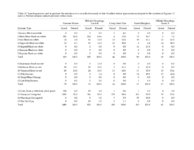
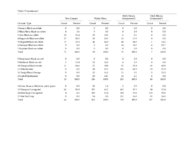
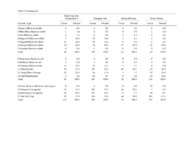
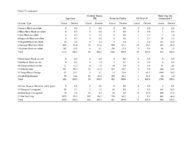
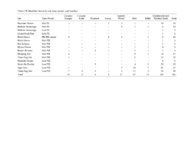
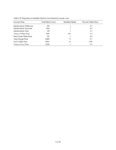
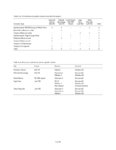
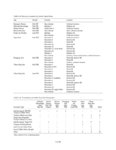
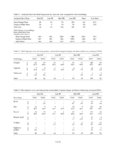
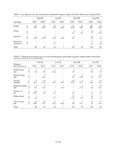
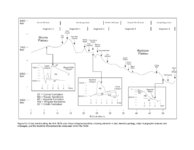
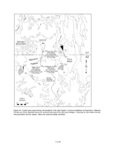
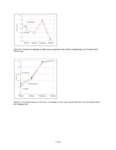
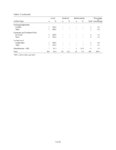
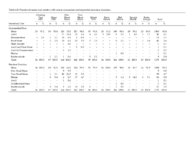
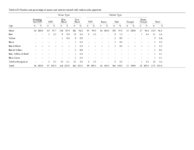
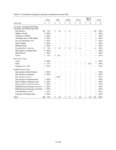
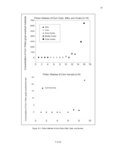
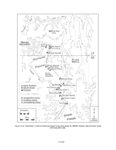
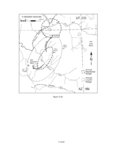
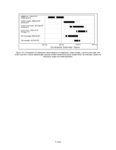
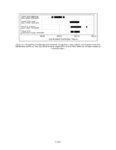
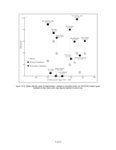
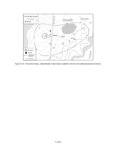
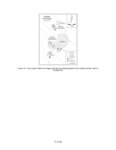
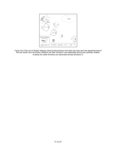
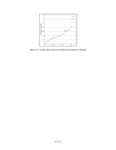
Show Volcanic Ash Temper in Ceramic Studies During the Pueblo II and early Pueblo III periods throughout the Kayenta region, both grayware and whiteware were typically tempered with sand or crushed sandstone. This strong trend makes classification of sherds to ware a simple task, but unfortunately does not allow us to define ceramic production systems in much detail. The majority of geologic formations in the Kayenta region are sedimentary in origin, and most contain significant exposures of sandstone. Although there are distinct differences in the grain size and associated inclusions on a broad scale, it is extremely difficult to identify sand temper as deriving from a specific geologic formation or location (Garrett 1986). Detailed mapping of petrofacies related to variations in regional geology has proven useful in other regions (e.g., Heidke 1988; Miksa and Heidke 1995), but until similar thorough mapping is undertaken in the Kayenta region, there is little hope of sourcing sand-tempered whiteware to specific production locales. Volcanic ash was initially used as temper during the late Pueblo II period. By AD 1100 its use was well established and ash-tempered pottery became widespread, albeit in small quantities. Based on frequencies of ash-tempered whiteware through time, Geib and Callahan (1987) concluded that whiteware production using volcanic ash initially took place in the Klethla Valley. Through the early Pueblo III period, ash-tempered ceramics comprised only a small percentage of assemblages away from the Klethla Valley, but beginning in middle Pueblo III times, high frequencies are found in Long House Valley and on the Shonto Plateau as well as in the original manufacture center.3 The inclusion of volcanic ash as temper in whiteware offers new opportunities for identifying ceramic production areas, as this research indicates. Volcanic ash deposits in Blue Canyon might argue for production toward the south end of Black Mesa, although it seems likely that additional deposits of the same material could occur along the west or south edges of the mesa. The presence of the small deposit near Tonalea, in fact, offers evidence that Blue Canyon is not the only source of the ash. The origin of the ash far to the west of the Kayenta region suggests that the ash would have blanketed the entire region for a brief period after the eruption. Subsequent reworking of the fine ash by wind and water would have stripped it off most of the ancient surface, concentrating it into protected topographic situations. Whether ash-tempered pottery was produced only in the Klethla Valley is an important question, and one that is not easily answered. It seems that manufacture began in and was dominated by this area into the late Pueblo III period, probably until the region was abandoned. During the middle Pueblo III period, however, there was a spike in the use of ash temper in Long House Valley and on the Shonto Plateau. No suitable clay sources occur in the latter area, but whiteware production would be possible in Long House Valley. To address patterns of ceramic manufacture, Stoltman et al. (1992) studied plainware and ashtempered decorated sherds from sites in Long House Valley and the Klethla Valley. Their ICP analysis of paste produced four distinct groups, divided into plain and decorated wares by site (Stoltman et al. 1992: Figure 6.1). The strongly patterned chemical data were interpreted as indicating that each site was producing both plain and decorated wares. The authors hypothesized that the four compositional groups represent four "recipes" for pottery, with different sources of clay and temper at each site for each type of pottery. From this conclusion they surmised that interaction between sites in the adjacent valleys was limited, and perhaps contentious. While it seems likely that sites in both Long House and Klethla Valley produced pottery during the Pueblo III period, the slight horizontal shift evident in their graphs (Stoltman et al. 1992: Figure 6.1) may simply reflect admixture of temper residue with the clay in the solution used for ICP analysis. At this point, there is inadequate evidence to verify whether dual production areas in adjacent valleys existed or whether ceramic manufacture was centered in the Klethla Valley but involved use of distinct clay and temper sources by potters from different villages. A lump of volcanic ash found at the other end of the Klethla Valley likely reflects the whiteware production system in the valley (Clark 1993). Only part of the late Pueblo III component of the Mud Wallow site-a middle-late Pueblo III habitation-was excavated, but the low frequency of ash-tempered ceramics at the site, consisting of only 2 percent of the whiteware assemblage, argues against manufacture of ash-tempered ceramics at this location. This site is only 10 km from the known ash deposits in Blue Canyon, and it is intermediate between that source and the sites in the central Klethla 3Production areas do not always correlate with high concentrations of specific ceramic types, as demonstrated at sites in Chaco Canyon (Toll 1981, 1984). The Chaco Canyon situation is quite distinct from the Kayenta region, however, due to the more complex and centralized nature of the Chacoan social and political systems. In contrast, communities in the Kayenta region were probably more autonomous and were not bound by a centralized political entity. Although larger and more integrated communities appeared after about AD 1250, there is little evidence of centralized political or ceremonial control (Dean 1996). V.4.16 |