| OCR Text |
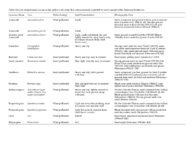
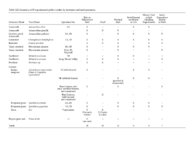
Show especially in drought conditions; settlement shifts can happen for this reason alone, with residential camps moved to reliable sources with placement relative to energy sources taking second priority. Hunter-gatherers coped with spatial and temporal differences in resource distributions by various forms of movement, either as entire family groups or in some subset thereof (Binford 1978, 1980; Kelly 1983; Thomas 1985). Binford's (1980) well-known forager-collector continuum is one common way of conceptualizing variability in mobility organization. Although called a continuum, and despite Thomas's (1983: 17) claim that "any given group of hunter-gatherers can be characterized as residentially mobile, logistically mobile, or as some mix of the two," in a very real sense the two ends are mutually exclusive at any single point in time, because consumers are either moved to resources (residential mobility) or a small group of providers move resources to consumers back at home (logistic mobility). The continuum part refers to the temporal dimension, either annually or on larger temporal cycles, "since ecological requirements sometimes are such that a given group must shift seasonally and/or annually along the foraging-collecting continuum" Thomas (1983: 17). It is highly doubtful that a strict collecting strategy with no or low residential mobility was a realistic possibility on the Colorado Plateau until the introduction of domesticates. Prior to the introduction of domesticates, subsistence resources were probably never sufficiently abundant, predictable, and concentrated to allow the establishment of long-term residential camps. Archaic populations probably used a largely foraging strategy of residential mobility with many temporary residential camps widely distributed across the landscape to effectively exploit critical bulky subsistence resources that were differentially distributed in both space and time. Site Types General Considerations Foraging theory has nothing specific to say about how hunter-gatherers might structure and organize their settlement behavior, perhaps since animals other than humans have a very simple system-either an endless series of one-night stands, or, for some species, the use of a temporary home base (nest or burrow) during the breeding season. Observations of chimps in the wild reveal that they operate under the principle of endless one-night stands all the time (e.g., Goodall 1986) and this may have been the original pattern for human ancestors as long as the environment stayed homogeneous rather than patchy in both space and time. Once resources became clumped in space or time, including water resources, then there may have been incentive to stay in one place for some duration before moving to the next patch. Male provisioning could have played an important role in this as well. The idea of male provisioning and repeatedly used home bases in human evolution was brought to the fore by Glynn Isaac (1978a, 1978b) to account for localized concentrations of early hominid artifacts and bones separated by relatively empty space. Assuming that natural forces have not concentrated the remains or created artificial partitions, the base camp inference was basically one of simple analogy to ethnographic descriptions of camps such as Yellen (1977) provided for the San of South Africa. Using such a modern analogue to interpret the remains of ancestral humans is potentially suspect, but even in more recent archaeological cases, where we are dealing with anatomically and behaviorally modern humans, simple analogues should be treated cautiously. There are two basic ways of making site type assignments: (1) by proceeding inductively to group or cluster sites based on their characteristics (usually a partitioning of a continuum of variability) and then assigning such groups to settlements types (assigning behavioral meaning), or (2) by starting with statements about what the archaeological patterning should be for certain activities and settlement organization (logistic or forager) and then assessing the degree of fit for individual sites. Ethnographic observations on the range of behaviors observed in the world are critical to either approach, but in the former the information is used on more of an ad hoc basis to infer what the groups or data partitions might mean in terms of settlement behavior. In the latter approach, well exemplified by Thomas's (1983) research in Monitor Valley of the Great Basin, ethnographies help to inform what we might expect to see in the archaeological record for given activities. Either way there is a linkage problem, something that Thomas discussed at great length in his 1983 report. Because of this linkage problem, he cautioned with regard to site types that, "it seems preferable to exercise a degree of interpretive restraint than to blither on about what simply is not so" (Thomas 1986a:243). Although mindful of the need for circumspection, a site typology has utility for providing an initial basis for describing and perhaps understanding settlement behavior. A key assumption when considering site types is the anticipated extent of settlement differentiation, which immediately brings to mind the now commonplace contrast between foragers and collectors (Binford 1980). Following Yellen's (1977:77-84) arguments about hunter-gatherer intercamp V.13.32 |