| OCR Text |
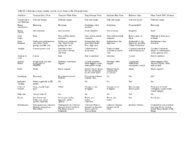
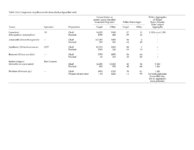
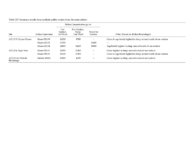
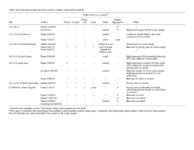
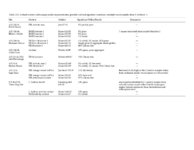
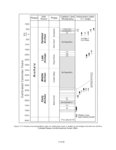
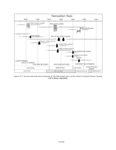
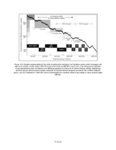
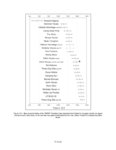
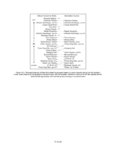
Show Rainbow Plateau appears to be no older than about 400 cal. BC. Further south in the Kayenta region this same Basketmaker II adaptation and cultural assemblage may be as old as 800 cal. BC (cf. Smiley 2002b). Also during this interval there continued to be an Archaic adaptation (continued foraging) along with a cultural assemblage that appears distinctive from Basketmaker II remains. This terminal Archaic lifeway lasted until about 800 cal. BC on the Rainbow Plateau with the possibility for sporadic Archaic use until about 400 cal. BC. The Basketmaker components excavated for the NMRAP are reported in Volume III, whereas Volume II presents information on the Archaic components. The introductory chapter to Volume III also presents information on unreported Basketmaker II sites that were tested or excavated in the general NMRAP project area by earlier researchers. This was done in order to provide the fullest possible interpretive context and database for understanding the Basketmaker occupation of the northern Kayenta region. CULTURAL-TEMPORAL SCHEMES Much has already been said about cultural-temporal schemes while trying to adequately define what Basketmaker II means for the NMRAP. Nonetheless, some additional points merit discussion. Various researchers have devised different phases to describe what is becoming an increasingly long interval for Basketmaker II. Colton (1939) created the term White Dog focus (or phase as it is commonly known these days following Gladwin's [1939] terminology) with reference to the Basketmaker II remains from the Kayenta region unearthed and described by Kidder and Guernsey. The temporal parameters of this phase were undefined on the early end, but often placed at about the time of Christ, with an approximation of AD 500 on the late end based on tree-ring dates from sites with early pottery. Lipe (1967, 1970) extended this phase designation to Basketmaker II remains of the Red Rock Plateau north of the San Juan River and outside the traditionally defined Kayenta core. When Lipe did this there was still a near total absence of chronometric dates;4 thus the age of Basketmaker II remains continued to be largely assumed. Subsequent work by Lipe and RG Matson on Cedar Mesa led to the formulation of the Grand Gulch phase, a late Basketmaker II pattern represented on Cedar Mesa by open pit house dwellings and heavy dependence on farming-the adaptation appears to have emphasized dry farming on the mesa top (Matson 2006a provides an overview). Dating of the Cedar Mesa phase was based on a series of radiocarbon and tree-ring dates (see summary in Matson 1991: Table 3 and sidebar of pp. 90 and 92) and placed at about AD 200-400 (uncalibrated). Matson ultimately came to contrast this phase with an earlier Basketmaker II adaptation that emphasized farming and settlement in the canyons where rockshelters were used for living and storage; this he termed the White Dog phase following Colton and Lipe (Matson 1991:122-123). This phase was seen as preceding (ancestral to) the Grand Gulch phase. The key aspect in drawing this distinction was Smiley's (Smiley et al. 1986; Smiley 1994: Table 1) direct radiocarbon dating of Basketmaker II remains from the Kidder and Guernsey type sites of the Marsh Pass area. This effort showed that many of the remains previously suspected to postdate the time of Christ were actually earlier, as old as about 600 cal. BC. Thus, Colton's White Dog phase became the early portion of the Basketmaker II sequence wherever the western variant of Basketmaker II culture was recognized: the Kayenta region, Cedar Mesa, the Red Rock Plateau, and Kanab. In the Kayenta region proper, the BMAP project proposed the Lolomai phase as the local manifestation of Basketmaker II on northern Black Mesa (Gumerman and Euler 1976:164-165). Though initially based on very little data, by the project's end 35 Lolomai phase sites had been excavated, providing a detailed picture of open Basketmaker II settlements for this one portion of the Kayenta region. The history of dating for this phase has been complicated but in short, after a decade of thinking that it spanned some 1100 radiocarbon years, from roughly 2800 to 1700 BP, Smiley (1985) demonstrated that the bulk of all radiocarbon assays for the phase were erroneous, resulting from the dating of old wood. Based on six direct dates on corn from six BMAP Basketmaker sites, Smiley argued that the phase actually had a duration of just several hundred years during the first part of the Christian era, with the interval of 1900 to 1600 cal. BP (ca. 50-350 cal. AD) given in the final summary report (Smiley 2002b:50; also Smiley and Ahlstrom 1987:219). Smiley, like Matson, distinguished between the open mesa-top settlements of the Lolomai phase and the earlier rockshelter-occupying Basketmaker II of the Kayenta region, and likewise adopted Colton's term White Dog phase as the referent for this early expression: "I continue to apply the term, White Dog phase, to the ‘classic' Basketmaker II occupation manifested in the rockshelters of the Marsh Pass region" 4 The single 14C date for the White Dog Phase on the Red Rock Plateau was 1700 ± 80 BP (given as AD 250 ± 80 in Jennings [1966:34], see Sharrock et al. 1963 for the site description). V.14.5 |