| OCR Text |
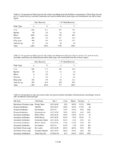
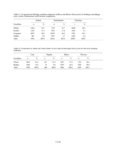
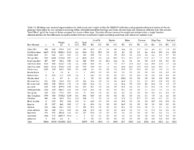
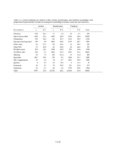
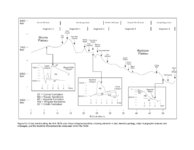
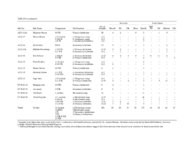
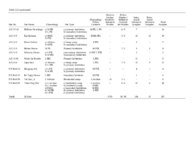
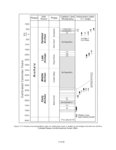
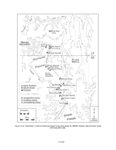
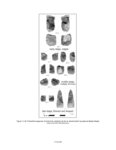
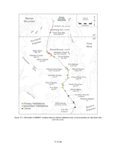
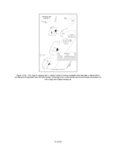
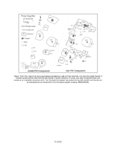
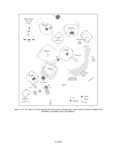
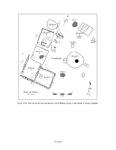
Show Plateau there are few residential sites with ceramic assemblages as early as Hammer House and Hillside Hermitage; in this area the earliest sites, such as Small Jar Pueblo, appear to date to the late Pueblo II interval or Sosi-Dogoszhi ceramic period, which has an estimated temporal span of roughly AD 1100- 1115, supported by noncutting tree-ring dates (Lindsay et al. 1968:134; Harlen and Dean 1968:381). It is perhaps from the early Pueblo II "founding" communities of Piute Canyon that the occupants of the middle Pueblo II settlements of Hammer House and Hillside Hermitage are descended; consequently they are situated within relatively close proximity. A simple shift in settlement organization from several multi-household early Pueblo II residencies to more numerous single nuclear household examples might account for sites like the two reported here. Whether or not such societal reorganization occurred, residential site location close to upper Paiute Canyon may also have been prompted by a desire to farm in diverse locations, both on the canyon floodplain using irrigation or subirrigation (high water table moisture) and in the washes and sand flats on the southeast portion of the Rainbow Plateau, thereby reducing the risks inherent with relying on food produced from a single field setting. The extensive use of Owl Rock chert for flaked stone tools and debitage at both settlements seems indicative of frequent movement in and out of Paiute Canyon where outcrops of this material are located (at Hammer House 90% of the debitage and 85% of the core/nodular tools are of Owl Rock chert). The settlement-subsistence strategies that involved these sites might have involved cycling at some periodicity between canyon farm fields and habitations and other fields and habitations on the rim and adjacent plateau. This said, these two primary residential sites occupy different environmental niches. Hillside Hermitage is not only further away from Piute Canyon, but is situated at the confluence of two important washes that drain the highlands on the southeast edge of the Rainbow Plateau, a location that is still farmed today by Navajo families and that Basketmaker farmers had initially exploited more 2000 years ago (the Basketmaker II site of Kin Kahuna is located at this place-see previous chapter). Hammer House, in contrast, is situated far closer to Piute Canyon and not adjacent to such an ideal farm setting. Both aspects could account for the lower incidence of Owl Rock chert at Hillside Hermitage. The nature of the food storage facilities at both of these middle Pueblo II habitations is worthy of comment because in both cases there were no obvious food storage rooms or granaries. This does not preclude the use of other structures for food storage, but specially designed structures for this purpose are not evident at these sites. This seems significant since the Kayenta Anasazi have a much longer tradition of constructing granaries, going back at least to Pueblo I (Dinnebito Phase on northern Black Mesa) and even earlier if Basketmaker III slab-lined cists are considered. The specialized storage features that are evident at these sites are large subfloor pits that emanate off the kivas at both sites or the jacal living room at Hammer House. Although these features cannot be considered "hidden" to the same extent that exterior Basketmaker II cache pits were hidden, they still suggest a concern for secreting away food stores to avoid their plunder when no one was around (see Gilman 1987). This seems to imply more residential mobility by the occupants of Hammer House and Hillside Hermitage than was true at some other Kayenta sites during middle Pueblo II, such as those on northern Black Mesa, an occurrence that might fit more of a "frontier" situation where families are expanding out and diversifying their land holdings (experimenting) but not fully committed or restricted to living in a single location. If the groups using these sites originated from Piute Canyon then perhaps the smaller volume of storage at the more distantly located Hillside Hermitage (ca. 1 cu m) makes sense relative to the considerably larger storage volume at Hammer House (ca. 3 cu m) in that only seed for next year's planting might have been secured in the former, whereas the latter also included storage of food for over-wintering (more will be said about Kayentan mobility later). Tipps et al. (1989) reported a primary habitation (AZ-J-19-12) in the southern portion of the N16 ROW, essentially contemporaneous with Hammer House and Hillside Hermitage, that is remarkably similar in overall layout and size. The report designates the site as early Pueblo II but the ceramic assemblage is herein designated as middle Pueblo II. The site consists of two living rooms, a subterranean circular storage room, and a kiva, providing a total roofed space of about 21 sq m. The kiva exhibits numerous floor features, including a storage pit (a vault in the report), but with nowhere near the capacity of the NMRAP sites. However, AZ-J-19-12 had a subterranean, masonry-lined room with a potential volume of 2.7 cu m, considerably greater capacity than Hillside Hermitage but comparable to Hammer House. This subterranean storage feature is of a type that could easily have been concealed while still being more rodent and insect secure than a storage pit. Located on the high divide between Gishi Canyon on the west and the upper reaches of an arm of Begashibito Wash on the east, this site also occupied a setting conducive to a settlement strategy that might have involved seasonal cycling between canyons and plateau rim, with primary habitations perhaps maintained in both settings. Late Pueblo II. This is an interval of Puebloan population expansion throughout the Kayenta region V.15.27 |