| OCR Text |
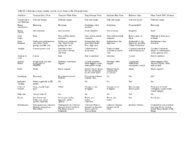
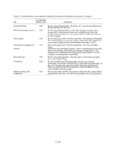
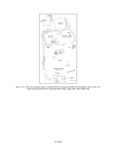
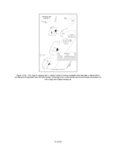
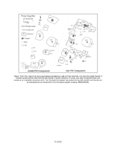
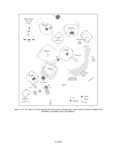
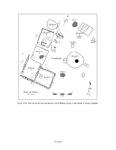
Show sometimes in or immediately adjacent to the field itself; Russell 1978:38; see also Hill 1938 and Spencer 1969). And, "summer sites [tend] to be located near arable, unforested, alluvial, flood-plain lands along valleys" (Rocek 1988:525). This pattern of locating field houses immediately adjacent to if not within an agricultural field is predictable on the basis of foraging theory since a transitory home established for the purpose of food production needs to be located so as to enhance the efficiency of the associated work, otherwise why bother? A good answer is to legitimize claims of ownership or use-rights to fields, as Kohler (1992) has argued. Since field houses should thus be explicitly located next to farmable land, secondary habitations situated in other than farmable places are not likely to be field houses. Depending on the environment, making such a judgment might be easy or hard. In the Kayenta region, including on the NMRAP, archaeologists are perhaps encouraged in making the field house inference when the site under consideration overlooks a modern Navajo field. Several examples of this were observed. Of course propinquity to modern fields does not necessarily have implications for past situations, although such an inference is almost impossible to avoid. Yet traditional farmers are few and far between these days, and even so, past practices may have been different such that retrodicting what was farmable based on current evidence is suspect. The well-used and favored farming situations today were likely similarly so in the past, but what about the less-used or unused areas? Besides making simple analogies for the functional role of settlements, the ethnographic record can also serve as a source of information for modeling expectations for the archaeological record concerning site seasonality and residential mobility more generally. Shirley Powell (1983) and Susan Kent (1992) among others have done this, and their two studies will provide a useful background context before delving into the NMRAP sample of secondary habitations. Powellʼs Black Mesa Study. Powell (1983) was concerned with the issue of residential mobility, which entails the seasonality of small sites rather than with field houses per se. The ethnographic foundation for her analysis included the Pai and Navajo from Arizona, forager-farmers and herder-farmers respectively, but excluded the Hopi or other Puebloan groups, who, she explained, "live in very large villages- relative to the size of northeastern Black Mesa settlements-and for this reason are an inappropriate analog" (Powell 1983:54). Although the scale of Kayenta Anasazi habitations, even at their largest, is miniscule compared to modern-day Hopi or Zuni villages, aspects of field sites old and recent are probably comparable. But Powell's more central concern with using the Hopi/Zuni analog was perhaps their degree of reliance on farming and evident long-term sedentism, both aspects that she doubted were applicable to the Pueblo I and Pueblo II Kayenta Anasazi on Black Mesa. One, however, does not preclude the other: the Kayenta Anasazi could have been heavily reliant on field produce (which is what stable isotope analysis reveals; e.g., Coltrain et al. 2007) yet still have had a modest degree of residential mobility, perhaps not intra-annually but at least inter-annually or on some larger time scale, one perhaps largely dependent on the unpredictable vagaries of climate. Powell's conclusions regarding prehistoric cultural change on Black Mesa were later criticized by Plog (1986b), but the data on Navajo field houses may still be useful for modeling some expectations for the patterning of prehistoric remains. Powell (1983: Table 42) presented several expected material culture patterns for Anasazi summer habitations that could easily be seen as applying to our secondary habitations generally or to field houses specifically: less interior habitation area, more exterior habitation area, more total site area, smaller structures, located near arable upland land, fewer interior hearths, more exterior hearths, and lower artifact density. Powell determined that some of the variables covaried to a greater or lesser degree with site type and season of use. We generally agree that structures used in the summer while tending fields should generally have less interior space than winter houses, but not for the reasons that Powell suggests-group size is a critical variable as well as the intended uses of interior space and the frequency of such use. Field houses might well have been occupied by smaller groups-portions of families- compared to winter houses, and a smaller range of activities likely took place in summer houses simply because one could comfortably work outdoors. Her values for Navajo sites ("sites with interior areas less than 25 m2 are likely to be summer-occupied," Powell 1983:77) have little relevance for Kayenta sites, where all interior space tends to be quite small. The total interior space for the NMRAP primary habitation of Hymn House is just 12 sq m (see Figures 15.31 and 15.32). Still, this floor area is far more than seen at secondary habitations because they generally consist of single structures whereas Hymn House as the smallest sort of primary habitation comprises three rooms of different functional type, something not generally true of secondary habitations. Naakai Hooghan, the largest NMRAP secondary habitation, has 13.6 sq m of floor space, but since the structures at this site are probably not all contemporaneous, the floor area in use at any one time was probably less than 9 sq m. The floor area of the Pueblo II component at Hillside Hermitage, a secondary habitation with two functionally V.15.39 |