| OCR Text |
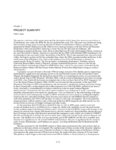
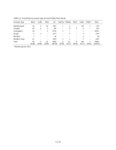
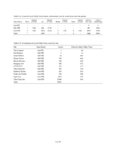
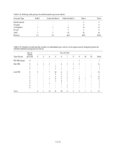
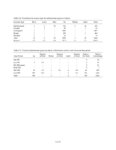
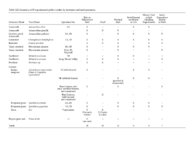
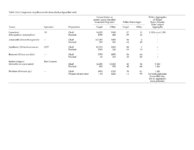
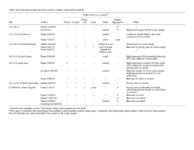
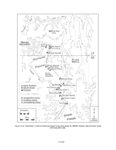
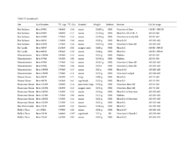
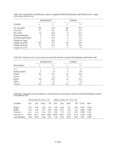
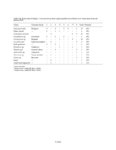
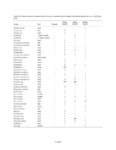
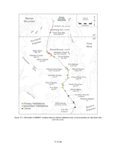
Show appear on Black Mesa. Orange-firing clays that provide likely sources for Tsegi Orange Ware appear in lower Piute Canyon (Chinle Formation). Some of these can be fired to a light gray color in a neutral to reducing atmosphere and a light orange to tan color in an oxidizing atmosphere, but no white-firing or light buff-firing clays were located. If buff-firing clays therefore are not available on the Rainbow and Shonto Plateaus, we can be certain that Tusayan White Ware and Tusayan Gray Ware, which oxidize to a light buff color, were imported. We can also argue that potters living on the Rainbow Plateau could have made Tsegi Orange Ware from clays obtained not far away in Piute Canyon. Like clays, the usefulness of temper analysis in archaeological research is dependent upon documenting what materials occur where in the geologic record. Past experience has shown that it is best to field-sample for temper after obtaining a good idea of what rock types were actually being used as pottery nonplastics. The process of sourcing temper is similar to that of sourcing clay, in that possible sources are compared with what is actually seen in ceramic thin sections. We sampled geological deposits in and around the study area in search of (1) the coarse angular quartz found within Tusayan Gray Ware, common on the Rainbow Plateau during Pueblo II but less frequent with the advent of Rainbow Gray production during Pueblo III, (2) the white-matrix sandstone used in some light-colored corrugated sherds that otherwise appear to be Tusayan Gray Ware, (3) the sandstone temper used in Rainbow Gray, a dark-paste utility ware (Callahan and Fairley 1983), and (4) the fine volcanic ash used to temper some Tusayan White Ware pottery (see Chapter 4). The spatial and temporal range of production of Rainbow Gray remains undefined because studies prior to Callahan and Fairley (1983) either did not recognize Rainbow Gray as a distinct type or treated some of it as a variety of Tusayan Corrugated. Callahan and Fairley (1983) suggested that Rainbow Gray is specific to the Navajo Mountain area in the late Pueblo III period but they did not have the advantage of data from a north-south transect such as N16. We found sherds that meet their criteria for Rainbow Gray in nearly all Pueblo III sites in the N16 Segments 3-6 study area, with increasing abundance in northern and late sites. Does Rainbow Gray represent development of a new technological complex in the Navajo Mountain area or is Rainbow Gray simply a locally produced analog to contemporaneous Tusayan Gray Ware types made elsewhere? We compared surface treatment of a sample of about 1100 utility sherds, and shapes and dimensions of whole vessels, to reveal whether selection of clays (high vs. low iron) and temper (sandstone vs. quartz sand) are the only differences between Rainbow Gray and contemporaneous Tusayan Gray Ware types, or whether many features differ, indicating a separate technological system. Understanding the source, technology, and organization of production of ash-tempered Tusayan White Ware is potentially significant in understanding long-term Puebloan history, because this pottery appears to signal a key phase in the developmental sequence leading through other fine-paste whiteware pottery in the Kayenta area, up to the production of Jeddito Yellow Ware in the fourteenth-century Hopi area (see Adams 1991; Hays 1991; Smith 1971; Upham 1982). Volcanic ash temper occurs in some Tusayan White Ware pottery at many sites in the N16 ROW. Volcanic ash deposits are not widely distributed in the Kayenta region. Geib and Callahan (1987) suggested that ash-tempered Tusayan White Ware was produced in the Klethla Valley, well south of the project area, and traded to Navajo Mountain and other areas. Analysis of the N16 ceramics (see Chapter 4) has determined that the temper of some Tusayan White Ware found in the N16 ROW matches the ash source at Blue Canyon, in the southern Kayenta region, and some does not. No ash sources were located anywhere near the project area, and no other ceramic wares in the ROW contain ash. Slips and paints are moderately rare occurrences in geologic deposits and thus are often highly valued and widely traded (Arnold 1981, 1985). Consequently, materials used for decoration are not as reliable as clays and tempers for identifying manufacturing zones. Knowledge of their geologic outcrops and physical or chemical characteristics is important for understanding ceramic technological traditions, and potentially for understanding trade relationships between the Rainbow and Shonto Plateau inhabitants and residents of other areas. For these reasons samples of minerals that could have served as clay slips and mineral paints were collected and examined when found, but they were very rare. The only specific sampling for slips to be conducted during this project was for the limonitic clay used as slip and paint in the production of Tsegi Orange Ware. If this substance was locally procured, it would not only have been important in ceramic manufacture, but would also have been a possible trade item. Samples of geological deposits in the project were compared with slips and paints on pottery from the sites. If red pigment is nonlocal but is used on local paste, then it is likely that the color red on pottery was of sufficient cultural importance to warrant its import, probably at some cost in trade goods, or in the travel time necessary to procure it directly. Due to time and budget constraints, neither optical petrography nor chemical analyses were V.2.9 |