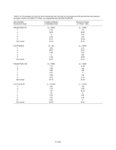
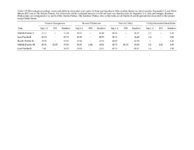
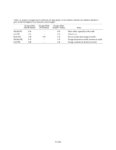
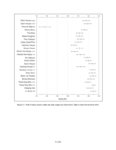
| OCR Text |
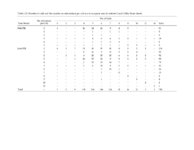
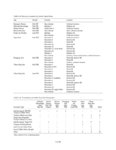
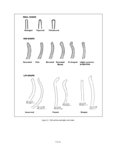
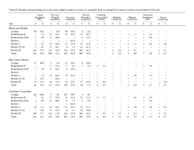
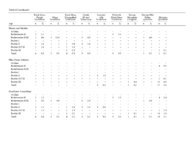
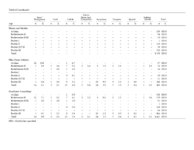
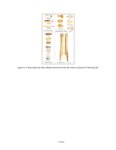
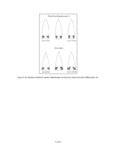
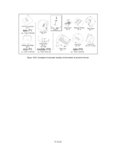
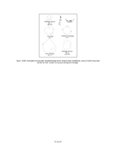
Show manufactured into an elliptical basin worn by rotary (circular) and reciprocal (back-and-forth) mano strokes. Based on the size of the basin and the type of stroke used it is clear that only one-hand manos were used with basin metates. Slab metates, also sometimes referred to as flat metates, had relatively flat grinding surfaces that extended across an entire (or nearly an entire) tool face. Use-wear on these tools was predominantly from reciprocal grinding or elongated rotary grinding strokes. Slab metate grinding surfaces remained flat if manos of the same length as the width of the metate were used. When shorter manos were used a concave surface was worn on the metate. Trough metates had rectangular depressions that were worn through reciprocal grinding with manos. Usually two-hand manos were used on trough metates, and these manos exhibited wear on the ends where the manos had ground against the trough walls. Two trough metate subtypes were observed in the N16 assemblages: metates with open troughs that had borders only along the sides so that both ends of the trough were open and extended to the edges of the metate, and metates with three-quarter troughs, which had borders on both sides and one end. Other subtypes may have been present in the assemblages, but due to the fragmentary nature of most recovered metates none were recognized. Another metate type, not as common as the others, is the basin-trough, which has well-defined grinding troughs with a basin-like conformation-subrectangular to elliptical in shape with curving sides and a concave bottom. The troughs of basin-trough metates are usually narrower than those of other trough metates. Given their general widths, by default the manos used with basin-trough metates were one-hand varieties. These were almost always convex along the long axis. Like other trough metates, usewear on basin-trough metates resulted from reciprocal grinding with the manos. Mano Classes The two main morphofunctional types of mano-one-hand and two-hand-were further refined into 9 classes (i.e. subtypes) of one-hand manos and 10 classes of two-hand manos. Tools identified as manos that could not be further categorized were coded as indeterminate (mano NFS). There were also classes for manos that were unused blanks and for manos recognized as either a one-hand or two-hand type that could not be further categorized (i.e. one-hand NFS and two-hand NFS). There were two classes of one-hand cobble manos. Although sometimes dubbed "Archaic style" because they are often found at Archaic sites, these types of manos are not always recovered from an Archaic context. One-hand mano class 1 is an Archaic style mano consisting of cobbles, unshaped prior to use, that became beveled from use. One-hand mano class 2 was the same type of mano except that the tools had undergone some degree of pre-use manufacturing. Generally both classes were circular or ovoid in shape. Two other one-hand mano classes were "Basketmaker II style." Such a designation means that these types of manos are commonly found at sites dating to the Basketmaker II period, but are not necessarily limited to recovery from sites of that period. Both classes of Basketmaker II style manos were manufactured into their desired shape prior to use and both had rectangular, slightly convex crosssections across the width. One-hand mano class 3 consisted of Basketmaker II style manos ovoid in plan view, with one-hand mano class 4 being rectangular in plan view. Inclusion into one of the three other classes of one-hand manos was based on prior use. One class was for one-hand manos made from pieces of two-hand manos, another class was for one-hand manos made from pieces of one-hand manos, and the third was for one-hand manos made from metate fragments. In addition to the classes of two-hand mano blank and two-hand mano NFS, there were eight other subtypes of two-hand mano. Unlike some one-hand manos, all two-hand manos had been purposefully shaped prior to use, principally by pecking; grinding seems related to use rather than production. Also, all classes of two-hand manos included tools that ranged from rectangular to oval in shape. Two-hand mano class 1 consisted of manos that were relatively thin (approximately 2.5 cm or less) and had triangular or airfoil-shape transverse cross-sections. Thicker examples of essentially the same type of tool (greater than 2.5 cm) were classified as two-hand class 7. The distinctive shapes of the cross-sections resulted from the development of two adjacent grinding surfaces on the same side of the tool. Both Bartlett (1933:12,16) and Adams (1997:6) have provided excellent diagrams and explanations of the motor activity that produces these shapes during grinding. Most of the manos in these two classes were used on slab (flat) metates but with Pueblo II examples used in trough metates. Other classes of two-hand manos included those with rectangular transverse and longitudinal crosssections. Ttwo-hand class 2 was thin (approximately 2.5 cm or less) and two-hand class 3 was relatively thick. Two-hand class 4 consisted of thick (greater than 2.5 cm) two-hand manos with trapezoidal transverse cross-sections. Two classes contained manos with D-shaped transverse cross-sections: two- V.6.3 |