| OCR Text |
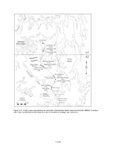
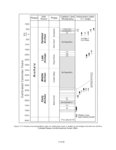
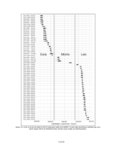
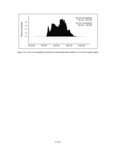
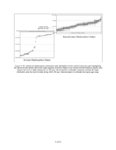
Show Basketmaker II period in the Kayenta region and the Colorado Plateau more generally. I hope that the truth to this claim is apparent in the information summarized in this chapter, even given the limited research topics that I explored. The detailed site descriptions of Volume III and the data generated by the various analyses should provide a useful reference point for some time to come. The NMRAP has provided the second largest sample of excavated open Basketmaker II sites within the Kayenta region, complementing and augmenting both geographically and temporally the data obtained by the BMAP for northern Black Mesa. This effort also provided evidence for the Basketmaker II-Basketmaker III transitional interval (see Geib and Spurr 2000), which is poorly known for much of the Four Corners region. The NMRAP excavation data, along with other evidence from the northern Kayenta region, informs about continuity during the agricultural transition. The robust radiocarbon record provided by the project for the Archaic and Basketmaker periods appears inconsistent with the notion of continuous settlement of the Rainbow Plateau during the interval when domesticates were introduced to the area. There is a several hundred year gap in the available dates, with no evidence of maize before the gap and abundant maize remains after the gap. The Basketmaker presence on the Rainbow Plateau appears shortly after about 400 cal. BC and evidently lacks local precedent. Some may see this as another strong case for a lack of continuity, whereas others might dismiss the evidence as inconclusive because of sample size limitations and other concerns. Sample size gives sufficient cause to be circumspect, in terms of both total number of sites excavated and types of sites; this is especially true for the late Archaic, but the sample of studied Basketmaker sites is quite good in both respects. Because of small sample size, it is conceivable that the project missed a large portion of late Archaic adaptive variability as well as remains that could show more continuity in settlement and adaptation during the agricultural transition than currently indicated. Yet, the current evidence in favor of discontinuity from Archaic to Basketmaker II is compelling and is backed by the findings from caves of the area. The nature of the archaeological record after the date gap reveals a profound change, one that is difficult to reconcile with autochthonous transformation of the local forager population in the northern Kayenta region. The nature of the change might be considered merely the expected effects of the increased sedentism that domesticates afforded (Wills 1995:217), but evidence for the transitional interval has yet to be found in the northern Kayenta region and would need to be compressed into an exceedingly brief temporal window. Compared to late Archaic sites lacking corn (those before the date gap), the Basketmaker II sites considered here reflect a marked departure in facilities investment, storage capacity, and building for permanence. This change appears to be more than one of degree; it seems to reflect an entirely new set of concerns or priorities that lay outside those of pre-agricultural late Archaic foragers in the region. The Basketmaker occupation of the northern Kayenta region is demonstrably related culturally to the Basketmaker occupation of the Marsh Pass-Monument Valley area in northern Arizona as well as the Grand Gulch-Cottonwood Wash area of southeast Utah. This chapter attempted to show this and to also make the case for cultural discontinuity between the Archaic and Basketmaker periods, focusing on nonperishable artifacts rather than the distinctive perishables that have so frequently been the focus of discussion about Basketmaker cultural distinctiveness. Tools used to fabricate such low-recovery objects as stone pipes or other artifacts can be quite informative since they are more likely to have higher recovery rates and to be disposed of in less specialized contexts. Domesticates appear to be no earlier than about 400 cal. BC in northern Kayenta region but both corn and squash have an earlier history of use in both the Marsh Pass-Monument Valley area in northern Arizona and the Grand Gulch-Cottonwood Wash area of southeast Utah. Smiley's (1994; Smiley et al. 1986) dating of maize from the White Dog phase type sites excavated by Kidder and Guernsey (White Dog Cave and Kinboko Caves 1 and 2) as well as from Three Fir Shelter (Smiley and Parry 1992) establishes that this domesticate was in common use by at least 600 cal. BC with earlier use indicated by a single corn date at about 1000 cal. BC from Three Fir Shelter. Even earlier use at almost 2000 cal. BC is possible if the outlier date from Three Fir Shelter is confirmed (see Smiley 1994:173), and this date is certainly supported by the Old Corn site (Huber 2005) in New Mexico. More recent dating of maize and squash from sites along Butler Wash (e.g., Smiley and Robins 1997; Michael R. Robins, personal communication 2000) also demonstrates domesticate use by at least 600 cal. BC. With an earlier agricultural transition in evidence to the southeast and east of the northern Kayenta region, it seems plausible that the first farmers on the Rainbow Plateau represented a local expansion of nearby groups shortly after 400 cal. BC. On northern Black Mesa, the earliest open-air Basketmaker habitations are dated to the first few centuries of the Christian era and are designated as the Lolomai phase. Smiley and Ahlstrom (1998:219) V.14.56 |