| OCR Text |
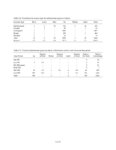
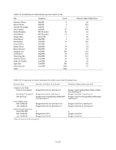
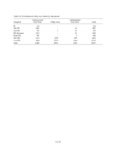
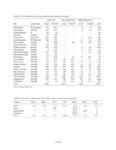
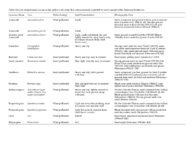
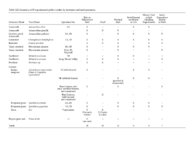
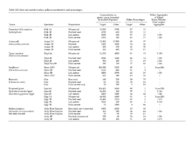
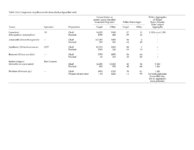
Show NMRAP secondary habitations; indeed, we have employed this term at several places earlier in this chapter. Yet, some of the NMRAP secondary habitations seem to have functioned for purposes other than tending fields and a generic term such as secondary acknowledges that possibility from the start, which is perhaps why other generic terms are used, such as limited activity/occupation sites, satellite sites, or seasonal habitations. Designating a site as a field house might seem to accord with intuitive, common sense notions of site and land relationships but today we might want to be more precise (see Sutton's 1977:30 remark concerning Pilles 1969). Not all secondary habitations are necessarily field houses, although all field houses are presumable secondary habitations. The Concept of the Field House. During the 1960s and 1970s as data recovery efforts shifted from substantial habitations, such as masonry pueblos, to more all-inclusive manifestations of prehistoric behavior under the duel influence of processual archaeology and CRM, excavation of seasonal or "nonpermanent" habitations became commonplace. Systematic surveys also documented how common such sites were, in some places outnumbering inferred "permanent" habitations (e.g., Anderson 1990). In the Kayenta region, the label "field house" is little seen in archaeological reports for projects that predate the 1970s (e.g., Anderson 1969; Ambler and Olson 1977), but field houses were beginning to be recognized and reported by the time of the CRM explosion of the 1970s and 1980s. When the Museum of Northern Arizona conducted data recovery along the Navajo Generating Plant coal haul railroad corridor between 1969 and 1972, for example, 33 excavated components were categorized as "temporary campsites," "seasonal field houses," or "field hamlets" (Stebbins et al. 1986; Swarthout et al. 1986). In 1976 Southwestern archaeologists convened the Small Sites Conference in Tucson, Arizona, to take a focused, synthetic look at the subject of seasonal sites, resulting in an edited volume by Ward (1978) that includes a historical review of prehistoric field houses and "small site archaeology" in the American Southwest by Pilles and Wilcox (1978). Isolated but important graduate studies of field houses began with Sutton's (1977) thesis followed by a more elaborate dissertation by Moore (1979) and the more recent dissertation research of Preucel (1990) and Lambert (2006). Sutton (1977:36) identified four primary criteria for field house identification: seasonality, size, the relation of the site to agricultural land, and the relation of the site to larger (permanent) sites. Sutton's (1977:39-41) seasonality criterion appears to have more to do with length of occupation, but he also made a distinction between field houses that are "special purpose sites" and "habitation sites." The former are temporary, utilitarian structures lacking hearths, trash, and evidence of domestic activity. The latter may have the full complement of domestic items if the "site was occupied for weeks or months at a time." The size criterion means they were small, with the assumption that a limited number of people occupied a field house (Sutton 1977:42). In addition, large-volume storage features would be unnecessary because most produce would be stored in the main habitation. Field houses should be located next to agricultural lands and away from the main habitation site: "field houses exist mainly to enable the farmer to exploit farmlands that are located away from the main site at such a distance as to make daily commuting inefficient" (Sutton 1977:43). Conversely, a field house may be situated near the main habitation "to aid in field observation" (Sutton 1977:43). Moore (1979) noted considerable variation in field houses (what he called "seasonally utilized farm structures"), and Sutton's criteria reflect this; they are useful, but at least two of them ("seasonality" and "relation of the site to larger sites") are so variable as to be difficult to apply. The problem of field house variability-i.e., when is a field house something else-has been addressed by several researchers, including Sutton and Moore. Fish and Fish (1978:51) stated that "the Southwestern situation seems sufficiently complex that no single term provides an appropriate designation for all small sites." Wilcox (1978:25-26) noted similar ambiguity, and cautioned that field houses can easily be confused with what he has called "farmsteads" and "hamlets." For example, what Sutton (1977:52) called a "farmhouse" is a type of "farmer's shelter" that Moore (1979:134) simply refered to as a "field house." Sutton's farmhouse attributes (1977:52-54), which essentially encompass those of Moore, consist of (1) evidence for a full range of domestic activity, (2) a main habitation room with 1-2 storage rooms, (3) a lack of ceremonial objects, and (4) palynological evidence "that reflects its major resource procurement activity" (most likely maize harvesting). "The behavioral and material trends described for field houses reach their epitome in the summer village" (Moore 1979:135). This may be why-30+ years after the Small Sites Conference-there are still no agreed-upon methods to reliably discern prehistoric field houses from other small site types, or to test alternative interpretations of use (McAllister and Plog 1978). Site descriptions and interpretations continue to rely on ethnographic inference to define field house form and function (e.g., Ward 1978b). For this reason McAllister and Plog (1978) rued the lack of interpretive models for small sites (including field houses), and performed tests of site type-artifact association that highlight the problems inherent in more intuitive V.15.36 |