| OCR Text |
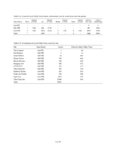
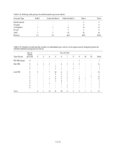
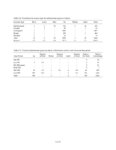
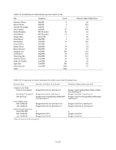
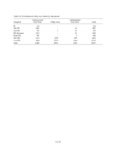
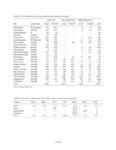
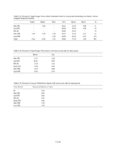
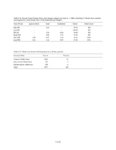
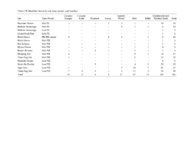
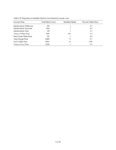
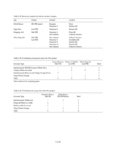
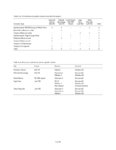
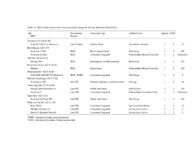
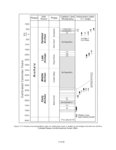
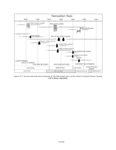
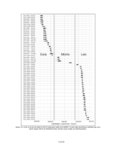
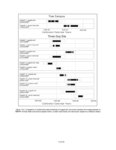
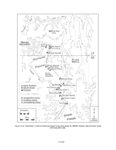
Show and beyond. Ambler et al. (1983) suggested, like many authors before, that the proliferation of late Pueblo II habitations across the northern Kayenta region (Rainbow Plateau, Piute Mesa, and Cummings Mesa) resulted from migration rather than simple population growth, an inference based on the number of settlements that appeared within a fairly brief interval and the evident lack of local antecedents for extensive populations during prior ceramic periods. In the Red Lake area, for example, one can point to Basketmaker III, Pueblo I, and early Pueblo II settlements but this is not the case for the northern Kayenta region. Early Pueblo II settlements of modest size occur in Piute Canyon, followed by small scattered hamlets in middle Pueblo II such as those considered previously, but these alone seem inadequate to account for the late Pueblo II habitations that are distributed across the entire northern Kayenta region-a migratory influx seems implicated. Dean et al. (1985) have characterized the late 1000s and early 1100s as a relatively warm and wet interval favorable to farmers, a time that might have encouraged population movement into areas near the lower fringe of the present pinyon-juniper zone. Such a climatic optimum could well have promoted the use of regions previously considered too marginal for settlement. The NMRAP sample does not adequately reflect the late Pueblo II population increase and spread since all sites dating to this period are classified as seasonal or otherwise limited-use habitations rather than primary residencies, such as represented by the middle Pueblo II sites previously discussed. Several late Pueblo II primary habitations lay partially within the N16 ROW but were excluded from data recovery either by avoidance or because no work was warranted on account of extensive prior disturbance or because the portion to be impacted was peripheral to the core residential area. Primary habitations from this interval are well known from the northern Kayenta region with two examples excavated, both at the northeast foot of Navajo Mountain-Small Jar Pueblo (Lindsay et al. 1968) and UTV-13-19 (Geib et al. 1985). Hewitt et al. (1989) reported a late Pueblo II primary habitation (AZ-J-19-3) lying largely within the southern portion of the N16 ROW on the Shonto Plateau. This site consisted of a mealing room, kiva, and a surface activity area that may have been covered by a ramada; other structures might have existed outside the ROW. Early Pueblo III. Early Pueblo III is characterized by the abandonment of certain areas such as northern Black Mesa, and perhaps even population reduction, occurrences thought to be directly related to environmental conditions inimical to farmers (e.g., Dean 1988; Dean et al. 1985). Dean (2002:122-123) has characterized the start of this interval as a "second-order interruption of the depositional trend … which was centered on AD 1150, [when] alluvial water tables dropped, and floodplains ceased accreting … [and] erosion, in the form of surface stripping and moderate channel incision, dissected the floodplain deposits." Dislocation of people is evident enough, but there was continuous occupation of several localities in the Kayenta region from late Pueblo II to middle Pueblo III (contra Berry 1982) across the early Pueblo III environmental downturn, including the Shonto and Rainbow Plateaus. Such continuity of settlement is barely evident in the NMRAP site sample since this interval is poorly represented. This sample is, however, unrepresentative of the regional pattern. For example, excavations for the southern portion of N16 documented three primary habitations ceramically dated to the early Pueblo III period (Schroedl 1989). Work was confined to the trash middens at two of these sites, one of which produced 10 burials, a sizable number for a pre-Tsegi Phase site in the Kayenta region; at the third site a kiva and mealing room were excavated. The site with excavated structures produced noncutting tree-ring dates, the latest of which was 1189+vv. In the NMRAP sample there is but a single early Pueblo III primary habitation (Windy Mesa) and it was avoided during data recovery except for a few peripheral hearths. Testing acquired a large enough ceramic sample from this site to be certain of its temporal placement; a primary residential role is indicated by surface evidence of a room block, kiva depression, and abundant and diverse trash. Aside from this there is a probable field house (secondary habitation) that was likely used during this interval (Mouse House). The site of Ditch House also might have been seasonally occupied at this time as the ceramic types suggest, but the evidence in this case is equivocal because the ceramic assemblage might well result from the mixing of types from two temporally discrete occupations-late Pueblo II and middle Pueblo III. The latter is confirmed by tree-ring dates on several burned structures and the late Pueblo II component appears substantiated by two radiocarbon dates. Middle to Late Pueblo III. Many of the NMRAP Puebloan sites were occupied after AD 1200, corresponding to the middle or late Pueblo III ceramic periods. This includes all of the largest primary habitations excavated during the project, several of which appear to span the transition to the Tsegi Phase. The NMRAP sample is a true reflection of what was clearly a Pueblo III population surge in the northern Kayenta region, one that is evident on all of the local highlands-Cummings Mesa, Rainbow Plateau, and Piute Mesa (Ambler et al. 1964, 1983; Lindsay et al. 1968; Stein 1974). Population growth is represented not just by the number of middle to late Pueblo III sites present in the area but also by the V.15.28 |