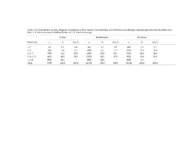
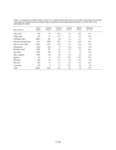
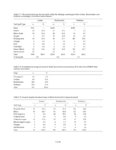
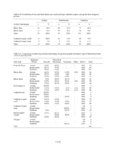
| OCR Text |
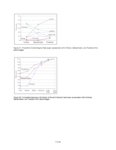
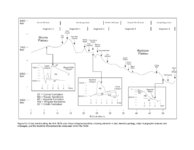
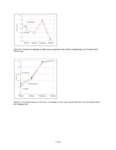
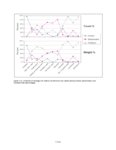
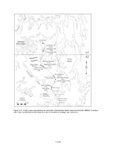
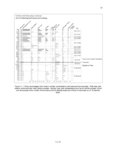
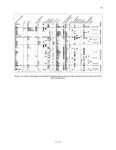
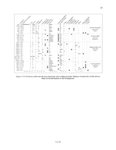
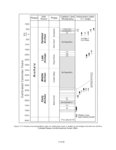
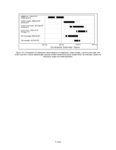
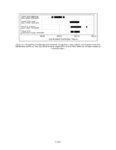
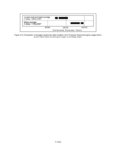
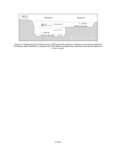
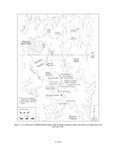
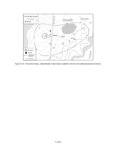
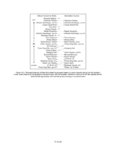
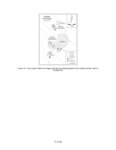
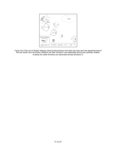
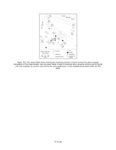
Show simplification of what was probably a complex and variable situation, both spatially and temporally. Yet, numerous and diverse data sets show that the middle Holocene between roughly 8000 and 5000 years ago was generally far warmer and drier than what came before or what followed. Increasing temperatures are thought to be driven by the changing nature of solar insolation, accompanied in many areas during the middle Holocene by decreased summer precipitation (Thompson et al. 1993; Bartlein et al. 1998). There are latitudinal variations to consider as well as significant differences in elevation (both affect temperature and evaporation rates), plus the orographic effects of mountains and high plateaus. The Southwest generally is characterized by aridity and drought, with the latter resulting from diminishment of one or both sources of the biseasonal precipitation sources-the summer monsoons out of the southern gulfs or the winter frontal systems from the northwest off the Pacific Ocean. The significance of these two precipitation sources diminish in opposite directions, with monsoonal moisture decreasing in contribution to total precipitation from south to north and conversely for winter Pacific moisture, which accounts for less total precipitation from north to south. Climatic modeling would suggest that middle Holocene warming in the Southwest would be accompanied by strengthened monsoonal incursions as more moisture-laden air masses were drawn from the Gulfs of Mexico and California. Van Devender (1990) finds evidence for just this pattern in the Sonoran Desert and argues that summer precipitation increased rather than diminished during the middle Holocene. Spaulding (1991) has suggested that any such monsoonal incursions did not penetrate significantly into the Great Basin, and there appears to be nearly unanimous opinion these days that the Basin was both warmer and dryer in the Middle Holocene than before or after (e.g., summaries in Grayson 1993, 2000). Whatever mechanism of air mass circulation limited middle Holocene penetration of monsoonal moisture to the southern Great Basin where Spaulding's record comes from (see also Quade et al. 1998) would also have applied for most of the adjoining Colorado Plateau, especially those portions away from the Mogollon Rim. Even along this rim there appears to have been a drastic reduction in effective precipitation during the middle Holocene, as indicated by lake records that reflect desiccation, reduced sedimentation, and poorly preserved pollen (Jacobs 1985; Anderson 1993; Hasbargen 1994). So, perhaps there was an easterly shift in the monsoonal boundary, which left the Arizona and Utah portions of the Colorado Plateau deprived of summer moisture. Comparatively xeric conditions on the Colorado Plateau during the middle Holocene are indicated by various pieces of evidence. For example, based on the alluvial records of Black Mesa, Karlstrom (1988:69) documented a major postglacial drought that culminated about 6000-3500 BP (see also Karlstrom 1982; Karlstrom and Karlstrom 1986). Withers's (1989) study of late Quaternary macrobotanical remains from alcoves in the Glen Canyon area is interpreted as reflecting a warming and drying trend at the end of the late Pleistocene, culminating in hot xeric conditions by the middle Holocene (ca. 7000 BP). Following Cole (1981), Withers believes that shifts of the summer monsoon and polar jetstream could account for a dry middle Holocene in Glen Canyon. It is important to point out that the evidence for reduced effective moisture in the Great Basin during the middle Holocene has an important bearing on the interpretation of precipitation patterns on the Colorado Plateau. Basin drying would have resulted from a reduction in the intensity or number of Pacific storm systems that moved through the area coupled with somewhat higher temperatures (increased evaporation). Decreases in summer precipitation are inferred (e.g., Grayson 1993), but to the extent that this was also true in winter, then much of the Colorado Plateau might have received a double whammy-a lessening of both summer and winter sources of moisture. The effects of such a condition would of course vary depending on which portion of the Colorado Plateau one examined. Arid lowelevation basins or river valleys might have been more severely affected than say high-elevation plateaus, especially those of broad aerial extent and adjoining the Rocky Mountains (e.g., the Uncompahgre Plateau). Dry plateaus at average elevation such as the Rainbow Plateau or the Kaibito Plateau might have been quite undesirable places during an extended drought interval. This would perhaps apply more to the Kaibito Plateau than the Rainbow Plateau, because the former is far more environmentally uniform. The Rainbow Plateau is adjacent to the Glen Canyon lowlands with its permanent rivers and also has the higher elevations of Navajo Mountain. Less Food, Less Water If the reconstructed middle Holocene climatic patterns are approximately correct, then the implications for foragers are not good. Judging from the dietary evidence contained in human feces and recovered from cave deposits, it is clear that early Holocene (early Archaic) foragers on the Colorado Plateau were already living close to the margin. This inference is based on the evidence for heavy reliance on prickly pear cactus pads and on various low-rank seeds such as dropseed , goosefoot, and sunflower (Van Ness and Hansen 1996). Thus, any factors that reduced the resource base further would have been V.13.27 |