| OCR Text |
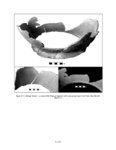
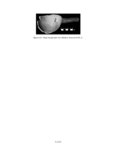
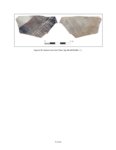
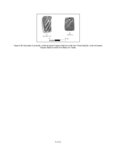
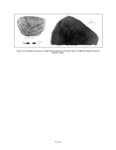
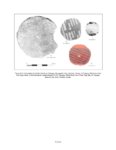
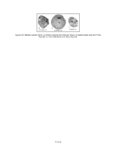
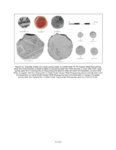
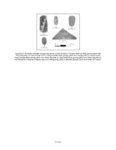
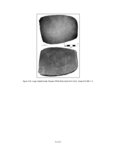
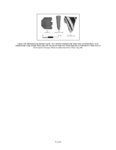
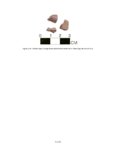
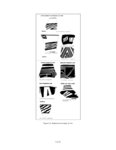
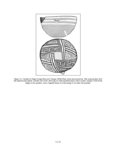
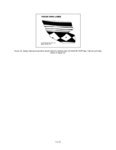
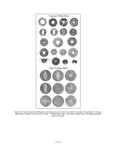
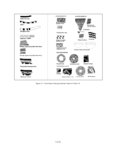
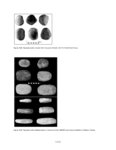
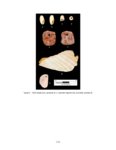
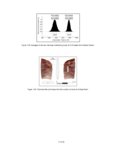
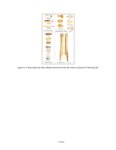
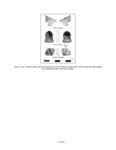
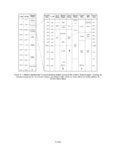
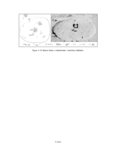
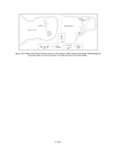
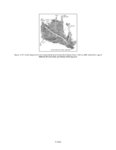
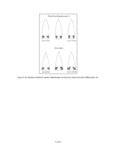
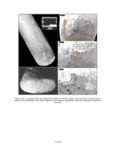
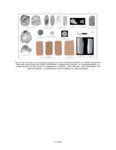
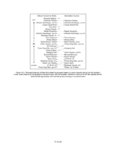
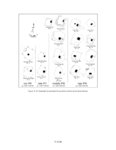
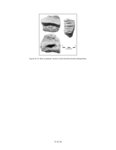
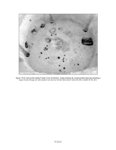
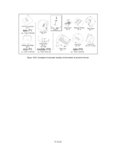
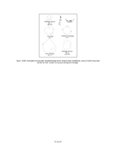
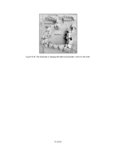
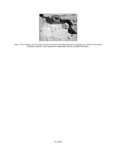
Show populations and the Great Basin and norther Arizona (Bennyhoff and Hughes 1987). Pendants A pair of sub-rectangular, cut-shell pendants (Figure 9.1d) were recovered from an extramural storage pit (Storage Pit 1) at The Pits (AZ-J-14-17). These are essentially a matched set, with both being carved from the wall of a large Haliotis valve. They are made of a dark reddish, nacreous shell, and do not retain the exterior cortex. The coloration appears to be a product of use, possibly due to oxidation. It is not a color associated with any of the abalone that inhabit the California coastline. These pendants are roughly the same size; one measures 22.5 mm by 19.9 mm and the other 21.2 by 20.3 mm. Both are roughly 4.7 mm thick, and each is perforated by a single, biconical perforation located along the mid-line of one of the shorter edges. Worked Fragment A fragment of an Oliva shell was recovered from the fill of a structure at Hillside Hermitage (AZ-J-3-14). This piece has been abraded and worn along the front portion of the body whorl. This genus is generally associated with shell tinklers and whole shell bead/pendants where the apex is removed to permit the passage of the cord. The current specimen retains the anterior portion of the body whorl, with the break occurring around the mid-section of the shell. The absence of a perforation near the anterior end that indicates the specimen was not being used as a tinkler. Since the spire portion is missing, and the wear that is present is not diagnostic, the original artifact form cannot be determined. Unworked Fragments Seven fragments of shell were recovered that exhibited no evidence of grinding, cutting, or other purposeful modification. One is a small section of the upper body whorl and spire from an Olivella valve. Although all of the edges are rough breaks, it is likely that it was a fragment of a bead, but this cannot be confirmed. Another fragment seems to be a small portion of the outer lip from a medium size gastropod, possibly an Oliva or a Conus valve. The specimen, while somewhat chalky, appears to have been unmodified. Five fragments of Laevicardium were recovered from three different contexts at Waterjar Pueblo (AZ-J2-58); these are the only occurrences of this genus from the project. In two cases there are multiple fragments in the contexts, and in each case the physical condition of the pieces suggests that each pair probably represents a single specimen. Indeed, it is possible that all of the fragments may derive from one valve, since the pieces do not appear to represent overlapping portions of the shell. The pieces from the various contexts differ in their physical condition but this can be attributed to different degrees of exposure and weathering. The specimen from the kiva floor (Figure 9.1e) is relatively fresh, with a wellpreserved surface. In contrast, the two fragments from the shallowly buried midden are quite soft and the surface is weathered and chalky, and the final two fragments, which were recovered from an isolated hearth (Feature 13/Hearth 3), are burned and very chalky. V.9.3 |