| OCR Text |
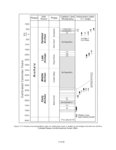
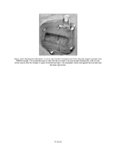
Show Chapter 13 SUMMARY AND INTERPRETATION OF ARCHAIC REMAINS Phil R. Geib When Guernsey and Kidder (1921) presented their summary of Basketmaker remains from the Kayenta region of northeast Arizona, they described a preceramic farming culture that predated the Puebloan cliff-dwellers. The origins of the Basketmakers were a mystery, because none of the numerous shelters that they excavated produced evidence of a prior hunter-gatherer stage-they found no remains underlying those of the Basketmakers. Granted that excavation technique in the early 1900s was not what it is today and that the loose sands of the shelters where Guernsey and Kidder worked can challenge even the most meticulous modern excavator, still, had obvious cultural layers rested below those with Basketmaker materials, then these keen observers likely would have noted them. This absence of evidence was not, however, equated with evidence of absence, so Kidder (1924) conjectured that the Basketmakers must have developed from a prior population of hunter-gatherers. Accordingly, the formulators of the Pecos classification left open a developmental stage (Basketmaker I) for the hypothetical forager ancestors of the Basketmaker II farmers (Kidder 1927). There was virtual agreement among the 1927 Pecos Conference participants that "agriculture was taken up by a previous resident … nomadic or semi-nomadic people" (Kidder 1927:489). The conceptual foundation for this view might have derived from an implicit assumption of continuous cultural development within single regions and areas (Berry and Berry 1986:255). Today, of course, the first Basketmaker stage is known as the Archaic, and by slow degrees, especially since the 1960s, archaeologists have accumulated evidence for the preagricultural foragers on the Colorado Plateau. But the evidence produced has yet to accord with the apparent unanimous position in 1927 that farming was adopted by long-resident Archaic foragers. An initial finding in this regard, and indeed the first recognized discovery of demonstrable Archaic remains directly underlying Basketmaker materials, occurred in 1961 when J. Richard Ambler excavated Sand Dune Cave at the foot of Navajo Mountain (Lindsay et al. 1968). He recovered distinctive open-twined sandals from cultural deposits directly under those with typical Basketmaker artifacts. Unlike anything reported from Basketmaker sites, the sandals raised the possibility that ancestral remains had finally been unearthed. Radiocarbon dates on three of the sandals came as a surprise: they were some 5000 years older than the maximum postulated age of Basketmaker II-the sandals ranged in age from 7150 to 7700 BP (Lindsay et al. 1968:96). These sandals were thus not immediately ancestral to the Basketmaker culture. Indeed, given the age disparity, they perhaps had no affinity whatsoever with Basketmaker materials beyond occurring within the same grotto. There are many reasons why the findings from a cave might be biased, why one site (or two1) would never contain an accurate record of prehistoric use for an entire region-Thomas's (1989:426-430) "fallacy of the ‘typical' site." No matter how deeply stratified and materially rewarding a site is, it can never serve as a model for past forager societies-it is merely another sample, albeit a rich one, of cultural variability. As Wills (1988a:155) put it, "we need to consider individual sites and artifacts as participants in and products of socioeconomic systems, not models for such systems." Although Sand Dune and Dust Devil Caves were high-information sites of the kind that can provide about as detailed a glimpse of past lifeways as is possible for early foragers, they nonetheless represented single data points. When the Navajo Mountain Road Archaeological Project began in 1991, little had changed in the archaeology of the Kayenta region when it came to Archaic prehistory. Numerous large contract excavations had been conducted in the region for power plants, coal leases, and ROWs for roads, railroads, and transmission lines, thereby greatly increasing our understanding of Puebloan and Basketmaker periods, but the Archaic period has remained largely a blank slate. Even the largest undertaking in the region, the excavations conducted for the Peabody Western coal lease on northern 1 Dust Devil Cave on the northern portion of the Rainbow Plateau, tested in 1961 (Lindsay et al. 1968) and then completely excavated in 1970 (Ambler 1996), corroborated the findings from San Dune Cave. V.13.1 |