| OCR Text |
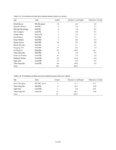
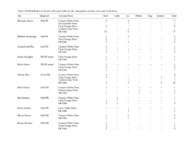
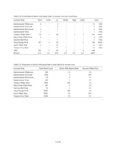
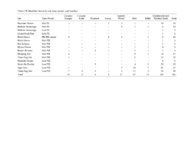
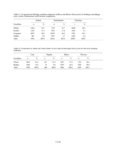
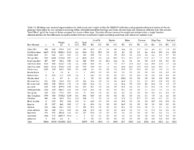
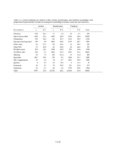
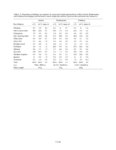
Show DIRECTIONS FOR FUTURE RESEARCH Defining exchange networks is useful for understanding social structure within the Kayenta region. Unfortunately, we can seldom understand the full breadth of such networks; we are left with the nonperishable items brought in, but rarely can discover what was traded out in exchange. A single site is likely to be involved with more than one exchange network, whereby the residents may get pottery from one group and ground stone from another. Various types of ceramics might have been acquired through exchange with different groups (Garrett 1986). It is also likely that rules governing the structure of one trade network, for instance ceramics, may be quite divergent from those governing exchange of another item, such as tchamahias or textiles. Regulations might differ for finished items and raw materials, for trade of domestic versus ritual items, or for exchange conducted by males or females. If we can elucidate any networks, however, we move closer to defining the social and economic systems that functioned in prehistory. The Klethla Valley was likely the first and only long-term production center for volcanic ashtempered Tusayan White Ware ceramics; Long House Valley may have been a production center during the middle Pueblo III period. Perhaps potters in the lower Begashibito Wash also produced ash-tempered ceramics. A study to address these possibilities would involve, as a first step, additional survey to establish site distribution during the late Pueblo II and Pueblo III periods. Expansion of the ceramic analysis by Geib and Callahan (1987) to compile data on frequencies of ash-tempered ceramics at specific sites in different areas with access to light-firing clays would be the next step. Microprobe analysis of sherds from potential production locales could indicate the distribution of low-FeO versus high-FeO ash temper, and might lead to discovery of additional sources of volcanic ash. Sampling of existing ceramic collections, such as those at the Museum of Northern Arizona, would reduce the fieldwork necessary for this effort. Additional ground reconnaissance of the western portion and scarp of Black Mesa could identify other deposits of volcanic ash that might be closer to the production areas. Supplemental evidence for different ceramic production locales might be gained through detailed study of the paste in sherds tempered with volcanic ash. Intraregional sourcing of ceramic paste can be challenging because a single clay source often exhibits variation in composition across a relatively short distance depending on residual or erosional mineral inclusions and conditions under which it was deposited or reworked. Ceramic oxidation studies undertaken for the N16 and N21 projects identified gross divisions in the clays used for ceramic production, rather than the specific geologic sources of the clay. Refiring indicates whether a vessel was produced using low-iron, light-firing clay as opposed to iron-rich, red-firing clay. Refiring does not tell us, however, whether the low-iron clay came from the Mancos Shale or the Wepo Formation. More detailed compositional analysis would be necessary to determine specific proveniences of clays. As noted previously, a problem inherent with paste analysis is removal of temper to prevent distortion of the clay signature so the paste composition can be compared with raw clay samples. Microprobe research to date has verified that Kayenta potters were using low-FeO volcanic ash related to the deposits in Blue Canyon for temper. The presence in some whiteware ceramics of high-FeO ash that has no known local source hints at a range of possible scenarios. This distinct volcanic ash could have been brought into the Klethla Valley from some distant source, either through exchange or by direct procurement. Alternatively, sources of volcanic ash unrelated to the Blue Canyon deposit may exist within a relatively short distance from the Klethla Valley. Finally, it is possible that areas other than the Klethla Valley were centers for production of Tusayan White Ware during the late Pueblo II and Pueblo III periods. Regarding this final model, the geologic distribution of suitable clay resources for whiteware ceramic production constrains the area that must be explored. Another potential research avenue would be to investigate ceramic production relationships in the Klethla and Long House Valleys. Ash temper appears in high frequencies at early Pueblo III sites in Long House Valley, and there is some evidence that ceramics were produced in this area (Stoltman et al. 1992). Long House Valley residents would presumably have been exposed to ash-tempered pottery through exchange with the Klethla Valley potters during the late Pueblo II and early Pueblo III periods. If Long House Valley potters wanted to produce ash-tempered ceramics, they presumably would have been obligated to find ash sources not already in use by Klethla Valley potters. Were previously unused sources available in the vicinity? Did the Long House Valley potters have to trade with established ceramic-producing communities to obtain ash? Did a lack of available ash sources lead them to the Hopi Buttes area? This intriguing possibility could be addressed through further electron microprobe analysis of a ceramic sample large enough to determine the frequency of high-FeO versus low-FeO ash in both the Long House and Klethla Valleys. It seems certain that by the late Pueblo III period, both the Klethla V.4.18 |