| OCR Text |
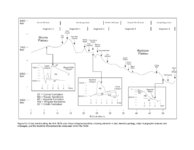
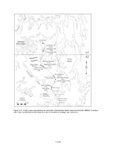
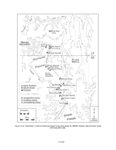
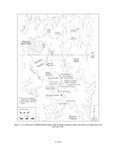
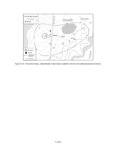
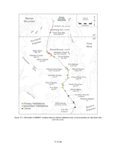
Show Chapter 1 PROJECT SUMMARY Phil R. Geib The previous volumes of this report presented the descriptive details from data recovery excavations at 33 prehistoric sites within the ROW for the Navajo Mountain road, N16. This road runs northward along the one artery of high land connecting the Shonto Plateau to the Rainbow Plateau, paralleling a route pioneered by Hubert Richardson in the 1920s to start a trading business at the foot of Navajo Mountain (Richardson 1986) and doubtless following a course that natives had used for millennia. The southernmost portion of this road, from Arizona State Highway 98 south of Inscription House, Arizona to just past the turnoff to Shonto, Arizona was paved in the late 1980s with Schroedl (1989) reporting on the archaeological sites excavated within that portion of the ROW. The 33 sites reported here were excavated within the lengthy portion of N16 that extended from where the 1980s pavement ended northward to the small community of Rainbow City, Utah at the northeast foot of Navajo Mountain, a distance of approximately 43 km (27 miles). The Navajo Nation Archaeology Department, Northern Arizona University Branch Office, based in Flagstaff, Arizona conducted this project, known as the Navajo Mountain Road Archaeological Project or NMRAP for short, which was sponsored and funded by the Bureau of Indian Affairs with the Navajo Nation Historic Preservation Department acting as contract administrator. A proposal was put forward in the early 1970s to realign and pave N16, thereby greatly improving a horrendously rugged road and opening up one of the most remote corners of the Navajo Reservation. Though the original blueprints for the road are dated 1974, an archaeological survey was not conducted until a decade later in 1983 (Popelish 1984; Rayl 1984), with no actual archaeological excavation occurring until 1985, when Pueblo III Associates investigated sites in the southern third of the ROW (Segments 1 & 2) on the Shonto Plateau (Schroedl 1989). NNAD's involvement for the remainder of the road ROW (Segments 3-6) began in 1991 with preliminary site reassessment, significance testing, and extent testing. In total, 65 prehistoric archaeological sites within Segments 3-6 of the N16 ROW received some level of study, minimally a reconsideration of surface evidence in order to make National Register determinations. Twenty-two sites for which surface evidence was inadequate to make a conclusive eligibility determination were tested for significance. This was followed by the extent testing of 48 sites, some of which were subsequently avoided by ROW restrictions or reevaluated as not Register eligible based on the new subsurface findings. Data recovery excavations for the NMRAP did not commence until 1994, extending into 1999 when the final five sites in Utah were investigated. The work generally progressed from south to north on sites within one of the four ROW segments per field season, but not consecutively on account of budget shortages and other issues. At the same time that NNAD crews tested N16 sites in Utah in 1993, some workers went and conducted limited work at Atlatl Rock Cave, a large dry shelter with stratified cultural deposits located on the southeast edge of the Rainbow Plateau about 1 km east of the N16 ROW. Large-scale looting of this previously pristine cave during 1993 (removal of ca. 60 cubic meters of cultural deposits, destruction of at least 21 storage cists plus other features) prompted the emergency work, which was funded by NNHPD. NNAD archaeologists backfilled the massive looter holes along with limited study of intact deposits and features. The limited work at the cave was not strictly part of the NMRAP, but the site is reported here because of its significance to the overall NMRAP research focus. The cave is significant for its record of early Archaic, Basketmaker, and Puebloan occupancy, including the Basketmaker II-Basketmaker III transition. The area traversed by the N16 ROW consists of three main environments that seem to have had an influence on the types of sites investigated. The southernmost of these consists of the dissected ridgeline that connects the northwestern part of the Shonto Plateau to the southeast edge of the Rainbow Plateau and separates the upper reaches of Piute Canyon from the eastern tributary canyons of Navajo Creek. This portion, which ranges in elevation from about 2100 to 2240 m, is characterized by a dense pinyon- V.1.1 |