| OCR Text |
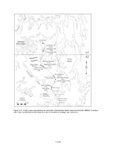
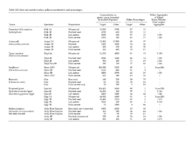
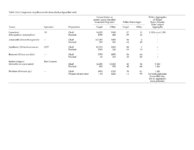
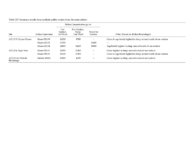
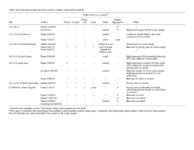
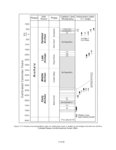
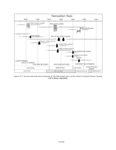
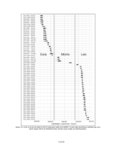
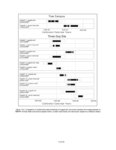
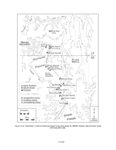
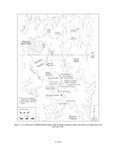
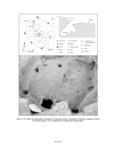
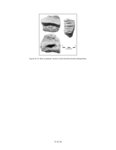
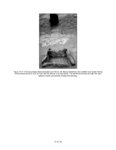
Show Black Mesa, provided minimal information (Parry et al. 1994; Smiley 2002a). In all, that project identified just seven Archaic sites, and Smiley (2002a:30) recently reassigned many of these to the Basketmaker II period. As Smiley (2002a:15) put it, "rarely have so many searched so intensively in an area of such limited size for so few old sites." Virtually the same result came from the large sample survey of Cedar Mesa-abundant Basketmaker and Puebloan sites, but no certain Archaic sites (Matson 1991:8): "the Basketmaker II culture … appears as if out of nowhere to begin the Anasazi cycle of occupations and abandonments on Cedar Mesa" (Matson 1991:10). Thus, there was some degree of hope that the Navajo Mountain Road Archaeological Project would provide an opportunity to overcome the sampling deficiency for the Kayenta region by excavating a series of Archaic sites on the Rainbow Plateau and far-northern edge of the Shonto Plateau. One basic interest was what would be revealed about occupation history by excavating what amounted to a random sample of preceramic sites. Would there be a continuous record of forager occupancy culminating in Basketmaker II, or one that was punctuated by hiatuses, a discontinuous record? Would the NMRAP excavations reveal a pattern similar to that evident for Sand Dune Cave and Dust Devil Caves-Archaic occupancy followed by Basketmaker occupancy, but with no evident link between the two? These questions ultimately relate to evaluating two alternative, though not mutually exclusive, pathways to the agricultural transition: the diffusion of crops to in situ forager populations or the migration of farming groups from some southern source area (see review by Matson 1991, 2002). Moreover, it seemed that the NMRAP excavations would make a solid contribution by providing an initial documentation of forager remains at open sites for this northern portion of the Kayenta Anasazi region. The 14 open Archaic sites ultimately investigated by the NMRAP have added significantly to what little was known about the pre-pottery and non-agricultural foragers of the Kayenta Anasazi region. The limited testing and damage assessment of Atlatl Rock Cave conducted in conjunction with the NMRAP provided another datum point for hunter-gatherer use of caves in the region. A further contribution in this regard resulted from test excavations as Atlatl Rock Cave conducted at the same time as the NMRAP (reported herein). WHAT IS THE ARCHAIC? The term Archaic has both chronological and "developmental" implications, ones that seem inextricable even though this can create conceptual confusion (Cordell 1997:102-105). Archaeologists have defined the Archaic period as an extended interval of time from the end of the early Holocene to the late Holocene when most human groups had socioeconomic adaptations of fairly broad spectrum hunting and gathering (Byers 1959; Willy and Phillips 1958). Archaic lifeways are thought to have developed in response to postglacial environmental change and the extinction of the Pleistocene megafauna. These generalist adaptations followed what are thought to have been more focal (Cleland 1966:42-45) Paleoindian hunting economies during the early Holocene and late Pleistocene. No doubt, some Paleoindian economies were more generalist (less focal) than archaeologists commonly supposed just a few decades ago. As Bruce Huckell (1996:306) phrased it, "the adaptive gulf between the two periods [Archaic and Paleoindian] is not so wide nor deep as we might think." Indeed, mobile foraging may have always been the way of life in the Great Basin; hence Jones and Beck (1999) used the term "Paleoarchaic" to refer to the terminal Pleistocene-early Holocene archaeological record. In an attempt to avoid conflating chronology with developmental criteria some researchers use a strictly chronological definition for the Archaic (e.g., Lipe and Pitblado 1999:97, 105). I agree that aspects of lifeway should be based on analysis rather than assumed by simple categorical assignment, yet even when labeled as a chronological period rather than a stage, connotations of lifeway are unavoidable when the term Archaic is employed. Research on the Colorado Plateau has yet to reveal certain evidence of what might be termed a transitional (or Paleoarchaic) lifeway-basically a Paleoindian point assemblage associated with Archaic subsistence technology or remains.2 The evident changes in the archaeological record that correspond with the transition to the Archaic period suggest that a significant adaptive shift likely occurred. One aspect of this change is the appearance of or vast increase in the abundance of seed-grinding tools. Onehand manos and grinding slabs are key markers of the Archaic because of their durability in the archaeological record; they are ubiquitous finds at temporary residential camps dating to this period. 2 Some archaeologists have considered the Jay phase of the Oshara tradition as Paleoindian (Judge 1982; Wait 1981) while others see it as Archaic, including Irwin-Williams (1973); such disagreement might point to a true transitional interval (cf. Irwin-Williams 1994:630-633. Pitblado (1994) extended Frison's (1992) Foothill-Mountain complex to southwestern Colorado, arguing that the late Paleoindian groups of this tradition were less focused on big-game hunting and instead had more generalist subsistence practices. V.13.2 |