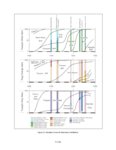
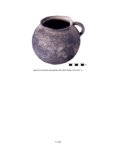
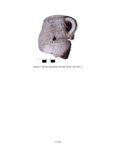
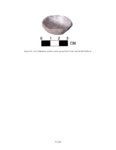
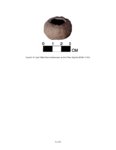
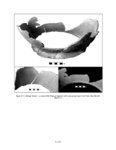
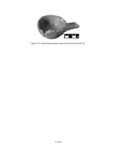
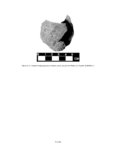
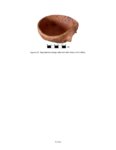
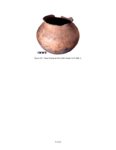
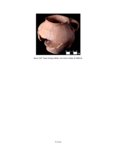
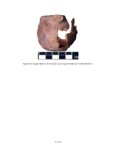
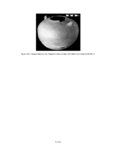
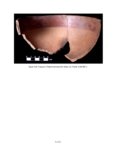
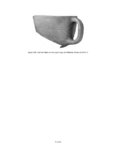
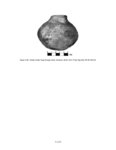
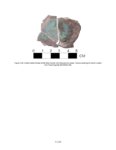
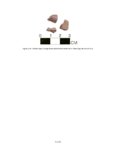
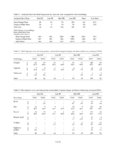
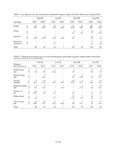
| OCR Text |
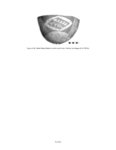
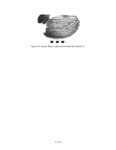
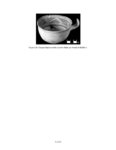
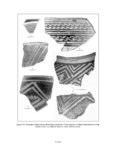
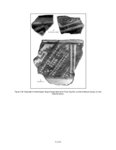
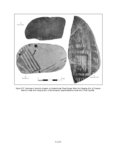
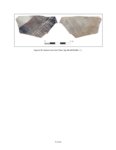
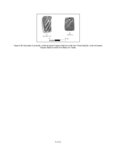
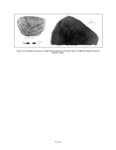
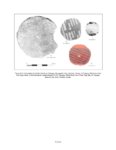
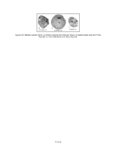
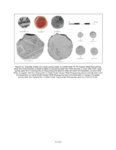
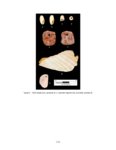
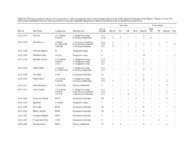
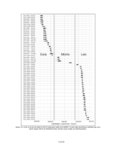
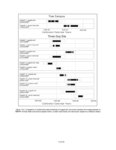
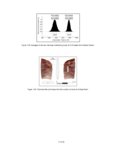
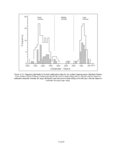
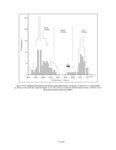
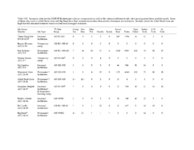
Show The cultural sequences recognized for Cedar Mesa and northern Black Mesa are characterized by a significant hiatus in occupation following Basketmaker II (Matson 1991; Smiley 2002), with a short-lived reoccupation during late Basketmaker III on Cedar Mesa but no permanent reoccupation on northern Black Mesa until Pueblo I. These sequences seem to reflect a larger trend for a greater than two-century gap between the Basketmaker II and III stages as documented by Berry (1982:117), something that other Southwest archaeologists have also mentioned (e.g., Rohn 1989:154). Evidence obtained by the NMRAP suggests that the northern Kayenta region has a record that spans the gap between Basketmaker II and III-that the occupation of this region was continuous from about 400 cal. BC up to about cal. AD 700. More important, the findings shed some light on the processes of this transition, revealing that change was more piecemeal than sweeping, with "suites" of newly introduced traits; the change that occurred is poorly captured or characterized by phase or stage schemes that presuppose or impose steplike shifts. How to best subdivide a continuum of cultural development within a region is a common problem for archaeologists. The advent of pottery manufacture traditionally seemed an unambiguous and useful marker for dividing the continuum of Basketmaker cultural development, and it was explicitly incorporated into the Pecos classification for such purposes (Kidder 1927). Most archaeologists working on the Colorado Plateau use ceramics to differentiate between Basketmaker II and III (cf. Berry 1982:88). Pottery occurs on open as well as sheltered sites, making it a more widely documented trait than the many perishable remains (e.g., sandals and feather blankets) that may also serve as markers of this transition. Pottery also seems to have made a rather sudden sweeping appearance across the Four Corners region, so that by AD 500 or shortly thereafter it was found nearly everywhere. On the Rainbow Plateau the situation appeared to be different, since the excavation of Sand Dune Cave suggested that a Basketmaker II lifeway persisted past AD 700: "development of the Basketmaker tradition into a later manifestation characterized by ceramics, the bow and arrow, and a different settlement and community patterning is not evidenced on the plateau" (Lindsay et al. 1968:364). This notion gained some acceptance (e.g., Dean 1996:29, 32; Gumerman and Dean 1989:111) but the findings reported here and in Geib and Spurr (2000) and Geib (2004) refute this idea. Indeed, in the context of our current understanding of the Basketmaker period, it is reasonable to question what a continuation of Basketmaker II lifeways means. Basketmaker II groups can no longer be considered as modified huntergatherers, for evidence indicates that they were nearly as dependent upon maize as were Basketmaker III and later Puebloan populations (Chisholm and Matson 1994; Coltrain et al. 2007; Matson and Chisholm 1991:465; cf. Wills 1992:159). Increased reliance on cultigens, therefore, is not a distinguishing characteristic of Basketmaker III. If it is merely the absence of ceramics, beans, and the bow and arrow that indicates a continuation of Basketmaker II lifeways, then no claim for their absence can be made. These traits did not appear as a suite at a single point in time in the northern Kayenta region, nor were these items equally adopted by all contemporaneous households of the region. Initial Pottery Basketmaker II populations, like Archaic foragers before them, manipulated clay to make small artifacts, especially human figurines. Such a practice dates back to the early Archaic for the portion of the Colorado Plateau that includes the northern Kayenta region (Coulam and Schroedl 1996). However, if we restrict the definition of pottery to the creation of purposefully fired vessels used for cooking or storage, then this practice is comparatively recent. For the Kayenta area, like the Four Corners region generally, the advent of pottery production has traditionally been placed at around AD 500 based on tree-ring dates associated with pottery.11 Evidence accumulated in the past decade or so has tended to push the starting date for pottery back several hundred years (see review in Reed et al. 2000), with NMRAP findings providing part of the case for this revision, principally the site of Mountainview (Geib and Spurr 2000; see Chapter 10 of Volume III). The earliest pottery for the Kayenta region is a plain utilitarian ware usually brownish in color and varyingly burnished. A number of traits distinguish this material from Lino Gray. Early pottery on the Rainbow Plateau is classified as Obelisk Utility (see Chapter 2 of this volume). It resembles the pottery recovered from Obelisk Cave but differs from much of the pottery previously identified as Obelisk Gray 11 The earliest tree-ring dated pottery is a polished brownware recovered by Earl Morris from Obelisk Cave in the Prayer Rock District; the available dates indicate that pottery was in use at this site by AD 480 (Morris 1980: Table 2; Berry 1982:68). This finding is supported by Breternitz's (1986:263) report of brownware sherds from a pit structure in Mancos Canyon with tree-ring dates in the early AD 470s. Specific to the Kayenta region, the earliest tree-ring dated pottery comes from two sites in the Klethla Valley, NA8163 at AD 555 (Ambler and Olson 1962) and NA11,058 in the mid AD 530s (Swarthout et al. 1986:426). V.14.50 |