| OCR Text |
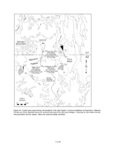
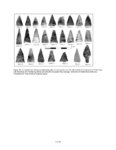
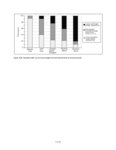
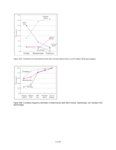
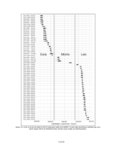
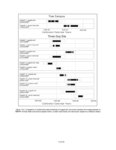
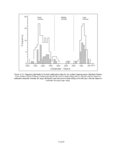
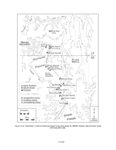
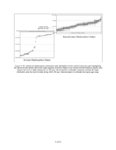
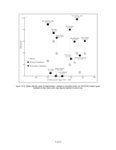
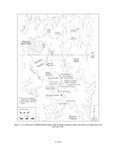
Show interval when dependence on domesticates was substantially less than it finally became later in the Basketmaker sequence (see Matson 2006b for just this suggestion). Alternatively, we could simply recognize that there might well be temporal variability in the degree of agricultural commitment during Basketmaker II. This is certainly expectable given paleoclimatic fluctuations coupled with a variety of ecological factors, demographic patterns, an evolving social landscape, and heterogeneous cultural practices. Geographic variability likely played a part as well, for much the same reasoning, plus the diversity of settings occupied by Basketmaker II groups. Inter- and intra-annual variability in domesticate use is a predictable consequence of erratic yields among other factors such that evidence pertaining to specific points in time (e.g., feces and Pompeii assemblages) might say little about overall reliance on produced food. The problem with the Basketmaker II label extends beyond the issue of identifying whether groups used agriculture or not, or how reliant upon it they were. The term also implies historical and cultural relationships that may not be real. Evidence for the first use of agriculture on the Colorado Plateau is not uniformly associated with the material culture first described in detail by Kidder and Guernsey (1919, 1922; Guernsey and Kidder 1921), and designated by Matson (1991:122-123, 1999) as the western variant of Basketmaker II. Morris and Burgh's (1954) excavations of rockshelters in the Durango area provided one of the best samples of preceramic farming remains that differed in several key respects from those to the west, but also classified as Basketmaker. Matson (1991:122-123, 1999) drew attention to these differences and distinguished the Basketmaker materials from the Durango and Los Pinõs areas along the upper San Juan River and its tributaries as an eastern variant of Basketmaker II. Yet, evidence for agriculture on the Colorado Plateau may be associated with preceramic remains that are neither eastern nor western Basketmaker variants, and further afield, away from the core region where the Basketmaker II concept was originally defined, use of the Basketmaker label for preceramic sites or components is potentially even more confusing. Principally, it might imply cultural connections or relationships where these may be lacking, such as classifying late preceramic remains in central and northern Utah as Basketmaker (e.g. Berry and Berry 1976:32-37, Figure 17; Horn 1990:51, 85-86). Considering such remains within Canyonlands National Park, Tipps (1995:176) argued that "the Terminal Archaic-age sites thus far discovered in Canyonlands do not typify the same stage, lifeway, cultural expression, or adaptation described by Matson (1991) for Basketmaker II." If true in Canyonlands, might not it also be true in the Four Corners region, the core area of Basketmaker II? Might there have been groups during the Archaic-Formative transition that had a Basketmaker II agricultural adaptation and cultural assemblage (western or eastern variants) as well as groups that were still essentially foragers and had a distinctive cultural assemblage? This indeed appears to be the case for the Rainbow Plateau as argued in Chapter 13 of this volume (and touched upon in Volume II). Smiley (2002a,b) took a different stance in the final interpretive report for the BMAP. He is explicit about his definition of Basketmaker II vis-à-vis the Archaic: "I view the Archaic both as an adaptation and a temporal period. Accordingly, I apply the term ‘Archaic' only to hunter-gatherers and not early agricultural populations … In fact, the several-millennium-long Archaic hunting-and-gathering adaptation comes to a close with the beginnings of food production" (Smiley 2002a:26). The arrival of maize on Black Mesa specifically and the Colorado Plateau generally marks the beginning of Basketmaker II, which he estimates may start as early as 4000 cal. BP. This is based on acceptance of the outlier date on corn from Three Fir Shelter (3610170 BP, Beta-26275; Smiley 1994: Table 1) as well as the outlier corn date from Bat Cave (374070, A-4187; Wills 1988a: Table 18). Because of this temporal revision for the beginnings of Basketmaker II, Smiley reassigned the previously identified late Archaic (Hisatsinom phase) sites on Black Mesa-those lacking agriculture-as part of the White Dog phase of Basketmaker II: "the term, Hisatsinom, as an Archaic-period phase name, appears now obsolete in the light of recent chronological discoveries" (Smiley 2002b:45). Elsewhere he states, "Sites in the period initially assigned to the Hisatsinom phase (Smiley and Andrews 1983) now appear to fall within the White Dog phase, which begins with the onset of agriculture. Accordingly, these sites are likely campsites within the phase of the White Dog settlement system" (Smiley 2002a:30). The presence of 3610 BP maize at Three Fir Shelter has called into question the existence of any late Archaic manifestation on Black Mesa. Granted that early Basketmaker II farmers probably had a differentiated subsistence-settlement organization that included camps lacking agricultural remains, there could also be terminal Archaic foragers living in the region contemporaneous with Basketmaker farmers. Blanket ascription of all remains as Basketmaker II because they fall within a given temporal interval when domesticates may have been present could obscure important evidence of adaptive variability and different trajectories leading to a Formative adaptation. Smiley (2002b:40) presents a case for accepting the outlying Three Fir Shelter corn date, yet the next V.14.3 |