| OCR Text |
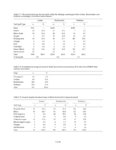
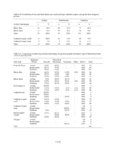
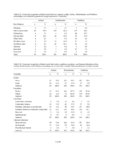
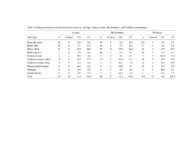
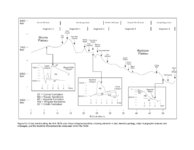
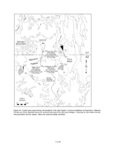
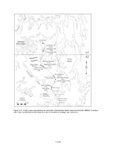
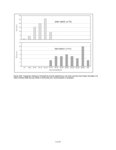
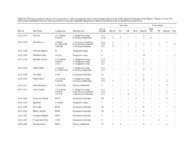
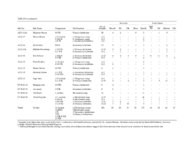
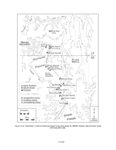
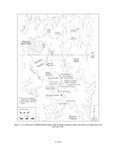
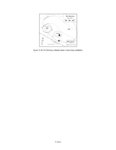
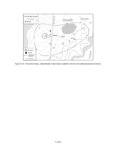
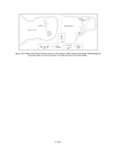
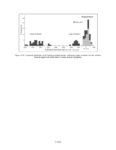
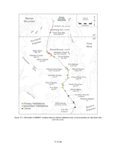
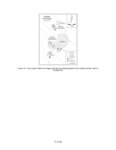
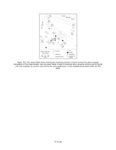
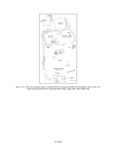
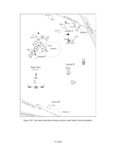
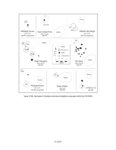
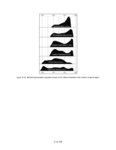
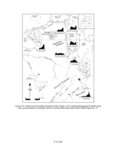
Show occurs within is well suited for living and there is every probability for an open pit house settlement close to the shelter yet buried and thus unknown to archaeologists. Settlement Pattern: Where Are Sites Distributed? A linear project such as the NMRAP is poorly suited to the study of settlement patterns for the obvious reason that the data come from such a narrow swath, when what is needed is information for large blocks of terrain. A natural question is whether the strongly clustered distribution of Basketmaker sites in the N16 ROW as shown in Figure 14.13 is merely some sampling fluke or whether it is a true reflection of reality. Most of the 17 NMRAP Basketmaker sites occurred in the southern portion of the project area where the road ROW traverses the dissected slickrock divide between Piute and Navajo Creeks. This area appears to have been favored by these early farmers for their residential sites. One could simply proceed trying to explain why this is so, but if it is totally the result of sampling bias, then such an account might well be wrong or at least not fully informed. Therefore, it is important to bring in whatever other relevant data are available, as limited as these may be. Our understanding of Basketmaker settlement on the Rainbow Plateau is hampered by a lack of intensive regional survey and the problem of positively identifying Basketmaker sites based on surface evidence. I consider the second problem first, because without positive identification all else is futile no matter the amount of survey. Most of the sites that can be assigned with certainty to the Basketmaker period are those reported above, for which there are radiocarbon dates and excavation data. Nearly all of these sites were excavated to varying extent, most for the NMRAP. Minus chronometric dates, the few sites reliably assigned to this interval include several excavated caves that produced typical western Basketmaker perishable remains and a few open sites with diagnostic projectile points or other remains or distinctive architecture. The temporal placement of open sites known from surface evidence alone is more problematic. Aceramic sites with quantities of burned limestone have a good chance of a Basketmaker affiliation, but Puebloans or Archaic foragers on hunting and gathering forays may have created such sites as well. Identification problems extend to Basketmaker sites with early brownware pottery. These sites not only appear similar to aceramic Basketmaker sites, but the pottery is often unobtrusive and may occur in such low quantities that it can be overlooked. Earlier surveys also may not have recognized the early pottery for what it is, instead considering it unidentified and undiagnostic. Survey coverage on the Rainbow Plateau is relatively more thorough north of the Utah state line, but none has been intensive over broad areas, so I am in a poor position to make any substantive claims about settlement patterning. For the Arizona portion of the plateau, survey coverage is limited to small parcels for modern homes and the like and linear transects for the N16 road and a power line. Even though MNA and NAU archaeologists have recorded more than 360 sites on the plateau in Utah (Ambler et al. 1985; Lindsay et al. 1968:16-30), none were positively identified as Basketmaker. A few dozen sites lacking masonry architecture and pottery were considered as probable evidence of Basketmaker II occupation, but a lack of diagnostics precluded positive identification.9 Many of the probable Basketmaker sites are shelters, some with cists exposed on the surface, but there are also a number of open aceramic sites with burned rock and charcoal-stained soil. Current knowledge of Basketmaker settlement remains sketchy and subject to revision once a substantial portion of the plateau has been surveyed and a greater number and diversity of Basketmaker settlement types have been excavated. With these caveats in mind, it seems reasonable to look at where Basketmaker sites are concentrated and the possible environmental reasons for why this might be the case. The concentration of secondary habitations on the divide between Piute and Navajo Canyons is real and meaningful. There are simply too many sites located here, both within the NMRAP sample and known from personal reconnaissance in the area, for this pattern not to be significant. Having hiked extensively in the area and participated in a survey of upper Piute Canyon (Fairley 1989), I know that the NMRAP sample along this divide is quite representative and that small Basketmaker residential sites abound in the area. The specific locations of these secondary habitations were probably selected for such factors as view quality, proximity to water, and well-drained level sand for house construction, factors that relate to convenience, efficiency, and comfort. At a larger scale though, it is worth considering why it was important to locate so many similar sites along the high divide between Piute and Navajo Canyons. How do the secondary habitations fit into the larger pattern of Basketmaker II settlement organization for the area? What was their subsistencesettlement role and if used seasonally, during what season or seasons? The dissected high divide between 9 This is a conservative interpretation of the evidence in several cases, especially based on what we currently know about the surface appearance of Basketmaker sites. The presence of four-warp wickerwork sandals (Lindsay et al. 1968:27) provides fairly conclusive proof for Basketmaker occupancy of several shelters. V.14.33 |