| OCR Text |
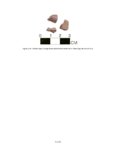
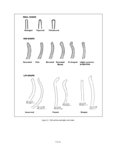
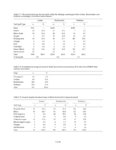
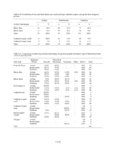
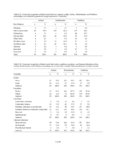
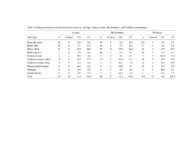
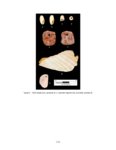
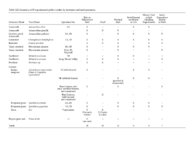
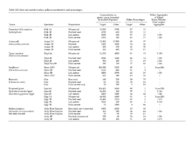
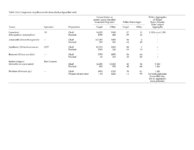
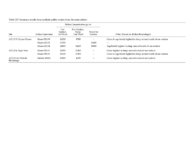
Show and inconclusive, during Basketmaker times it appears that each household controlled its own foodprocessing equipment and storage facilities. Many tasks undertaken by females-such as daily food grinding-were done within each household in the confines of a family's pit house. By the Pueblo II period separate communal structures had developed that housed many gender-specific activities. There were specialized processing facilities in the form of mealing rooms and mealing bins in public spaces and multipurpose rooms that probably were used by more than a single household. It is likely that many households continued to retain possession of some tools such as manos, but most food grinding seems to have taken place in communal settings within established mealing facilities such as the grinding bins in mealing rooms and elsewhere. Mealing rooms were the focus of female-related activities and kivas were associated mainly with male ones. It seems likely that to one degree or another both structure types were the focus of both religious and economic tasks. SUGGESTIONS FOR FUTURE RESEARCH Over the course of conducting the research presented in this chapter a number of issues were brought to light that suggest methodological improvements and potential areas for future study. For example the current use-phase categories might be refined so tools that were used to exhaustion could be distinguished from those that broke prior to being worn out. Use-phase categories might also be revised to better reflect the degree of actual wear exhibited by manos and metates. The current system used for classifying manos uses the somewhat arbitrary and sometimes confusing system of identifying the tools as "one-hand" or "two-hand." In addition, the various mano classes combine these designations with characteristics of the tool profile. A helpful revision to this system would be to incorporate a way of identifying the type of metate the mano was used on based on its morphology and use-wear. For example, a mano exhibiting trough end wear would be classified as a trough mano versus one that had been used on a slab metate or in a basin metate. It might also be useful to quantify raw material vesicularity beyond the system used for this report. Vesicle density could be quantified with definitions that use number of vesicles per square centimeter. In addition, the size of vesicles may be an important attribute to quantify. A highly vesicular stone with small vesicles will probably have a different grinding texture than a highly vesicular stone with large vesicles. The larger the vesicles the fewer there are per square centimeter; therefore the quantification of vesicles must also take into account the vesicle size. When vesicularity, grain size, and degree of cementation are taken into account some type of texture index could be developed. This index would describe the inherent texture of the stone without looking at artificial textures created by grinding wear or maintenance pecking. Another area of inquiry involving texture would be to see if a correlation exists between particular transverse cross-sections of manos and certain textures (grain sizes and vesicularity). Significant correlation may be indicative of certain grinding strokes used in different stages of the corn mealing process (Fratt 1991). Last, a potentially informative tool type that begs for more in-depth investigation is the rectangular crushing stone. In the future when rectangular crushing stones are recovered from possible in-use or storage contexts it may be beneficial to pollen wash these items. The subsequent pollen analyses may more clearly define the function of these tools (but see Chapter 12). Similarly, if the current issues with blood residue analysis were resolved this could be a useful tool in identifying other secondary uses for grinding tools or possibly even primary uses for some tools (such as pestles and mortars). We hope that the analyses, findings, and suggestions for future work presented in this chapter prove useful for other researchers. Detailed examination of stone grinding tools has the potential to yield information about the economic and social behaviors of the tools' creators and users, as well as to shed light on their technological approaches to solving grinding problems. The database compiled for this project could be compared or combined with others to provide a more detailed understanding of these issues and to add greater insight into the prehistoric peoples of the Kayenta region. V.6.42 |