| OCR Text |
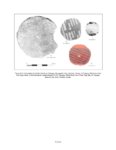
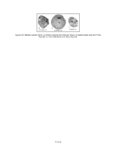
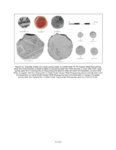
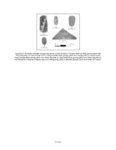
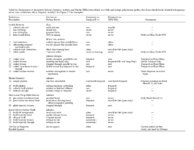
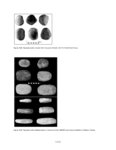
Show the form of degenerative joint and bone disease. Invariably the evidence of habitual grinding is found only on female skeletons (Ortman 1998:166; Spielmann 1995:96). Prior to this point the discussion has focused on grinding tools used in the preparation of food; however, nearly one-fifth of the N16 grinding tools had no clear association with food preparation. In addition, many of the tools used to prepare food also had concomitant secondary functions that were not food related. Many of the uses for grinding tools not related to food processing are known in only a general sense. While it may be a relatively straightforward matter to identify a tool as a flat abrader, grooved abrader, lapstone, or paintstone, it is much more difficult to determine what precisely was created with a particular tool. Past experimental replication and use-wear experiments have helped improve our understanding of how tools were used (e.g. Adams 1988, 1989; Kamp 1995; Logan and Fratt 1993; Mills 1993; Wright 1993), and tentative conclusions about tool functions can be drawn from these studies. Links with gender-specific activities can sometimes be established using this experimental data. For example, Kamp (1995) has conducted experiments suggesting that basalt cylinders were used in pottery manufacture. From this it seems reasonable to claim that such tools were used mostly by women, as pottery production was an activity done primarily by women in Western Pueblo cultures (Lowell 1991). Usually, however, replication experiments do not provide sufficient information to conclude what specific job(s) a tool was used for. To illustrate this point, consider two types of grinding tools: shaft abraders and paintstones. It is known that shaft abraders were hand-held tools used to abrade and straighten the shafts of objects. Nevertheless, these objects could be as diverse as arrows, weaving or drill spindles, or prayer sticks. Shaft straighteners may also have been used to shape beads that had been perforated and strung (Woodbury 1954:102-103). Paintstones, which were used to process pigment, can be identified from the presence of pigment and use-wear. Analysis of the use-wear may provide insight into how the tool was used to process the pigment, but seldom will it indicate what the pigment was used for. The pigment, as paint, could be used to decorate pottery, presumably a female activity, or to decorate the walls of a kiva or fraternity room, an activity conducted by males (Lowell 1991). Without knowing more precisely how these tools were used it seems futile to attempt to associate their use with a particular sex. Indeed, the very fact that so many of the miscellaneous grinding tools were used in more than one activity and could be used to produce a variety of items suggests that their use may not have been linked to gender. On the other hand, because most pigment-stained grinding tools were manos and metates it might be reasonable to presume that women were doing much of the pigment processing with these particular tools. Nevertheless, pigment processing may have been a sequential secondary task for some of the manos because they were broken. In this case men may have used broken manos and metates when they were no longer useful for grinding food. In summary, the many similarities between historic and prehistoric Puebloan groups strongly support the conclusion that corn grinding and food preparation were tasks performed primarily by women and that women owned the food-grinding tools. In several cultures that use manos and metates, however, grinding and cooking are not linked to sex, or even to age (Bruhns 1991:421-423). Cultures change over time and it is possible that the historical sexual division of labor recorded ethnographically was different or did not exist prehistorically. Also, unless the specific task or set of tasks that a grinding tool was used for is known, it is extremely difficult to validly link that tool with gender-specific activities. Distribution of Food-Processing Tools One of the specific questions addressed in the research design deals with the distribution of food and food-processing tools. Did each household control access to its own food-processing and storage facilities or were there community processing and storage facilities? This question can be answered in part by examining the distribution of food-processing equipment, particularly manos and metates, and architectural features such as mealing bins. Obviously tools left at or close to where they were used or stored would be most useful in determining access to food-processing facilities. Manos and metates recovered from secondary trash deposits such as middens and the deliberately deposited trash within features were clearly not discovered in "in-use" contexts. "In-use" assemblages are most likely to be obtained from structure floors and floor fill, fill from collapsed structure roofs and walls (where artifacts may have been stored), extramural activity surfaces, and obvious in situ use-contexts. Also only whole, usable food-processing tools were used to examine the degree of access to food-processing facilities (although 199 whole manos were recovered, 12 of them exhibited extreme use-wear and were considered worn out). Broken tools are much less likely to remain in use-contexts unless they were being reused or recycled. Floor assemblages consist of artifacts discovered directly in contact with structure floors. When V.6.34 |