| OCR Text |
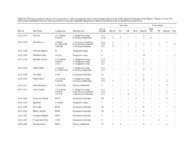
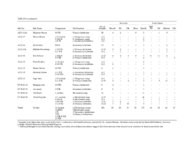
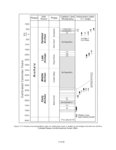
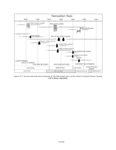
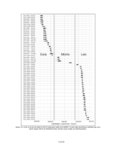
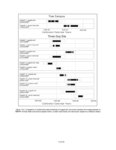
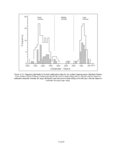
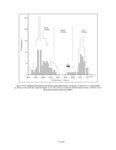
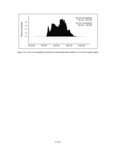
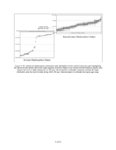
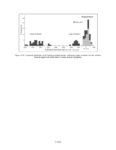
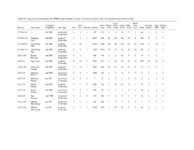
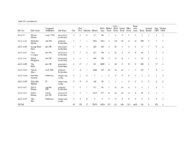
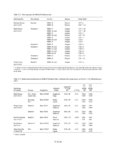
Show flake seems somewhat consistent with a group that anticipates returning to an obsidian source at some not-too-distant future time. CONCLUSIONS The highly visible and comparatively rich archaeological records left by Puebloan and Basketmaker farmers or farmer-foragers of the N16 ROW sharply contrast with the generally diffuse remains from ephemeral forager use of the project area. This is generally true all across the Colorado Plateau unless, perhaps, one has the good fortune to be working in a dry shelter where organics are preserved. The returns from studying Archaic sites in the Southwest usually appear scant by comparison with those from sites dating after the introduction of domesticates. For buried Archaic sites, great effort must be expended to expose a few basin hearths and recover a handful or two of small flakes, some bone, and rare tool fragments. Such is the fate of the archaeological study of foragers and it is unfair to expect the debris scatters generated by such highly mobile groups to be the information troves generated by more sedentary and logistically organized groups. Given the vast expanse of time covered by the Archaic period coupled with the paltry nature of the record, there will be no time soon when the discipline has reached a point of diminishing returns. Indeed this provides good cause to work at trying to maximize the information return from forager sites and isolated occurrences as well as sufficient justification for what might seem to be comparatively high expense (per artifact or other remain recovered or per square or cubic meter of features excavated). Although the Archaic period appeared to be a minor aspect of the NMRAP when the project began, it ultimately made a significant contribution to what little was known about the pre-pottery and nonagricultural foragers of the Kayenta Anasazi region. Fourteen open Archaic sites were excavated to varying extents by the project, with several of these being quite rewarding. In addition, the limited testing and damage assessment of Atlatl Rock Cave conducted in conjunction with the NMRAP provided another datum point for hunter-gatherer use of caves in the region. Much of the results came about because of fortuitously finding Archaic remains underlying those of Puebloans or Basketmakers, or because of exposure by the existing road. In something of a twist on Smiley's (2002a:15) quote about Archaic sites on Black Mesa, rarely have so many old sites been revealed in an area of such limited size by good fortune coupled by dogged determination to squeeze the most from what came to light. The NMRAP compiled an impressive radiocarbon record of forager occupancy for the Rainbow Plateau and far-northern Shonto Plateau from what amounted to a random sample of preceramic sites. This data set revealed a discontinuous record of forager occupancy, one that was punctuated by a long hiatus during the middle Archaic and a possible brief one just prior to the local introduction of domesticates and the start of the Basketmaker II period. The N16 road excavations revealed a pattern similar to that which Berry and Berry (1986) highlighted and that I criticized (Geib 1996a) for the suggested large-scale abandonment of the Colorado Plateau. I still believe that there was no regional abandonment because there are sites or components securely dated to the middle Archaic across various portions of the Colorado Plateau. Moreover, we have yet to adequately address how changes in Archaic mobility and settlement strategies might affect patterning in radiocarbon dates. Nonetheless, the data set assembled by the NMRAP strongly suggests reduced forager presence in the northern Kayenta region from about 6000 to 4000 BP. The addition of recently obtained radiocarbon dates from the Kaibito Plateau further corroborates the overall pattern of the NMRAP database, showing that a large portion of the Kayenta region had limited forager presence during the middle Archaic. Arguing that the patterning in dates was real and not the result of some bias, I have explored potential causes. Adequate explanations for this pattern will ultimately entail detailed study of sites well dated to the middle Archaic along with paleoenvironmental reconstructions at both large and small scales. V.13.48 |