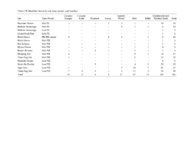
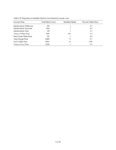
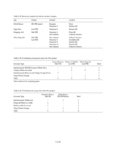
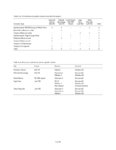
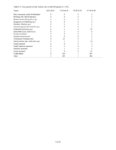
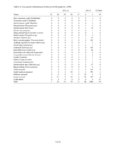
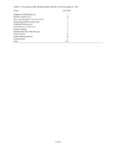
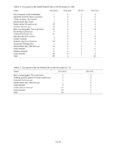
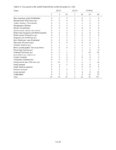
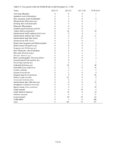
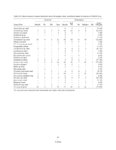
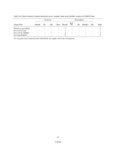
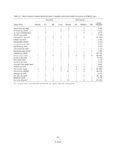
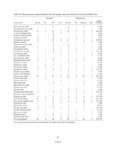
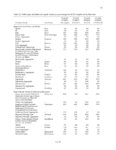
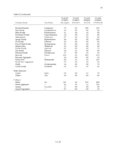
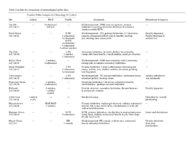
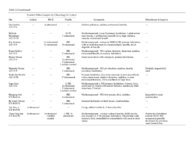
| OCR Text |
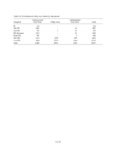
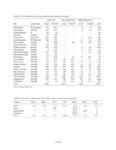
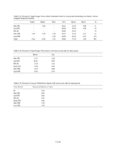
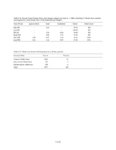
Show All analyses were conducted with a 10x-70x binocular microscope. A reference collection of reproductive parts and wood from plants indigenous to the northern Southwest was used along with published seed manuals for identification purposes when needed. Also, Mollie Toll and Pam McBride, paleobotanists with the Office of Archaeological Studies in Santa Fe, New Mexico, provided assistance with identification of problematic plant remains on several occasions. COMMENTS ON MACROBOTANICAL DATA The most important limitation of the macrobotanical study is that it provides only a partial record of the plant resources exploited or used by the occupants of the sites. Two major factors affect the composition of the macrobotanical database: preservation and prehistoric preparation techniques. The degree of preservation of botanical remains from open-air sites skews the database towards durable parts (e.g. seeds, wood) and away from fleshy parts such as greens, roots, and high-moisture fruits (e.g. cactus fruit). Macrobotanical remains are typically degraded by exposure to moisture, the freeze-thaw cycle, coarse and grinding soil (e.g. coarse sand, tuff), insect predation, and other such factors, all of which can completely destroy botanical remains. Preparation techniques also skew the record because parching, roasting, and grinding will result in more debris likely to be preserved compared to boiling, drying, or consuming products in a raw state (Munson et al. 1971). Preparation techniques and the level of preservation, in conjunction with the ways in which the occupants of a site used their space and disposed of debris, thus have a substantial effect on what is present in the archaeobotanical record. Also, not all N16 sites were excavated in their entirety, which constrained the choice of contexts available to be sampled. This may not have had a tremendous impact overall, but it did have some effect on the archaeobotanical database. The older the site, the more natural degradation to botanical remains can be expected. Archaic sites tend to have a smaller archaeobotanical record because of the lack of contexts conducive to protecting botanical remains through time, such as well-built structures or enclosed hearths, and these sites have been impacted by wind and water erosion as well as other forms of bioturbation for a longer period than Puebloan sites. Similarly, sites used over a long period of time that were also used as habitations tend to have a more diverse and rich archaeobotanical record than short-term sites such as camps. So, if the settlement pattern of a certain temporal or cultural period is characteristically represented by temporary camps and activity areas, the archaeobotanical record for that period will not be as well preserved, diverse, or abundant as temporal or cultural periods characteristically represented by long-term habitations. Botanical remains from the 476 flotation samples analyzed were found both charred and uncharred. The charred condition of plant remains from open-air sites is often used as a criterion to differentiate between cultural debris and post-occupational contaminants. However, the use of charring as a defining characteristic is most applicable to seeds of weedy (pioneer) and wild annuals; that is, the cultural affiliation of cultigens, regardless of condition, is rarely questioned because cultigens rely on human manipulation for propagation and are obvious byproducts of human activity. Wood has an intrinsically better preservation potential than seeds, and the cultural integrity of uncharred wood is more dependent upon context than condition. Due to the reproductive strategies of weedy and wild plants, and their value as a food source for some animals and insects, the remains of weedy and wild plants can become intermixed with a cultural context through a variety of natural means. It is the general consensus that uncharred seeds from open-air sites or contexts should be considered contaminants (Gasser 1982; Keepax 1977; Lopinot and Brussell 1982; Minnis 1981; Pearsall 1989). This generalization especially applies to pioneer species which are prolific seed producers that can advantageously remain in the soil for an indeterminate amount of time awaiting the proper germinating conditions. During analysis, it was observed that some of the uncharred plant remains were obviously recent while others appeared to have been in the soil for some time. Regardless, for the purposes of this synthesis, only charred plant remains were considered and included in the analysis of the macrobotanical data. For this study, then, the charred condition of plant remains implies association with the occupation of a site, with the implication that the charred taxa represented may have been used for food or other purposes. However, it should be pointed out that charring does not necessarily mean that an item was intentionally procured by the occupants. Seeds and other plant parts can be incorporated into cultural contexts through human activity, insect and/or animal disturbance, or some other bioturbative process. Once introduced into cultural contexts, these remains can be unintentionally charred through human activity, such as being swept into a hearth or inadvertently burned if, for example, a structure or midden caught on fire. A charred condition may thus be considered indicative of botanical resources exploited by 3 V.10.3 |