| OCR Text |
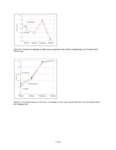
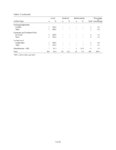
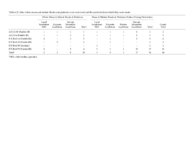
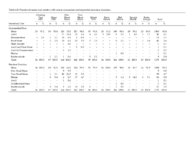
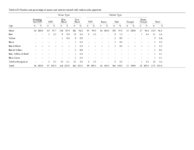
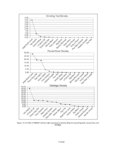
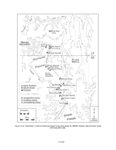
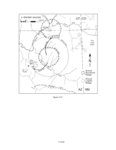
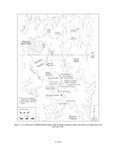
Show reached by Barlow and Metcalfe (1996:368): "Given an array of resources in the diet, the processing characteristics of each [whether high or low ranked] may influence which resources are most effectively exploited through strategies of logistic procurement and long distance transport, and which are more likely to affect the locations of residential camps." In the matrix of 10 resources that Rhode considered, ricegrass is at the bottom, meaning that it would make the most economic sense to live in a dense patch of ricegrass and move other resources to that location. When seasonality of harvest is also considered, there is even more incentive to locate in a dense stand of ricegrass, because, as observed by Bohrer (1975), few resources are available at the time that ricegrass seed is ripe. The few resources that might be available during the ricegrass harvest, such as the seeds of tansy mustard and peppergrass, can be profitably exploited on a logistic basis according to Rhode's calculations and transported to the location of ricegrass harvesting. Based on transport decay curves for two resources, one of which is far higher ranked than ricegrass (pinyon) and one that is even lower ranked (pickleweed), Barlow and Metcalf (1996:365) concluded that "it is always more efficient to move the consumer to the resource patch than it is to move the resource to the consumer … procurement … from a base camp outside the resource patch is only expected when the choice of the camp location is a tradeoff between other competing demands, such as access to water, fuel, other foods, or perhaps previously stored foods." This finding appears to explain in no uncertain terms ethnographic accounts of Puebloan towns vacated during the ricegrass harvest (see Bohrer 1975). Another point that comes out of Jones and Madsen's study concerns the storage of resources for future consumption-basically the generation of surpluses. They conclude that "a high return rate should be the best indicator of whether collection in excess of consumption is likely" (Jones and Madsen 1989:533). Ricegrass is such a low-return resource relative to pursuit and processing costs that it is an unlikely resource for generating a storable surplus, especially if the harvest area occurred outside the distance of the foraging range around a habitation (roughly 3-5 km). Pinyon pine is another wild resource of evident major importance in Basketmaker diet. This is not reflected in the feces from Desha Cave 1, which is well below the elevation range of this species, but it is evident in the fecal and sediment samples from the Basketmaker II layers of Turkey Pen Cave (see summary in Matson and Chisholm 1991), a site situated in the pinyon zone on Cedar Mesa, Utah. Flotation samples from Atlatl Rock Cave and several of the NMRAP Basketmaker habitations also contain pinyon nuts and cone parts but with low overall ubiquity. Of course it is difficult to evaluate the reliance on this resource based on these data. Pinyon is, in Minnis's (1989:548) terms, an erratic resource, such that, despite its high energy value (high rank, Simms 1984, 1987), it cannot be depended upon. It will however be heavily used when available. The energetic value of pinyon makes it a likely candidate for long-distant transport back to a residential site (Jones and Madsen 1989; Rhode 1990), especially if the non-food parts of the resource such as cones and hulls are removed (Barlow and Metcalfe 1996). As such, Minnis's statement should perhaps be qualified to read that pinyon is undependable in any one local area but that on a pan-regional basis it is far more reliable. Using Rhode's (1990:417-418) cost figure for a roundtrip move of a family group to harvest pinyon, which yields a maximum transport distance of 136 km, a Basketmaker family from Navajo Mountain could have reached the Kaibab Plateau on the west, the Henry Mountains on the north, and almost to the Carrizo Mountains on the east. Included in this area at much closer distances are such prime yet diverse pinyon nut harvesting areas as northern Black Mesa (80 km), the Kaiparowits Plateau (40 km), Cedar Mesa (90 km), and the Paria Plateau (90 km) Piute Canyon. Moreover, a family group harvesting pinyon nuts might quickly generate far more than they could ever carry as a group back to their home, caching the rest for later retrieval by an adult male in the group, which would then raise the maximum transport distance for a round trip to 475 km (Rhode 1990: Table 3) or increase the "profit" margin if distance stayed the same. The ability to travel to where the nut mast for a given year is productive could have a leveling effect on the erratic nature of pinyon harvests. The key in all of this perhaps has more to do with the social environment than with counting calories spent in harvesting and travel. If territoriality and boundary defense became a concern during the early agricultural period, then how was travel through other people's terrain mediated or facilitated so as to exploit this resource? When available, the productivity of pinyon is such that the nut becomes a common good and it does not make much economic sense to keep others out. For example, Phillips (1909:220) reported a yield of 73 kg of pinyon nuts per hectare of New Mexico pinyon-juniper forest, and assuming roughly 6340 calories per kg of nutmeats (Barlow and Metcalfe 1996:358), this weight of resource translates into 462,820 calories or 231 days of food (assuming a 2000 calories/day diet). This yield per hectare might be high, but even if cut in half the productivity of pinyons is enormous given the vast tracks of pinyon-juniper forest on the Colorado Plateau. V.14.20 |