| OCR Text |
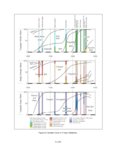
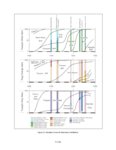
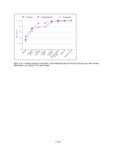
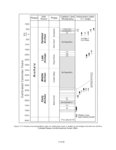
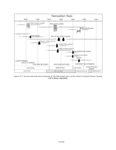
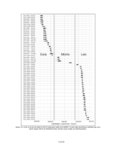
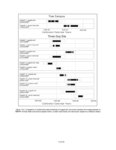
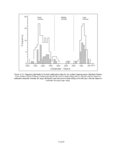
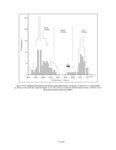
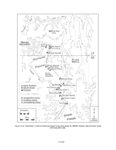
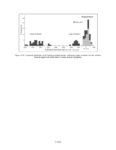
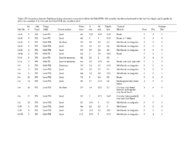
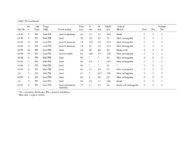
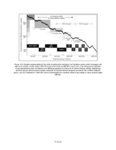
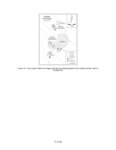
Show have argued that this early village manifestation "assumes a basal position on the scale of Anasazi development providing examples of some of the first villages in the northern Southwest." The evidence reported here (also Geib and Spurr 2000) indicates a somewhat earlier period for the open-air Basketmaker habitations in the Kayenta region, beginning by at least 300 cal. BC. This is during the White Dog phase, according to the currently proposed temporal spans of early agricultural phases for the Kayenta Anasazi region (Matson 1991:122-124, Figure 2.42; Smiley and Ahlstrom 1998:219, Figure 13-1), well prior to the Lolomai phase on northern Black Mesa. Given that the Basketmaker occupation of the northern Kayenta region appears to be an expansion of a phenomenon from the southeast and east rather than a local development, then there should be even earlier open-air early agricultural villages waiting to be identified somewhere in the greater Kayenta Anasazi region. The Marsh Pass-Klethla Valley-Red Lake area along the northwest scarp of Black Mesa is a likely place to look for evidence of the earliest farming villages. Lolomai phase settlements on northern Black Mesa might ultimately prove to be an expansion of Basketmaker populations or settlement-subsistence practices from the adjoining valleys to the west. Gilpin's (1994) findings from limited testing of two sites in the upper Chinle Valley reveal that early agricultural pit house settlements in this area date back to at least 1600 cal. BC. At present it is difficult to evaluate how this finding fits within the larger picture because of the limited nature of the work, but it suggests that much remains to be learned by future excavations throughout the region. Local discontinuity during the agricultural transition in the northern Kayenta region does not imply a lack of continuity elsewhere on the Colorado Plateau. This study concerns one modest-sized area of the Four Corners region of the northern Southwest, and just as a single site can never inform about the prehistory of some local area, likewise the archaeological record of one area does not inform about macroscale patterns for an entire region. Nonetheless, the pattern documented here is part of the puzzle that needs to be explained, part of the variability that informs about the processes at work in the past. Compiling detailed accounts of the foraging to farming transition or transformation for portions of the Colorado Plateau, such as the NMRAP has started to do for the northern Kayenta region, will enable a much better understanding of the processes at work during this important period of change in the Southwest. The patterning seen in pan-regional data sets at the highest level of abstraction are ultimately the outcomes of summed individual decisions made by small family groups with regard to local conditions and circumstances. The NMRAP findings provide evidence that helps bridge the greater than two century gap between the Basketmaker II and III stages perceived by Berry (1982:117). The northern Kayenta region is perhaps not exceptional with its record of the Basketmaker II-III transition but instead will be just one of several localities with sites dating to the transitional interval, once sufficient research is done. The characteristics of these areas, such as the upper San Juan River from the La Plata Valley (Toll and Wilson 2000) to the Navajo Reservior District (Eddy 1966; Wilson and Blinman 1993) and the middle Little Colorado River area around Petrified Forest National Park (Burton 1991; Wendorf 1953) need to be compared in order to understand what these regions share that other places such as Cedar Mesa and northern Black Mesa lack. In the northern Kayenta region pottery was not widely adopted within a short time frame by all households; rather it took several hundred years to become a ubiquitous item of material culture (ca. 200- 500 AD). This appears to be the case elsewhere on the Colorado Plateau. Consequently, ceramics do not provide a hard and fast marker for distinguishing between Basketmaker II and Basketmaker III even if we restrict our definition of pottery to true vessels and not figurines and other "non-utilitarian" items. Changing the Basketmaker III criterion from pottery in the generic sense to the advent of grayware production provides some degree of temporal specificity. With the advent of grayware it seems that virtually every household on the Colorado Plateau used pottery, with sherds occurring even at seasonal residences and some temporary camps. So, should the Basketmaker III designation be restricted to sites with grayware and should sites with brownware alone be classified as Basketmaker II or as Basketmaker II-III transitional? For the simple sake of communication I prefer the latter, but explicit recognition of intermediate stages, especially those with fuzzy boundaries, does not allow greater understanding as to how and why cultures change. In this chapter I have attempted to graph and discuss change in Basketmaker culture for the northern Kayenta region using the culturally independent dimension of time furnished by chronometric dates rather than by phases or stages. In this way it is possible to see that changes from preceramic to ceramic times, or from Basketmaker II to Basketmaker III, took place over the span of several hundred years, or many generations. There was no dramatic or sudden pan-regional adoption of a new trait complex that ushered in the Basketmaker III stage (contra LeBlanc 1982). Even within a small area such as the N16 project it is apparent that some households adopted pottery whereas others did not. On a larger regional scale, it is evident that pottery was more widely accepted earlier in some areas than in others. For V.14.57 |