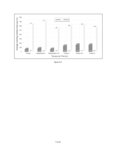
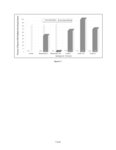
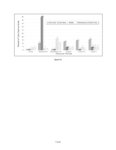
| OCR Text |
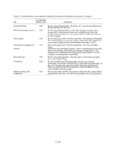
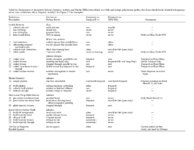
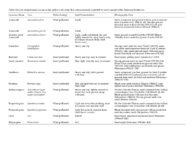
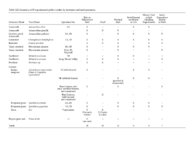
Show hand class 5 contained relatively thin examples (approximately 2.5 cm or less) and two-hand class 6 had thicker examples (greater than 2.5 cm). Two-hand manos manufactured from metate fragments, indicating prior use, were placed into a separate class. In many cases it was possible to identify manos that had been used on trough metates rather than slab metates. The convexity of the grinding surface(s) along the longitudinal cross-section and troughwear of the ends was used to distinguish the type of metate each mano had been used with. If trough end wear was observed it was noted in the Comments section of the analysis sheet. Therefore the type of metate (i.e. slab versus trough) that each larger mano was used on could, in general, be determined from the analysis notes. When smaller manos exhibited trough end use-wear from use in basin-trough metates this was noted as well. Nevertheless, no systematic procedure was used to determine or record the type of metates on which most one-hand manos were used. Metate Classes Nine classes, or subtypes, were used to categorize metates. A few classes duplicated morphofunctional types because more detailed classification of the metates was not needed. Tools identified as metates that could not be further categorized (metate NFS) were coded as indeterminate. Tools typed as slab (flat) metates could be placed into one of three classes. Slab metates used within mealing bins and those that were heavily shaped were considered formalized slab metates. Unformalized slab metates had little or no shaping. Often the metates had a slightly concave surface or a slight depression (less than 1 cm deep) near the center of the use-surface, resulting from grinding with manos shorter in length than the metate was wide. What differentiated these metates from grinding slabs was that the use-surfaces on the metates covered most, if not all, of at least one face. On grinding slabs the use-wear was much more localized. When a fragment was recognized as being derived from a slab metate but it could not be determined if it was the formalized or unformalized variety, it was classified as slab NFS. In addition to noting if trough metates were open trough or three-quarter trough, there were four classes of trough metate. Categorization of trough metates into classes was dependent on use-wear and the depth of the trough. On metates with little wear and a trough that was in the initial stages of formation (less than 1 cm deep) the tool was considered an incipient trough metate. Metates with troughs 1 to 5 cm in depth and exhibiting moderate to heavy wear were classified as shallow trough metates. When troughs were deeper than 5 cm the metates were considered deep trough metates. Generally the greater depth of these metates resulted from heavy use-wear. Trough metate fragments where the depth of the trough was not determined were classified as trough NFS. Basin metates and basin-trough metates were not subtyped, so the classes for these two types of metates were the same as their morphofunctional types. Basin-trough metates have a well-defined grinding trough with a basin-like conformation that is closed at both ends. Use-wear is clearly from reciprocal grinding. Unlike basin metates where some combination of stroke pattern ranging from rotary to reciprocal could be used, manos used with basintrough metates could only be moved back and forth. Manos used with basin metates were shorter than the width of the basin, allowing for the additional directions of movement, unlike manos used with basin-troughs, which were the same width as the trough. The basin-like troughs resulted from the use of short manos coupled with a lack of trough and mano surface maintenance (i.e. pecking and reshaping). Through use, the manos developed very convex longitudinal cross-sections and a corresponding basin trough in the matching metate. By Pueblo II longer manos were used with trough metates and the flat longitudinal mano cross-sections and corresponding squared troughs were maintained by pecking and reshaping both the mano and metate use surfaces. Miscellaneous Stone Artifacts Miscellaneous stone artifacts were classified into morphofunctional types based on form and function. Nearly 70 morphofunctional type codes were used to classify these miscellaneous stone artifacts (see appendix). Forty-five codes represent unique single forms or functions. Another 18 codes represent multifunctional tools that were combinations of two or more forms or functions. The remaining codes were used when more specific determinations about artifacts could not be made. Most of the morphofunctional tool types listed on the code sheet were represented in the N16 artifact assemblages. Although most of the morphological names seem fairly self-explanatory, many of these terms have had various definitions when used by different researchers. This section thus defines the morphological terms used for the N 16 analyses. V.6.4 |