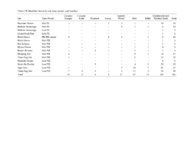
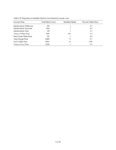
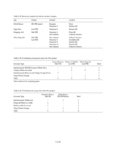
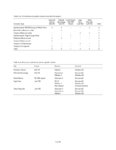
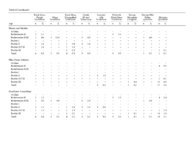
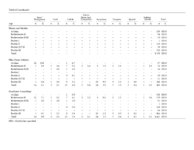
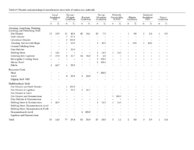
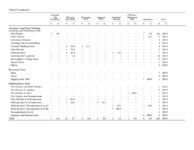
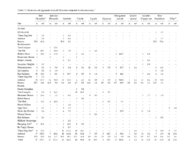
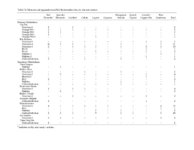
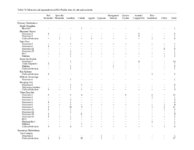
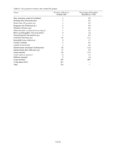
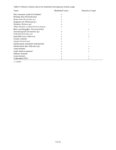
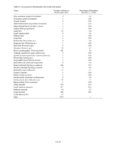
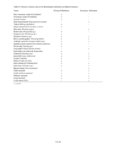
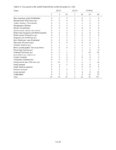
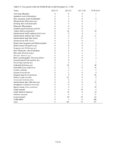
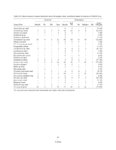
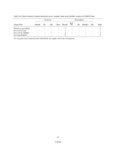
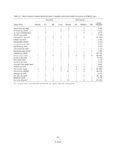
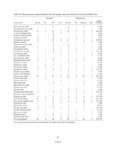
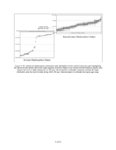
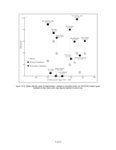
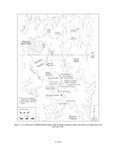
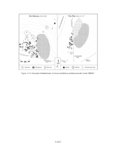
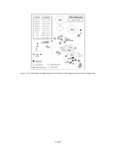
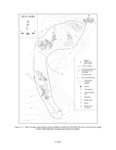
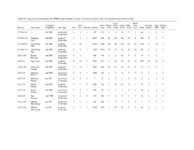
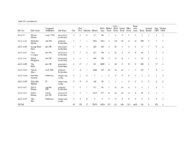
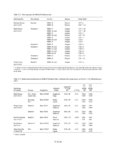
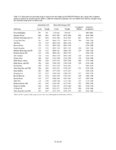
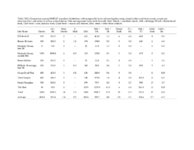
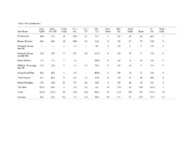
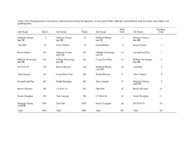
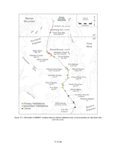
| OCR Text |
Show residences in the form of pit houses clustered around an established residential core; they built in an efficient fashion because the duration of stay was not necessarily anticipated to be long, given that much was in flux during the thirteenth century. Secondary Habitations and the Field House Conundrum As mentioned earlier, the NMRAP sample of Puebloan habitations is thought to consist of those that formed the anchor point(s) of annual settlement (primary habitations) and those occupied on a more seasonal or limited basis. The term secondary implies that a habitation served as a subsidiary domicile for a social unit, indeed in a subordinate or supporting role relative to the settlements considered previously. As mentioned, to distinguish between primary and secondary habitations we focused on architectural permanence, the presence and nature of interior hearths, and food storage capacity or lack thereof and to a much lesser extent on artifact or faunal/floral measures of occupation duration and activity diversity. Despite some rather clearcut distinctions in the NMRAP sample, there are at least two issues at play here that need to be considered individually to the extent possible. One relates to the annual duration of site use (was the site lived in seasonally or year-round?) and the other relates to the subsistence role for which seasonally used residences were created (are they field houses, as is often assumed, or something else?). The concepts of site seasonality and duration of occupation are intertwined, as sites on the "short" end of actual occupation are, by definition, seasonal. Evidence for seasonality is difficult to muster and comes principally from assessments of how structures were built, the presence of storage features, and the occurrence and type of interior hearths. Basically these concern whether sites were occupied during warm weather as "summer" habitations. A confounding issue with any assessment of seasonality is the intended (anticipated) and actual number of seasons that a secondary habitation was used (Kent 1992). As Kent argued, anticipated reuse of a place over many seasons could result in greater investment in feature construction from the start, while actual reuse over many seasons could result in much accumulation of debris and modification of features. Ethnographic descriptions of summer sites such as those used while tending fields are often used to model archaeological expectations or to build a simple interpretive framework. What Lightfoot and Jewett (1984:49) called the "use duration of an archaeological place" is defined as the "total aggregate of time that a specific location is used regardless of the functional nature of that site." A variation of occupation duration is "residential stability," described as "the length of time spent at any one settlement during the annual cycle." Evidence for site duration is primarily limited to the accumulation of various artifact classes with perhaps the greatest weight given to items with the quickest rates of deposition and smallest tendency to be recycled Grinding tools should in theory be good indicators because they require some time to become exhausted unless expedient tools are used, but grinding tools also have a high rate of recycling and reuse. Southwestern archaeologists frequently use the functionally specific term "field house" for secondary habitations (e.g., papers in Ward 1978; Kohler 1992; see Colton 1918 and Colton and Colton 1918 for an early reference to field houses on Sinaguan sites in and around Flagstaff). This term is an archaeological inference linked to ethnographic descriptions, an inference that conjures up Mindeleff's (1891: Figures 111-113) images of Native Americans huddled in the shade of "rude shelters" (Mindeleff 1891:217); children, perhaps, were given the onerous task of chasing ravens and coyotes from ripening corn (Moore 1979:262-265). Mindeleff (1891:217-219) described "field shelters" (kis; ki'si in Beaglehole 1937:39) that the farmers used on a limited basis while tending their crops. His comparatively brief descriptions along with those of other ethnographers (e.g., Beaglehole 1937; Stephen 1936; Hill 1938; Hack 1942; Bradfield 1971; Ellis 1974; Titiev 1992) defined what archaeologists would come to commonly call field houses (or field stations, field camps, farm shelters, or any number of like terms). The ethnographic accounts served both to create expectations of material patterns in the archaeological record that would allow for the "proper" identification of the permanent (pueblos) and non-permanent (field shelters) aspects of Puebloan settlement and also the interpretive conventions for how these different sites fit within subsistence and settlement organization. The term field house has a functional inference that implies proximity to a field, perhaps land use and ownership (see Kohler 1992; Moore 1978; Preucel 1990), but more important it implies reliance on food production, sedentism, and residential stability, issues that are themselves worthy of study. Obviously the NMRAP was in no position to resolve these thorny issues, though the collected data do allow some inferences. Subsistence base is key because the field house category presumes that farming (food production) provided a substantial proportion of the diet. This is something that Powell (1983), for one (see also Seward 1983), questioned based on the macrobotanical remains recovered from BMAP Anasazi sites as well as ethnographic data of how certain societies such as the Pai and the Navajo survived on the Colorado Plateau. A field house designation is perhaps warranted for some of the V.15.35 |