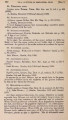
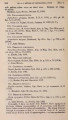
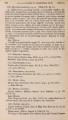
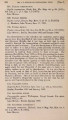
| OCR Text |
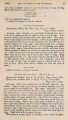
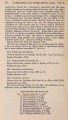
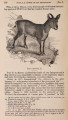
Show 756 ON PETRELS F R O M THE KERMADEC ISLANDS. [Dec. 5, Petrels unless it be the somewhat similar relation in colour Biomedea regia and Biomedea exulans; but these two closely related species are said to breed on different islands and at slightly different timesl. Macgillivi'ay was the first to call attention to this peculiarity in the birds of the Kermadec Islands (Zoologist, 1860, p. 7133), where he found incubating birds in both phases of plumage. More recently Mr. Osbert Salvin has discussed the question in Rowley's ' Ornithological Miscellany,' vol. i. p. 254. He says that the colouring is not dependent either on sex or on age, and that the colouring of the first plumage is retained through life, both of which statements the present paper tends to confirm. He considers, however, that the two phases of plumage do not indicate different, species, or even different varieties, but he thinks they are probably due to a kind of dimorphism. The word dimorphism has been used in zoology in several different senses, but it always denotes that the two forms are related to each other either as twin brothers and sisters, or else that there is an alternation of generations between them. As Petrels lay only one egg in a season, the first relation cannot hold here, so that-if it is really a case of dimorphism-eggs laid by bicolour parents should sometimes hatch out unicolour offspring and vice versd, of which there is no evidence at present. Also, if it be truly a case of dimorphism, there ought to be no intermediate varieties between the two forms, whereas these intermediate varieties seem to be sufficiently common to have led some ornithologists to the opinion that the two forms are merely adult and young of the same species. If we reject the idea of dimorphism as improbable, and that of changes due to age as disproved, we have three different hypotheses to choose from to explain the facts:- 1. Two distinct species, sometimes producing hybrids. 2. One excessively variable species, one form producing, or partially producing in an irregular way, the other. 3. Two species developed by ordinary variation going on for a long time, while the intermediate forms have not become extinct. An examination of the breeding-ground would probably enable us to decide which of these hypotheses is the correct one. If the first is correct, the young should always either closely resemble the parents, or be a distinct hybrid two parents of which had different styles of plumage. If the second is correct, then any variety might produce any other and the offspring should generally be different from the parents. While if it be the third hypothesis which is true, then each form should produce young very like themselves, and the two parents should always resemble each other. For my part I strongly incline to the last hypothesis, which is more in accordance with what we know in other cases 1 Buller, Trans. N. Z. Inst. vol. xxiii. p. 230 and vol. xxiv. p. 68. |