| OCR Text |
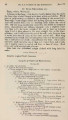
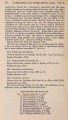
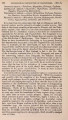
Show 70 ME. E. Y. WATSON ON THE HESPEEIID^. [Jan- 17, Section B. Antenna very varied, but never hooked ; the club either entirely without, or with a crook of varying length. Palpi: third joint in several genera long, slender, and curving over the vertex, a character never found in the Hesperiince ; in most of the other genera the thud joint is minute, only very rarely being horizontally porrectea, ana when this is the case it is always stout. Fore wing : cell invariably less than two-thirds the length of costa ; vein 5 curves downwards at its base and consequently arises considerably nearer to 4 than to 6 ; the middle discocellular being considerably longer than the lower one, frequently more than twice as long as it. Hind wing usually rather elongate, but never with a conspicuous tail or tooth ; vein 5 very rarely developed. The male is frequently furnished with a discal stigma on the fore wing and never with a costal fold. Both pairs of spurs are invariably present on the hind tibiae, and there is never a tuft of hair on the tibia? in the male. The epiphysis on the fore tibise is invariably present. This group is of world-wide distribution ; the South-American forms, however, are comparatively few. The majority of the species when sunning on a leaf depress their hind wings and elevate their fore wings, an attitude peculiar to this section. When in a complete state of repose both the wings are raised till they meet over their backs. Section C. Antennse: club of varying robustness, always tapering to a fine point ; occasionally hooked, in which case the terminal portion is always more than half the length of remainder of club. Palpi: second joint upturned, pressed closely against the face ; third joint long, slender, naked, porrect, projecting horizontally in front of the face. Cell of fore wing ranging from just over one-half to just over two-thirds the length of costa. Hind wing more or less lobate; vein 5 of hind wing usually well developed ; vein 5 of fore wing equidistant from 4 and 6 or slightly nearer to 6. Male never with a costal fold on fore wing, but with various o ther secondary sexual characters, both on wings and legs. As far as is known, all the species rest with their wings raised above their backs, frequently settling on the underside of leaves. They are remarkably crepuscular in their habits, being specially active only in the very early morning and at dusk. The "section is confined entirely to the Old World. The palpi of this section are very distinct, and readily separate them from nearly all other genera. The few genera of Hesperiince (Phanus, Entheus, and allies) which have somewhat similar palpi differ in the entirely different form of antenna, in the constant absence of vein 5 of the hind wing, and in some cases by the presence of the costal fold of the fore wing. |