| OCR Text |
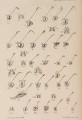
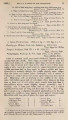
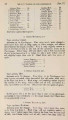
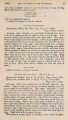
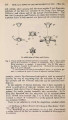
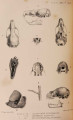
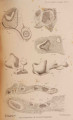
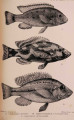
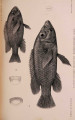
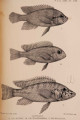
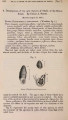
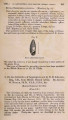
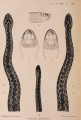
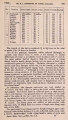
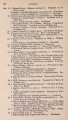
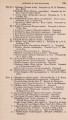
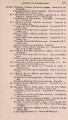
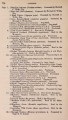
Show 622 DR. A. GUNTHER ON REPTILES, BATRACHIANS, AND [Nov. 7, streak from tbe eye to the angle of the mouth ; the soft dorsal and caudal with alternate darker and lighter spots between the rays; anal not coloured. Very young specimens, from 2 to 3 | inches long, have the body of uniform coloration, but the suborbital band is present. The largest specimen is 4\ inches long. CHROMIS JOHNSTONI, sp. n. (Plate LIV. fig. A.) D. i^. A. g2^. L. lat. 30. L. transv. ^. Teeth distinctly bicuspid, with the inner cusp longest, brown at the tip in a specimen 4 | inches long ; thirty on each side of the outer series of the upper jaw. Scales below the eye in three series. The diameter of the eye equals the width of the praaorbital and the depth of the scaly portion of tbe cheek, but exceeds the width of tbe interorbital space, which is convex. The angle formed by the praeopercular limbs is very obtuse. The height of the body is nearly equal to the length of the head and one third of the total. The longest dorsal spine is the last, and less than one half of the length of the head. Pectoral fin extending to the origin of tbe anal. Scales smooth. Body with six blackish cross-bands, which descend to the lower half of the body; the first is in front of the dorsal, tbe fifth below the end of the dorsal, and the last on the caudal peduncle; a short black streak from the eye to the angle of tbe mouth ; dorsal and caudal fins chequered with darker and lighter spots. Only one specimen is sent, 4^ inches long. CHROMIS LETHRINUS, sp. n. (Plate LV. fig. A.) D. JJ3- A. g. L. lat. 33. L. transv. ^. Teeth very small, each with two short, subequal, brownish cusps; thirty-seven on each side of the outer series of the upper jaw. Scales below the eye in three series. The diameter of the eye is less than the width of the praaorbital and equal to the depth of the scaly portion of the cheek and to the width of the interorbital space, which is flat. The angle formed by the praeopercular limbs i3 nearly a right one. The height of the body is nearly equal to the length of the head aud rather more than one third of the total (without caudal). The longest dorsal spine is the last and less than one half of the length of the head. Pectoral fin extending a little beyond the origin of the anal. Caudal covered with minute scales. Scales smooth. Body with a straight blackish longitudinal band running from the eye above the caudal portion of the lateral line; back with transverse blackish spots; dorsal fin with oblique blackish bands; caudal and anal without ornamentation. Only one specimen is sent, 5f inches long. |