| OCR Text |
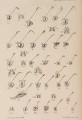
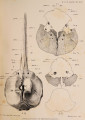
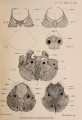
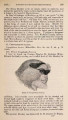
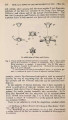
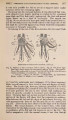
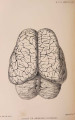
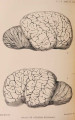
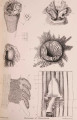
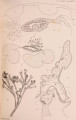
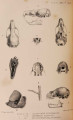
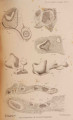
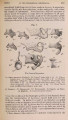
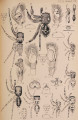
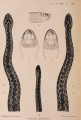
Show 330 MR. A. E. SHIPLEY ON THE GENUS SIPUNCULUS. [Apr. 18, Sipunculus nudus they are finger-formed; in Sipunculus tessellatus they are fused into a membrane at their base and at their free ends are somewhat branched. In the last-named species they bear certain pigmented spots, which are shown in Plate X X V. fig. 3. They project into the body-cavity between the dorsal retractor muscles on the dorsal aspect of the brain. Sections throw but little light on the nature of the structures. They are covered by a layer of cells continuous with those covering the brain, and they are not ciliated. They are solid and consist of a number of connective-tissue cells, and they are rather richly supplied with nerve-fibres. Beyond the fact that they receive a somewhat more abundant nervous supply than other organs there is nothing in their structure to suggest that they are sense-organs, and I am quite unable to surmise what their function may be. Plate X X V I I . fig. 13, which was drawn with the view of showing the position of these structures, is a section near the dorsal middle line of the fringe-like lophophore of S. nudus. It shows the relation of the brain to the dorsal blood-vessel, the ventral half of the central nervous system being bathed by the blood in this tube. The dorsal blood-vessel is continued on into the lophophore and breaks up into numerous lacunae, which when charged with blood serve to extend these parts. The same figure shows the attachment of the retractor muscle to the base of the brain, the giant cells in the latter, and the area where the brain is continuous with the epidermis, and the ciliated pit leading to this. This latter has been very accurately and fully described by H . B. Ward under the name of the cerebral organ. The Rectal Diverticula. There are in most members of the genus Sipunculus two feathery structures attached to the rectum in the immediate neighbourhood of the anus. These, like the papillae on the brain, project into the ccelom and are bathed on all sides by the coelomic fluid. If a small piece of these bodies be examined under the microscope it is seen to have a very branching, frayed appearance, somewhat resembling a minute sea-weed (Plate XXVII. fig. 12). The terminal branches are somewdiat swollen, and show no trace of any pore or opening, such as are found in tbe terminal branches of the anal cteca of Bonellia and some other armed Gephyrea. The following description applies to these organs in the species Sipunculus nudus and tessellatus. In stained specimens the nuclei are very prominent; they are apt to stand out from the surface of the structures, and in some cases seem to have absolutely separated off from the body of their cells. Whether this is really the case or not I cannot "say, as I have not been able to examine fresh material, and that which I had at m y disposal was not well enough preserved to permit the determination of this point. The branches gradually collect together and end in one mam trunk, and this opens, not, as I expected to find, into the alimentary |