| OCR Text |
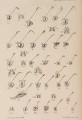
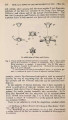
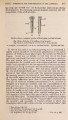
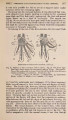
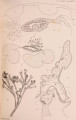
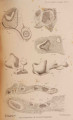
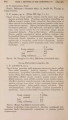
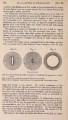
Show 462 MR. If. F. WOODWARD OF MAMMALIAN DENTITION. [May 2, definitely to which dentition this tooth is to be referred. Between the canine and the premolar the dental lamina branches out in a most curious way, in some sections exhibiting three or four down-growths from its adamantine face (fig. 13). Whether these represent modifications of the missing premolars 1 and 2 I am unable to say, but it is interesting to note that a somewhat similar condition of the dental lamina was observed in Petrogale in the same region. The anterior premolar (3rd) is present in the form of a long tooth-germ, which does not as yet show the formation of any dentine or enamel. A careful examination of a complete series of transverse sections revealed on the inner side of this tooth a long cord of epithelium whose neck was anteriorly and superficially connected with the dental lamina at the point of origin of the 3rd premolar (fig. 23, ppm), while posteriorly its deeper-seated extremity or bulb was swollen and situated rather behind and deeper in the g u m than this tooth. This structure entirely disappears from the sections before the 4th premolar is reached, thus showing that it is situated anteriorly to the latter, with which it at no time shows any connection. The same condition holds for the lower jaw save that the bulbous portion of this epitheloid cord (ppm) grows backward from its point of origin into the space between the two premolars and eventually attains a situation by the side of the 4th premolar, but it never has any connection with the latter, and its posterior position as compared with the same structure in the upper jaw is probably due to the backward extension of the great lower incisor, which takes up all the room under the 3rd premolar, so that this developing premolar is backwardly displaced until it attains a position under the 4th premolar. The 4th premolar is a very large and well-developed tooth, the largest in either jaw at the stage, and possessing well-developed calcified cusps. It shows no signs of a vertical successor at either of the two stages which I have examined in this species. The molars were in both specimens too advanced to show the vestiges of the other dentition, so I was unable to determine to which set they should be refered. MACROPUS GIGANTEUS. Material consisted of 8 pouch-specimens, a very complete series, youngest about 155 m m . long (this specimen was a little older than the largest Petrogale examined). In the youngest specimen there were three rudimentary incisors present corresponding to those in Petrogale, but in all the older ones i3 had disappeared and both i2 and i5, which were very large to begin with, had now become through absorption very much reduced. These three teeth have precisely the same relation and origin as in Petrogale, and so call for no further description. All three functional incisors, viz. il, i4,i6, show at one stage rudiments of their representatives in the second dentition (figs. 6, 7, 8). The first |