| OCR Text |
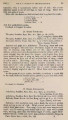
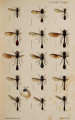
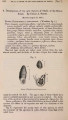
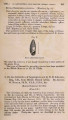
Show 716 PROF. P. B. UHLER ON I1EMIPTERA-HETEROPTERA [Nov. 21, Length to end of venter 2| mdlim., to tip of membrane 2f-3 millim.; width of base of pronotum | - 1 | millim. Numerous specimens, including some of both sexes, were collected in various parts of the island. This species is also common in Cuba, and I have swept specimens of it from weeds in the department of the Grand Anse, Hayti. Other specimens have also been seen by me, which were collected in Southern Florida, Mexico, Jamaica, and Brazil. This form will illustrate the variation which occurs in the joints of the antennae, some specimens having the antennse tapering, while in others the apical joints are abruptly setaceous. Fam. TINGITIDJ. TYPONOTUS, gen. nov. Form similar to Gargaphia, Stal, but lacking the transverse carina at the end of the mesosternum. The pronotal hood protracted long in front of the head, acutely compressed at tip and curved downwards, opaque, carinate on the middle line, with two longitudinal series of sunken areoles, followed beneath at base by a shorter series of smaller ones, with the lower border strongly reflexed. Carina of the mesonotum high, indistinctly areolate, arched and sinuated. Wing-covers almost flat, subquadrangular, narrowing posteriorly, the costal area ampliated about the middle, with the border strongly reflexed; the basal division of the area is occupied by two imperfect series of areoles, which are followed towards the tip by a single series of much larger ones. Sternal carinae high, set wide apart, and curving on the metasternum. Throat enclosed by an elevated border of the prostethium. The antennae slender, of medium length, with the apical joint short, clavate. Pronotal lobes subtriangular, widely extended, protracted in a narrow lobe anteriorly, reflexed, set with curving series of nearly circular, large areoles. Legs slender. TYPONOTUS PLANARIS, sp. nov. Oblong, milk-white, opaque, contracted at the base of wing-covers and narrowing obliquely behind the middle, marked with brown across the sunken middle of the pronotum and in the grooves each side of the hood. Hood long and narrow, acutely compressed at tip. Scutellum with an obscure spot each side. Veins of the wing-covers a little dusky in patches, sometimes tinged with yeUow, the discoidal area with a dusky spot at base and tip, the costal area usually with a brown crescent near the base and one or two spots near the tip; veins of the membrane marked with fuscous so as to form a broad, double, transverse loop next the tip : this dark area encloses cells of a larger size and more transparent colour than those of the corium. Underside black, with the bucculae, margins of the pleural pieces, and sternal carinae whitish. Legs pale fulvous, darker at the ends of femora, tibise, and tarsi. Antennse pale, the clavate apical joint dusky. |