| OCR Text |
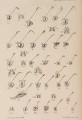
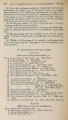
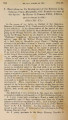
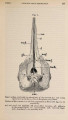
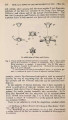
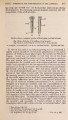
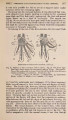
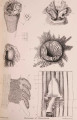
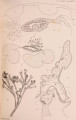
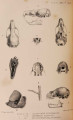
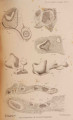
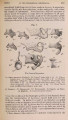
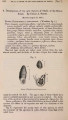
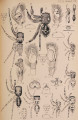
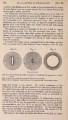
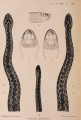
Show 1893.] MR. O. T H O M A S O N M A M M A L S F R O M CENTRAL PERU. 333 P L A T E XXVII. Fig. 10. A transverse section through the rectum of S. tessellatus, to show the arrangement of the rectal tufts. On the left are scattered portions of the tufts surrounding and opening into the main duct, which is supported by two mesenteries. The section is cut obliquely, and on the right it passes beyond the tufts but through the duct, and the communication of the latter with the lacunar spaces in the wall of rectum is shown. The outlines of the skin and of the longitudinal muscles in section are shown above. 11. A transverse section through the oesophagus of S. cumanensis. Above the oesophagus is seen the dorsal blood-vessel with diverticula opening into it, other diverticula crowded with blood-corpuscles are shown in various planes. The retractor muscles are seen at the side. 12. A branch of the rectal tufts of S. nudus, highly magnified. 13. A section taken through the tentacular fold and brain of S. nudus. The ciliated coating of the fold and the numerous blood spaces in its walls are shown. Below, the latter open into the dorsal bloodvessel which bathes the ventral surface of the brain. The ciliated pit leading to the anterior surface of the brain, which is continuous with the epidermis, is shown, and also the digitate processes which project into the coelom. The mouth and oesophagus lie to the left. 2. On some Mammals from Central Peru. By OLDFIELD THOMAS. [Received April 7, 1893.] (Plates XXVIII & XXIX.) I owe to the kindness of Dr. Jean Stolzmann, the Director of the Branicki Museum, Warsaw, the opportuuity of working out a small collection of Mammals obtained in Central Peru by Moiis. J. Kalinowski, which contains examples of several species either new or of such interest as to deserve a record. The locality at which most of the specimens were obtained is Chanchamayo, near Tarma, approximately in lat. 11° 20' S., and long. 75° 40' E.; in fact in very nearly the same region as the specimens collected by Mons. C. Jelski and described by m e in 1884 \ The altitude of Chanchamayo is about 3000 feet. The most remarkable of the species to be described is the interesting fish-eating Bat, Ichthyomys stolzmanni, which I have named in honour of the distinguished Polish ornithologist and collector, to w h o m I owe the pleasure of working out the specimens. There are also two new Bats. Mons. Kalinowski is much to be congratulated on the excellent manner in which he has collected the specimens, the care he has devoted to the preservation of the skulls, and on the interesting discoveries he has made in a region evidently very far from worked out. Thanks to the kindness of Dr. Stolzmann, the British Museum has been permitted to acquire, by way of exchange, the majority of the specimens now described. i P. Z. S. 1884, p. 447. PROC. ZOOL. Soc-1893, No. XXIII. 23 |