| OCR Text |
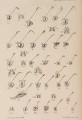
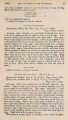
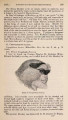
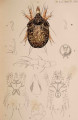
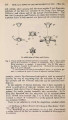
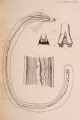
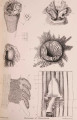
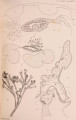
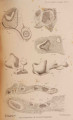
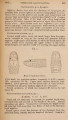
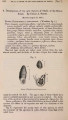
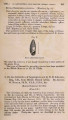
Show 1893.] ACARUS FOUND IN CORNWALL. 263 opportunity of studying the anatomy of two of these species. For this purpose I required frequent fresh supplies of the creatures, but, unfortunately, before I had completed m y investigations, a two days' storm of violent rain and wind came, and when I revisited the stream I found almost all the alga washed away and not an Acarus left in what remained. Under these circumstances I began to search for other patches of the Cladophora, and found a largish quantity growing on the face of the cliff near the horn of the bay, in a place somewhat difficult of access, nearer to the sea than the other, but higher up the cliff; a very thin thread of fresh water trickled down the cliff here, keeping the alga moist, and the spray of the sea would dash there in rough weather, and probably more or less would be carried there whenever the wind was from the sea, its most frequent direction. It was a warm corner facing south. The weed was abuudant and in good condition, having been protected from the storm; but, to m y surprise, I did not find in it a single specimen of either of the species which I was looking for, but, on the other haud, I did find examples of two other totally distinct species which I had not ever before found in the Cladophora either at the stream in the middle of the bay or elsewhere. The first was in great numbers and in all stages ; it was one of the Halicaridse. More careful examination with a microscope disclosed that there was also a second and much smaller species present in considerable numbers ; it is, I believe, unknown, and the object of this paper is to record it. The creature, in spite of its minute size, has structural peculiarities which seem to m e to render it particularly interesting. It belongs to the family Tyroglyphidae. I thought at first that I had a new species of the genus Hericia, and that genus is certainly its nearest ally ; but it is not possible to include it in that or any other existing genus. The great and singular difference of the two front pairs of tarsi and claws, the different position of the anus, and the absence of the strong sexual dimorphism found in Hericia, besides other points, distinguish it from that genus. There is only one recorded species of Hericia, viz. H. robini (Canestrini ex Robin), a very singular creature of a flattened diamond-shape (the male especially) which wades in the sap which exudes from elm-trees where the bark has split. The present species shares the flattened diamond-shape and the wading habits of H. robini, although the habitat is so very different. The great peculiarity and interest of the present species consists in the tarsi and claws. The Tyroglyphidae usually have rather slender tarsi and from the actual end of each tarsus springs a single claw either with or without a caruncle : where the caruncle is present the claw is usually small; where it is absent, as in the genus Hericia, the claw is usually larger and more powerful. The claw generally consists of hard colourless chitin, and is a strongly curved hook with a very short, straight, hard, and solid peduncle, at the proximal end of which a small ball-like swelling serves to give attachment to tendons. Hook, peduncle, and ball |