| OCR Text |
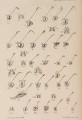
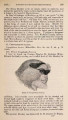
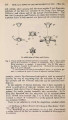
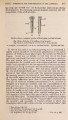
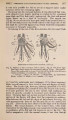
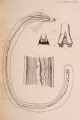
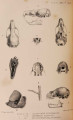
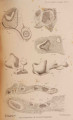
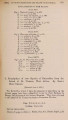
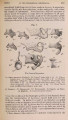
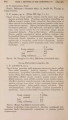
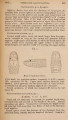
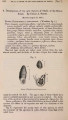
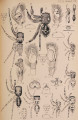
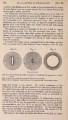
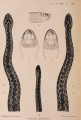
Show 276 PROF. G. B. HOWES ON THE DEVELOPMENT OF THE [Mar. 14, inversion in growth is interesting, as it tends to bring the Amphibian " coccyx " into closer harmony with that of the Mammal, in which (Homo)1 ossification of the vertebral arches, unlike that which obtains in the pre-sacral region, is effected subsequently to that of their overlying centra 2. It m ay be of interest here to recall the similarity in numerical reduction of the free vertebrae met with in the Anurous Amphibia (Pipa to 7) and the Teleostean Fishes (Ostracion to 14)3. In its occasionally rod-like character, the Teleostean " terminal vertebra " may so closely approximate to the condition of the Amphibian urostyle (ex. Molva) as to merit that title; and the enclosure within it of a cartilaginous urochord (ex. Osmerus) indicates a close parallelism of modification between the two great groups of Vertebrates, which calls for further investigation. Carrier has directed attention4 to an apparent similarity in the primary mode of origin of the vertebral bodies of Urodeles and Teleosteans ; and the interest of the foregoing consideration is enhanced by the discovery by Emery 5 and Albrecht6 of an odontoid vertebra of the Amphibian type in Fierasfer, Pelamys, and certain other bony fishes 7, and by the tendency towards a common type of fusion of vertebrae in the two great groups8. Pedal Skeleton.-An adult male of the Spotted Salamander (S. maculosa) has recently come into m y hands in which the hind limb was exceptionally modified (figs. 15 & 16); and as it is the only one possessed of a reduced pedal skeleton out of some hundreds which have from time to time come under m y notice, I conclude that the variation of the same is, in this animal, very rare. The left hind limb (fig. 15) was in every respect normal; but the right one (fig. 16), when viewed externally, appeared to be tridactyle. The apparent three digits were less completely distinct from each other and less freely movable than those of the normal limb, and the presumed inner one (I, II), which was very short, and in transverse diameter equal to the other two combined, was more rigid than the rest of the limb and apparently of little service in progression. W h e n the limb was brought to the ground, 1 Especially when regarding as coccygeal those so-called sacral vertebra which take no share in the formation of the ibac articulation. 2 Cf. Quain's 'Anatomy,' ed. 9, pp. 20-22. 3 Giinther, ' Introd to Study of Fishes,' p. 686. 4 Zeitschr. f. wiss. Zool. Bd. xxxv. (Sup.) p. 73; cf. also Goette, loc. cit. p. 415. 5 Fauna u. Flora d. Golfes von Neapel, Monogr. ii. p. 26 (1880). 6 Loc. cit. p. 472. 7 The analogy, if worth anything, certainly does not bear out Jordan's recent suggestion (Proc. U. S. Nat. Mus. vol. xiv. p. 107) that this numerical reduction and its associated " ichthyization," as he somewhat fantastically terms it, take place in degree approximate to the approach to the equator. 8 Cf. Schmidt, loc. cit. p. 757. |