| OCR Text |
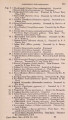
Show 1893.] BEETLES OF THE FAMILY CLERIDYE. 509 are granulose, or rather are broken by the coarse punctures of stria? in the basal half. 1 have possessed this species for many years, under the name humerale. M . Chevrolat's description is not very accurate, as in a very long series of examples I do not find any with two linear grey fasciae. The legs are black, with the exceptions which I have pointed out; the femora are not more stout than is usual in the smaller species of this genus. The application of the name humerale came about by a reprehensible system of so labelling species which it was intended to describe ; m y specimens were probably so named by White for the late Mr. W . W . Saunders, and it is well that that name should now drop for that of M . Chevrolat. It is common apparently at Singapore and Perak. STIGMATIUM TAPETUM. Stigmatium tapetum, Gorh. Cist. Ent. 1876, p. 95. Omadius nehulosus, Klug ?, Spin. Mon. ii. p. 133, t. 15. f. 6. I have already (I. c. p. 101) suggested that these may be, and probably are, synonyms, but in such an obscure genus I cannot affirm that they are so. Perak. CLADISCUS DISTORTUS, n. sp. Niger,prothorace obscure rufo; capite crebre, thoraceparcius,elytris crebre crihrato-punctatis, apice Icevi; antennis articulis ramulis longis a basi exorientibus, apicali subulato ; tibiis compressis, medio subincrassatis. Long. 9% millim. Hab. Camboja. Black with a slight brown tint, and clothed with long upright hairs; only the thorax is rufous, and the mandibles and two basal joints of the antennae pitchy red. The thorax is not so conically contracted as in C. sanguinicollis, Spin, (to which I refer the species from the Andaman Isles), but the sides are subparallel till they are rounded in to the strangulation. Its disk is very smooth and sparsely impressed with a few distinct points ; it is a little depressed in the middle, but with no constricted line in front. The antennas are remarkable for the mode in which the rami spring from the base of each joint; each ramus is as long as three joints, and the apical joint widens from its base to near the middle, and from thence is awl-shaped. The basal node of the thorax is black and has the usual double tumidity; the front tibiae are compressed, widened in the middle, and somewhat distorted. One specimen in Mr. Fry's collection. CLADISCUS ATTENUATUS, n. sp. Fere flliformis, niger, antennis quam caput cum prothorace sesqui-longioribus, articulis 3°-10m leviier serratis, elytris apice Icevioribus, callo humeralirufo. Long. 6-6% millim. Var. 2 ? antennis brevioribvs, prothorace obscure rufo. Hab. Burmah, Ruby Mines : Manipur (Boherty). |