| OCR Text |
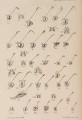
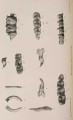
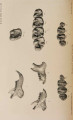
Show 210 DR. C. J. FORSYTH MAJOR ON MIOCENE SQUIRRELS. [Feb. 28, exception of Kowalevsky, who, in the same 22ud volume of the • Palseontographica,' had expressed an identical view, I had supposed that the two inner lobes of upper equine molars are not homologous with those of Anchitherium, but are a more modern additioxi to the tooth. N o w ontogeny, according to Klever l, suggests that Kowalevsky and myself are wrong. As to the molars of Hydrochcerus, Phacochosrus, and Elephas, I leave them to ontogenists ; and, if I a m not mistaken, there is every appearance that w e shall not have to wait very long for au answer. It may be asked whether the pattern of molars towards which the types of almost all the Orders of Mammalia represented in the Lower Eocene tend is nowhere realized. W h e n I first saw the plates of Marsh's " Discovery of Cretaceous Mammalia," m y impression was that the molars figured on plate ii.2 constitute one of the most important discoveries as regards the ancestry of Placentalia, inasmuch as these figures correspond to what I considered, and have been expounding just now, to approach the presumed ancestral form of Mammalian molars. In going over the text, I found that Marsh collocates all these multitubercular teeth in the " aberrant" Order of Allotheria, and states expressly, that " Carnivores, Rodents, and Ungulates appear to be entirely wanting in this unique fauna," and that " a still more surprising fact is the absence of their probable ancestors, unless, indeed, the insectivorous forms are entitled to this important position: many known facts point in this direction"3. In Part III. of " Discovery of Cretaceous Mammalia " Marsh agaiu states : " These remains are not transitional between Mesozoic and Tertiary forms, but their affinities are with the - ormer beyond a doubt " 4. To m e it appears, from what w e n o w know of those important fossils called Allotheria, we are not entitled to consider the whole Order as an aberrant one, though there may be, and certainly are, aberrant genera. But, on the whole, the Allotheria are not more aberrant than the Myomorpha, for instance. The discovery of the Laramie mammals led to a controversy between their discoverer and another eminent American palaeontologist ; but this side of the question has not been taken into consideration, both disputants being agreed in assuming that the multitubercular teeth in question belong to an aberrant group. This aprioristic assrmption may have prejudiced the impartial investigation of facts. I cannot enter fully into the question, especially as it would be rash to pronounce too positively on an 1 Ernst Klever, "Zur Kenntniss der Morphogenese des Equidengebisses" (Morphol. Jahrb. xv. 1889, Leipzig, pis. xi.-xiii.). 2 O. C. Marsh, " Discovery of Cretaceous Mammalia," American Journal of Science, vol. xxxviii. July 1889, plate ii. 3 L. c. p. 83. 4 " Discovery of Cretaceous Mammalia.-Part III.," I. c. vol. xiii. March 1892, p. 250. |