| OCR Text |
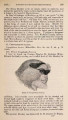
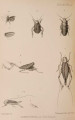
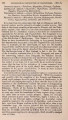
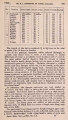
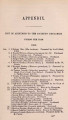
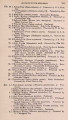
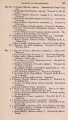
Show 1893.] MR. P. L. SCLATER ON CONTINENTAL MENAGERIES. 613 fiber) have been previously exhibited in the Society's Gardens. In general appearance these animals are certainly easily distinguishable from the American form, of which w e have several specimens, being much browner in colour. The registered additions to the Society's Menagerie during the month of July were 165 in number ; of these 58 were acquired by presentation, 44 by purchase, 44 by birth, and 19 were received on deposit. The total number of departures during the same period by death and removals was 115. The registered additions to the Society's Menagerie during the month of August were 208 ; of these 130 were acquired by presentation, 13 by purchase, 14 by birth, 1 by exchange, and 51 were received on deposit. The total number of departures during the same period by death and removals was 137. The registered additions to the Society's Menagerie during the month of September were 96 ; of these 54 were acquired by presentation, 21 by purchase, 8 were bred in the Gardens, and 13 were received on deposit. The total number of departures during the same period by death and removals was 108. Amongst the additions I may invite special attention to the following:- 1. A young Corean Sea-Eagle (Haliaetus branickii), obtained direct from Corea by the authorities of the Zoological Gardens of Hamburg, and purchased from them Sept. 21st. The example is very small in size, but is apparently a young male of this species. (Cf. Bolau, P. Z. S. 1892, p. 173.) 2. A fine specimen of the Great Grebe of Antarctic America (JEehmophorus major) in full plumage, new to the Collection, obtained by purchase. I exhibit a coloured drawing of this bird, which is the first specimen of the species that I have seen alive, I also take this opportunity of exhibiting a living example of the Goliath Beetle (Goliathus druryi), which was presented to the Society by Mr. Frederic W . Marshall, of Reed Vale, Teignmouth. Mr. Marshall informs m e that he received this insect alive, but weak, on the 16th M a y last. It was brought to him from Eastern Akim, some 4 or 5 days' journey from Accra. It seems to do well in our Insect House, and feeds readily on melon. It has also eaten grapes and very ripe pears, but prefers melon to any other food. It drinks tea and cocoa. The Beetle is of course well known, but, so far as I a m aware, no living specimen has previously been brought to England. The present example has been figured in the 'Field,' Oct. 21,1893, p. 607. Mr. Sclater offered a few remarks on the Zoological Gardens of Stuttgart, Frankfort, and Cologne, which he had visited during the past summer. In Herr Nill's little garden at Stuttgart were observed good examples of Struthio molybdophanes from Somaliland, and a fine and very tame pair of the Great Anteater (Myrmecophaga jubata). In the Zoological Garden of Frankfort, where Dr. Seitz had |