| OCR Text |
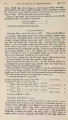
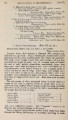
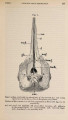
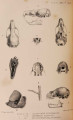
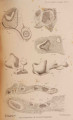
Show 1893.] DR. C. J. lORSYIIi MAJOR OIN MIOCENE SQUIRRELS. 195 inferior in number to the non-flying Sciuromorpha, and have, to all appearances, greatly diminished from Tertiary times up to the present, so that their special means of locomotion do not seem to have proved of more value in the struggle for existence to those of the non-flying. (3) One m a y thirdly suppose that there is no direct connexion whatever between the Sciuropteri and recent Sciuri or SciuricUe. From Tertiary times up to the present, the species of Flying- Squirrels have been gradually diminishing iu number, their characters having proved inadaptive, whilst the species of Sciuridse have been increasing. The points of similarity in the grinding-teeth of Sciurus prevosti and Sciurojderus flmbriatus, on the whole, are very slight (and so are those between Sciuropterus volueella and Sciurus hudsonius); with a little practice it is at once possible to distinguish an isolated tooth of the one from that of the other. Their skulls, moreover, are very different. For m y part, I rather incline towards the third supposition, although admitting that the grounds on which it is based may not be convincing. At any rate, the characters of the cranium as well as those of the dentition, though greatly varying, give on the whole a family likeness to all the Flying-Squirrels, so that I cannot but separate them into a distinct subfamily from the Sciurinee. The Pteromys, sensu strictissimo, have probably evolved from a single Sciuropterus-Y\ke form, and Eupetaurus is apparently the more specialized descendant of some Pteromys. The really important characters in which some Sciuri and Spermophili approach the Sciuropteri, as in the restricted interorbital region of Colobotis, the general elongation of the frontals of various Sciuridae, the general shape of the grinding-teeth in Eosciurus, and in the stronger development of the first ridge in the upper molars of the OtospermojJiili, are all such that they may be considered as ancient inheritances. Therefore we need not admit any recent connexion between the Sciuropteri and the above-mentioned members of Sciuridse. Anatomical characters and palaeontological evidence point in the same direction, viz. that the Sciuropteri are the little modified remnants of a very old and once widely spread group. There is not sufficient evidence for admitting that they have evolved from forms of non-flying Squirrels identical with, or very closely allied to, those actually living; their power of flying m a y not be a comparatively recent character. They are specialized, no doubt, compared to the remnant of Sciurida); but the ancestral non-flying types may neither have been Sciurida? nor even Sciuromorpha. It would be more consistent with these views to place the Flying- Squirrels in a distinct family; but for this it will be time enough when their recent as well as their fossil forms are better known than is the case at present1. 1 The present paper was completely finished when I first became partially acquainted with H. Winge's " Jordfundne og nulevende Gnavere (Rodentia) |