| OCR Text |
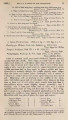
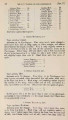
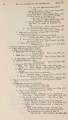
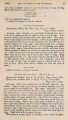
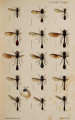
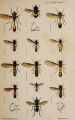
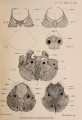
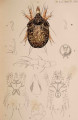
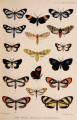
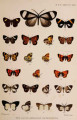
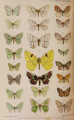
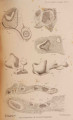
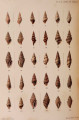
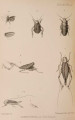
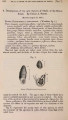
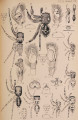
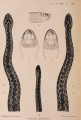
Show 1893.] THE BUTTERELIES OE THE GENUS THYSONOTIS. 539 A. The DANIS group. In this group the males are more or less metallic blue, and both sexes have a white band common to both wings. The species are best distinguished by the presence or otherwise of the metallic blue on tbe upperside of the females. In T. serapis this character seems at its best, as the hind wing is suffused all over, and the base of the fore wing very strongly, with metallic green scales. T. danis and var. karpaia have the metallic scales along the costal margin only, whilst T. philostratws, T. apollonius, and T. regina are absolutely without any metallic scales on the upperside. T. syrius and T. ribbei we have not seen, but from Mr. Miskin's note concerning his species the female has apparently some blue on the upperside. The females of all the species of this group have the outer marginal band of the hind wings beneath broader, and the blue more extensive, than the males. THYSONOTIS SERAPIS. (Plate XLV. figs. 1, 2.) Banis serapis, Miskin, Ann. Queensl. Mus. no 1, p. 49 (1891). Hab. Cardwell, Cairns, Queensland (Miskin); Herbert Biver, W . Queensland (Mus. Stand.); N. Queensland (Mus. B.). This is perhaps the easiest species of the group to distinguish, as it is the only one in which the hind wings of the female are suffused with metallic scales. W e have in our collection a number of specimens collected by Mr. Gervas Mathew, R.N., in Queensland, but the precise locality is not noted. They vary considerably in size and also somewhat in the width of the metallic fascia on the underside of the hind wings. The extent of blue and also of white on the upperside of the male seems to be quite constant. THYSONOTIS DANIS. (Plate XLVII. figs. 1, 1 a, 1 b.) Papilio danis, Cr. Pap. Exot. i. pi. 70. ff. E, F (1779). Papilio damis, Herbst, Naturs. Schmett. xi. t. 321. ff. 10, 11 (1804). Erycina danis, Godart, Enc. Meth. ix. p. 577 (1819). Cupido damis, Pagens. Lep. Fauna Arnb. (1884); Schmett. A m b . p. 10 (1888). Plebeius damis, Ribbe, Iris, ii. p. 249 (1889). Bamis sebce, Boisd. Voy. Astr., Lep. p. 68 (1832); Guer. Voy. Coquill. p. 275, Atlas, ii. t. 18. f. 12; Blanchard in Hombron et Jacquinot, Voy. Pole Sud, Lepid. pi. 3. ff. 1, 2 (1853). Banis sebce,'We$t\v. Gen. D. Lep. p. 497, pi. 77. f. 4 (1852). Banis danis, Semper, J. Mus. Godeff. xiv. p. 154 (1878). Banis sebce, Miskin, Ann. Queensl. Mus. no. 1, p. 49 (1891). Hab. Amboina; Ceram; Cardwell to C. York. Although Cramer gives " Indes Occidentals " as the locality of this well-known species, there can be no doubt from an examination of his figure that he delineates an Amboinese example. M y authority for giving Ceram is a pair (d $ ) in Messrs. |