| OCR Text |
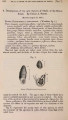
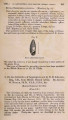
Show 430 MR. W. WARREN ON NEW GENERA AND [Apr. 18, 10,000 feet. I have seen one or two other specimens from Moller's collection.-H. J. E.] PRORHINIA, gen. nov. Near to Myrioblephara, from which it may be distinguished by the shortness of the cell, which is scarcely longer thau i of the fore wing, the oblique discocellular of the fore wing, and the angulated one of the hind wing, but more especially by the quite differently shaped palpi; in Myrioblephara these are horizontally porrect, the second joint broad, hairy, the third small, button-shaped ; in Prorhinia they are much longer, rostriform, drooping, the third joint acute. Type, Prorhiniapingasoides, sp. n. PRORHINIA PINGASOIDES, sp. n. 3 . Fore wings suffused in part, and also slightly dusted, with mouse-colour ; lines dark fuscous ; first double, curved, with a slight angulation below the middle; discal spot linear, black, followed by an indistinct fuscous central line ; second line thick, straight in its costal ^, then slightly wavy and inclined inwards, ending in a large curve, concave outwards, above the inner margin ; sub-marginal line fuscous, denticulate, followed by 2 darker blotches on the hind margin at | and § from the costa ; fringes white, with a row of contiguous blackish lunules at their base : opposite the 2 dark fuscous blotches of the hiud margin the fringes are flecked themselves with fuscous ; the spaces between the 2 branches of the first line and between the second and subterminal line are suffused with mouse-colour, as well as the inner marginal portion of the central space. Hind wings the same. Head, face, and thorax whitish; palpi, top of collar, and patagia blackish; abdomen mouse-colour. Underside of both wings pearly wdiite, with a broad mouse-colour marginal band, which is interrupted by white spaces before the fringes and by a larger white spot at anal angle ; discal spots distinct, lying in a short mouse-colour shade. Expanse of wings 28 millim. Hab. Naga Hills. At first sight this insect recalls a small Pingasa. [The type was the only one received, and is very distinct in coloration ; taken by Doherty at about 3000 feet.-//. J. E.] PSILALCIS, gen. nov. Tephrosia, Wlk. xxxv. p. 1590. Narapa, Moore, Ceyl. iii. p. 411, part; Swinhoe, P. Z. S. 1889, p. 426. Type, Psilalcis inceptaria, Wlk. The type of Narapa, Moore, has pectinated antenna? in the 8 like Alcis, and will, I think, have to be placed in that genus. A few species, however, which in markings and general aspect |